
Winter crane fly
Trichocera
Description
How to identify
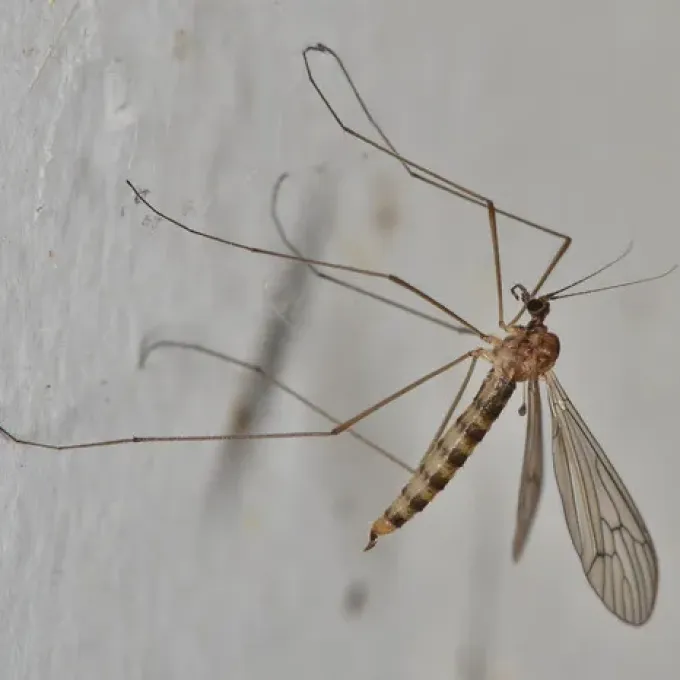
The winter crane fly, belonging to the Trichoceridae family (order Diptera), is a group of flies easily identified by their slender body and specific wing venation.
Adult flies are small, typically ranging from 5 to 10 mm in length. Their coloration is usually brownish or grayish, providing camouflage during the winter months.
The wings are transparent, often featuring faint spots, and they are capable of active flight even in very cold temperatures, unlike most other fly species.
Larvae are small, cylindrical, and legless, with a dirty-white to yellowish appearance and a robust, dark-colored head capsule.
They are primarily associated with cool, moist environments where organic decay is occurring, making them common in soil-based horticultural settings.
What it damages
Although they are generally saprophagous, acting as decomposers, they become significant pests in greenhouses when organic debris is abundant.
Larvae feed on the roots and underground stems of seedlings, which can severely compromise the plant's ability to absorb water and nutrients.
In cases of heavy infestation, young vegetable crops or flower seedlings can suffer significant damage, leading to stunted growth or total plant death.
The feeding damage creates entry points for soil-borne pathogens, such as fungi and bacteria, which often cause secondary infections like root rot.
The presence of larvae in the potting mix or greenhouse soil is particularly harmful during the early growth stages of the crop.
When it appears
As the name suggests, the peak activity of adults occurs during the cooler months: late autumn, winter, and early spring.
These flies are cold-hardy and can remain active during winter thaws, which allows them to colonize sheltered greenhouse environments effectively.
The larval stage is the most prolonged phase, developing continuously if conditions in the greenhouse are moist and provide sufficient organic food.
Adult flies are often seen congregating on the inner surfaces of greenhouse glass or plastic sheets, particularly on sunny winter days.
Lifecycle speed is highly dependent on ambient temperature, meaning warmer greenhouses can sustain higher populations throughout the winter season.
Signs of infestation
A primary indicator of an infestation is the observation of small, crane fly-like insects flying within the greenhouse during cool weather.
Plants showing symptoms of sudden wilting or yellowing, particularly in the lower leaves, often indicate root damage caused by larvae.
Inspect the soil surface for small entry holes or signs of larvae feeding on the base of stems, especially where the stem meets the moist soil.
Stunted growth or poor seedling development despite regular watering and fertilization is a major warning sign for subterranean pests.
- Wilting of young plants.
- Brown lesions on roots.
- Presence of larvae in the root zone.
- Uneven stand in greenhouse trays.
Control measures
Sanitation is the most critical control measure; remove all rotting plant material and debris from the greenhouse to eliminate food sources for larvae.
Managing soil moisture is essential; ensure proper drainage to prevent the moist conditions that favor the development of Trichocera larvae.
Soil disinfection (such as steam sterilization) prior to planting is highly effective in eliminating existing eggs and larvae in the growing medium.
For chemical control, use professional-grade soil insecticides specifically registered for greenhouse use, applied during the early stages of the crop.
Install yellow sticky traps to capture adult flies and monitor population levels, which helps in timing the necessary intervention for plant protection.
Taxonomy
- Latin name
- Trichocera
- Order
- Diptera (flies)
- Family
- Trichoceridae
- EPPO code
- TRCESP
Discussion
No discussions yet — be the first.