
Tricentrus treehopper
Tricentrus
Description
How to identify
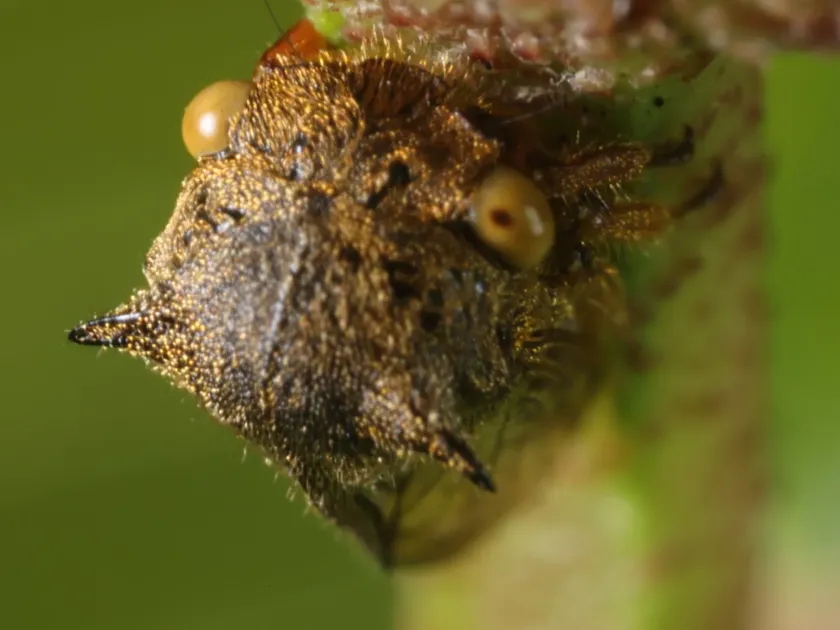
The Tricentrus genus belongs to the family Membracidae, commonly known as treehoppers. These insects are easily recognized by their highly modified pronotum, which often extends over the abdomen and can take on various shapes to mimic thorns or plant twigs.
Adult treehoppers have powerful hind legs, enabling them to leap quickly when threatened. Their coloration typically blends with the bark of trees, providing effective camouflage against predators such as birds and spiders.
The nymphs lack the pronounced pronotal process of the adults and often possess specialized soft spines or hairs. They undergo incomplete metamorphosis, passing through several nymphal instars before reaching maturity.
Identification at the species level is primarily based on the morphology of the pronotal process and, in the case of males, the internal structure of the genitalia. They are widely distributed in various climatic zones.
These insects are primarily active during the day, spending most of their time feeding on the stems and branches of woody hosts.
What it damages
Tricentrus species are known to be polyphagous, meaning they feed on a diverse range of host plants. They are frequently found on fruit trees, legumes, and various ornamental woody species.
Damage occurs when both nymphs and adults insert their piercing-sucking mouthparts into the phloem of young shoots. This sap-sucking activity deprives the plant of essential nutrients needed for healthy growth.
Extensive feeding can cause the tips of shoots to curl, yellow, and eventually die. In young nursery stock, this can lead to stunted growth and poor tree formation, negatively impacting future productivity.
The feeding sites often serve as entry points for secondary infections, such as bacterial cankers or fungal pathogens, which can exacerbate the physical damage caused by the insects themselves.
In high populations, the stress caused by treehoppers can make trees more susceptible to other environmental stressors, such as drought or heat waves.
When it appears
The seasonal development of the Tricentrus treehopper is synchronized with the phenology of its host plants. Overwintering typically occurs in the egg stage, with eggs tucked inside the bark of young twigs.
As spring temperatures rise, the nymphs emerge to begin feeding on the nutrient-rich sap of newly flushing growth. The timing of this emergence is critical for the success of the first generation.
Multiple generations may occur throughout the growing season, depending on the latitude and local climate. Peak activity of adults is usually observed during mid-summer months.
The cycle continues until autumn, when environmental cues trigger adults to lay their overwintering eggs. This ensures the species persists through unfavorable cold conditions.
Optimal environmental conditions for their rapid multiplication include mild temperatures and high humidity, which support both the development of the insects and the physiological activity of their hosts.
Signs of infestation
The most reliable sign of a Tricentrus infestation is the presence of numerous small puncture marks on the bark of young stems. In some cases, these punctures can cause the bark to crack or form small galls.
Another strong indicator is the presence of "honeydew," a sugary substance excreted by nymphs while feeding. This sticky residue often attracts ants, leading to noticeable ant activity on the tree branches.
Visible wilting or curling of leaves at the ends of shoots is a common symptom of the localized tissue damage caused by the treehoppers' persistent feeding.
Observing the insects themselves can be challenging because they are masters of camouflage, often remaining perfectly still when disturbed to avoid detection by potential threats.
In severe cases, the terminal growth of the branches may begin to die back, turning brown and brittle, which is a clear indication that the tree's vascular system has been severely compromised.
Control measures
Effective management of Tricentrus involves a combination of cultural practices and targeted chemical interventions to maintain plant health and suppress pest numbers.
Sanitation is key; during winter pruning, it is important to identify and remove infested twigs that contain overwintering eggs to reduce the next season's population density.
- Apply horticultural oils in late winter to suffocate eggs present on the bark.
- Use systemic insecticides during the peak hatching period of nymphs for maximum efficacy.
- Encourage natural biological control by creating habitats for predators like lacewings and ladybugs.
- Use yellow sticky traps to monitor adult population levels and determine the need for intervention.
Chemical applications should be carefully timed to coincide with the most vulnerable life stages, typically early nymphal instars, to ensure the best results with minimal environmental impact.
Integrated Pest Management (IPM) strategies, including regular monitoring and alternating between different chemical classes, are essential to prevent the development of pesticide resistance in the treehopper population.
Taxonomy
- Latin name
- Tricentrus
- Order
- Hemiptera (bugs, aphids, leafhoppers)
- Family
- Membracidae
- EPPO code
- TRIESP
Discussion
No discussions yet — be the first.