
Trachelizus
Trachelizus
Description
How to identify
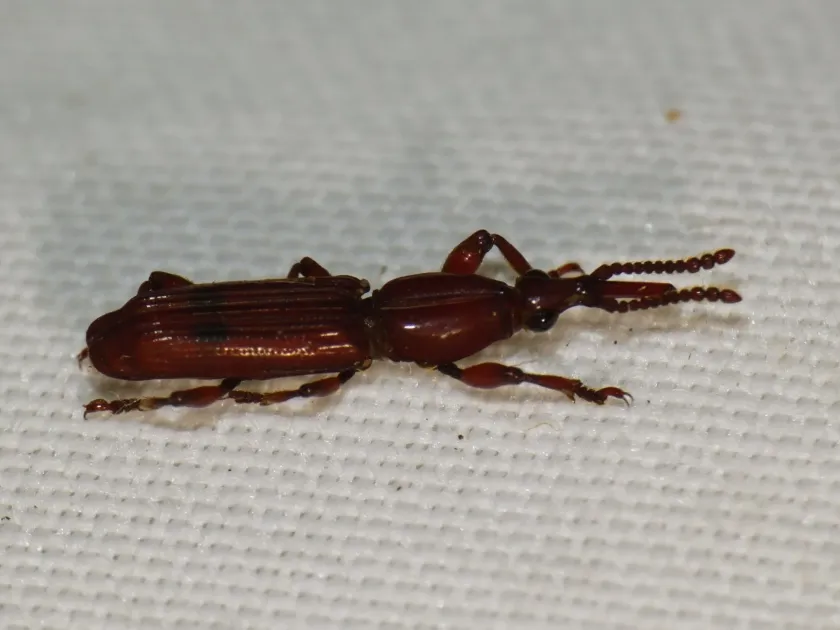
Trachelizus is a genus of beetles belonging to the Brentidae family, often referred to as straight-snouted weevils due to their elongated body shape.
The adult insects are characterized by a highly distinctive slender body and a well-developed rostrum, which is essential for their feeding and mating behavior.
Their coloration is typically dark brown or black, allowing them to blend into the bark and crevices of decaying wood where they thrive.
The larvae are typically legless and adapted for life within woody tissues, feeding on the inner layers of the tree during their development.
These insects are highly specialized, often gravitating towards weakened or dying trees that provide the necessary moisture and nutrient conditions for their progeny.
What it damages
The primary damage is caused by the larvae, which bore intricate tunnels through the wood, compromising the tree's structural integrity.
By disrupting the xylem and phloem, the larvae interfere with the transport of water and nutrients, leading to the gradual decline of the plant.
Trees that are already suffering from environmental stress, disease, or mechanical injury are the most susceptible to infestation by this pest.
In orchards and timberlands, their activity leads to significant economic loss as trees lose their vitality and commercial value.
Furthermore, the tunnels created by the larvae provide entry points for secondary fungal and bacterial pathogens, exacerbating the overall damage.
When it appears
Adult Trachelizus beetles emerge in the spring, coinciding with rising temperatures that trigger their reproductive activity.
Mating and egg-laying occur throughout the early summer months, as beetles search for suitable hosts to ensure the survival of the next generation.
The larval stage is the most prolonged, with active feeding continuing throughout the summer and into the autumn season.
Overwintering occurs in the larval stage, deep within the protective environment of the wood, shielding them from harsh winter conditions.
The transition to the pupal stage takes place during the following spring, completing the annual lifecycle of this wood-boring insect.
Signs of infestation
The presence of minute, circular holes on the surface of the bark is a primary indicator of adult emergence and infestation.
Small piles of frass, resembling sawdust or wood flour, at the base of the trunk or near bark fissures confirm larval activity inside the wood.
Wilting of foliage on specific branches, even with adequate water supply, suggests an interruption of internal vascular flow due to boring.
The thinning of the canopy and the premature loss of leaves are common signs that the tree's internal systems are being compromised.
In advanced stages of infestation, the tree may show signs of bark loosening and localized necrosis around the areas where larvae have been most active.
Control measures
Sanitation is the most effective management strategy, which includes the immediate removal and disposal of all dead or heavily infested wood.
Stumps should be removed or treated to prevent them from acting as a breeding reservoir for future generations of the pest.
Preventative insecticide applications can be used during the peak flight season to deter female beetles from laying eggs on susceptible trees.
Promoting general tree vigor through proper irrigation, fertilization, and site management helps trees defend themselves against potential infestation.
Regular monitoring of woody plants is crucial for detecting the early stages of infestation, allowing for prompt intervention before widespread damage occurs.
Taxonomy
- Latin name
- Trachelizus
- Order
- Coleoptera (beetles)
- Family
- Brentidae
- EPPO code
- TRAZSP
Discussion
No discussions yet — be the first.