
Clover seed weevil
Oxystoma pomonae
Description
How to identify
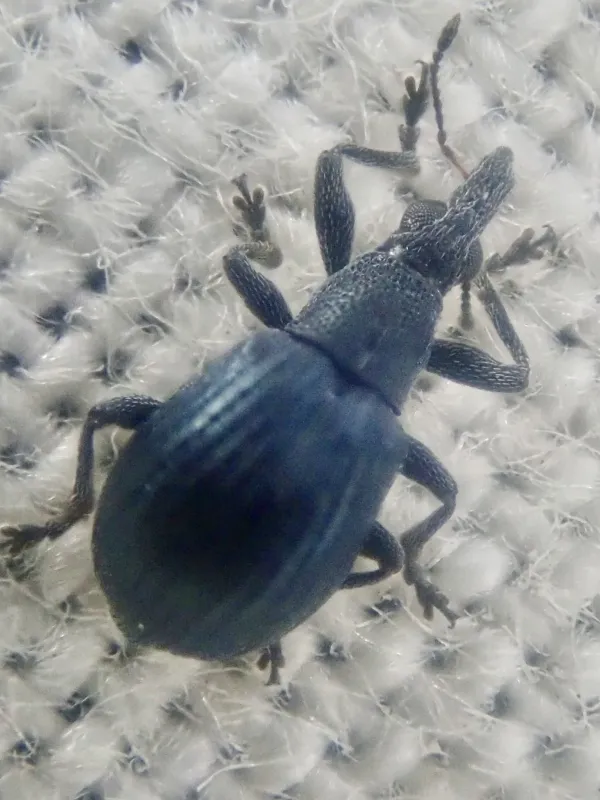
The Clover seed weevil (Oxystoma pomonae) is a small beetle belonging to the family Brentidae (formerly Apionidae). Adults typically measure between 2.5 and 3 mm in length and exhibit a characteristic pear-shaped, black body with a faint metallic luster.
The most prominent feature is the elongated, slender rostrum (snout), common to the weevil family. The elytra are covered in fine, sparse hairs, giving the beetle a slightly matte appearance under close inspection.
The larvae are legless, C-shaped grubs with a creamy-white body and a distinct brown head capsule. They spend their entire development stage hidden inside the host plant's tissues, making them difficult to spot without dissection.
Pupae are initially white, gradually darkening as they develop into adults. This metamorphic process is usually completed within the host seeds or in the soil, depending on environmental conditions.
Adults are highly mobile and are known to fly short distances to locate suitable host plants during the warmer months, making them efficient at colonizing new patches of legumes.
What it damages
The primary hosts for Oxystoma pomonae are various leguminous plants, particularly species within the genera Lathyrus and Vicia. They target the generative organs of the plants, causing significant damage.
The larvae are the most destructive stage, as they burrow into the developing seeds and consume the endosperm and embryo. This destruction often results in total loss of seed viability.
Adult beetles feed on leaves and flower buds, causing minor defoliation and tissue damage. While this feeding does not typically kill the plant, it weakens the host, making it less resilient to environmental stressors.
Economic damage is most severe in seed production crops, where even a small percentage of infestation significantly degrades the quality and market value of the harvest.
Infested seeds are often lighter, misshapen, and susceptible to secondary fungal pathogens, which can lead to further spoilage during storage if not properly handled.
When it appears
Adults overwinter in soil debris, leaf litter, or sheltered areas near host fields. They emerge in early spring as soon as temperatures are consistently mild, signaling the start of the breeding season.
After a period of maturation feeding, mating occurs. Females use their rostrum to bore small holes into the young pods of host plants and deposit individual eggs inside the seeds.
Larval development occurs entirely inside the pod. Throughout the summer months, the larvae mature while feeding on the internal contents of the seeds, effectively hidden from predators.
New adults emerge towards the end of the summer, coinciding with the maturation of the legume crops. This generation engages in supplementary feeding before seeking out overwintering sites.
The life cycle is tightly synchronized with the phenology of the host plants, ensuring that the most vulnerable stage of seed development coincides with the presence of larvae.
Signs of infestation
Early symptoms of infestation include tiny, circular holes on the leaves, which are caused by adult feeding. While easily overlooked, these are reliable indicators of weevil presence.
Tiny puncture marks on the young pods indicate where females have laid their eggs. These areas may eventually show localized necrosis or slight deformation.
The most definitive sign of infestation is the presence of perfectly round exit holes in mature seeds, created by emerging adults after they have finished their development.
- Reduced seed weight and uneven pod filling.
- Presence of frass (larval waste) inside the seeds.
- Discovery of adult weevils on foliage during flowering.
- Poor germination rates in laboratory testing of harvested seeds.
Dissecting a suspect pod will usually reveal the larvae or the excavated remains of the seed interior, confirming an infestation.
Control measures
Cultural control is the most effective management strategy. Implementing a crop rotation scheme and maintaining spatial isolation from previous year's infested fields helps significantly reduce pest populations.
Deep autumn plowing of crop residues is recommended to bury overwintering adults and larvae, preventing them from emerging the following spring and reducing the overall population pressure.
The use of certified, clean seed is vital to prevent the introduction of this pest into new fields. Seed cleaning processes often effectively remove heavily infested seeds.
In cases of high pest pressure, systemic or contact-action insecticides may be applied during the early flowering phase. However, timing is critical to minimize harm to beneficial pollinators.
Early harvesting can sometimes mitigate losses, as it removes the seeds from the field before the adult weevils complete their development and exit the pods, thus reducing the number of insects returning to the soil for hibernation.
Taxonomy
- Latin name
- Oxystoma pomonae
- Order
- Coleoptera (beetles)
- Family
- Brentidae
- EPPO code
- APIOPO
Discussion
No discussions yet — be the first.