

Pest · Hemiptera (bugs, aphids, leafhoppers) · affects Apple, Common hop, Winter wheat
Especially harmful
Hop aphid
Phorodon humuli
Description
How to identify
The hop aphid, scientifically known as Phorodon humuli, is a member of the Aphididae family within the order Hemiptera.
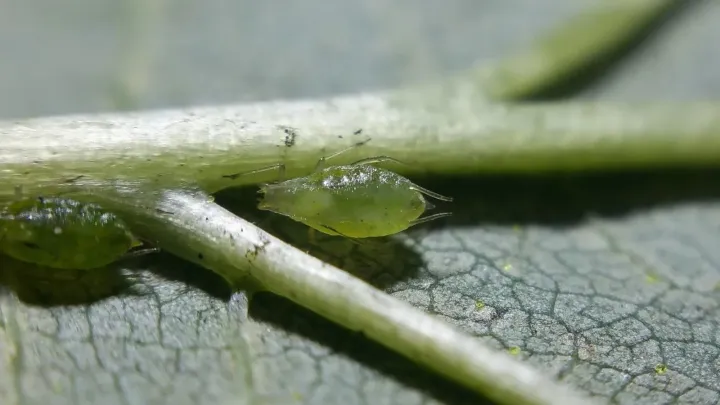
Adult aphids are small, measuring approximately 1.5–2 mm in length, and typically display a pale green or yellowish coloration.
A key diagnostic feature for identification is the presence of distinct, inwardly directed frontal tubercles located on the head.
This species exhibits a heteroecious life cycle, which means it alternates between a primary woody host and a secondary herbaceous host.
During the growing season, both winged and wingless forms are produced to facilitate rapid colonization and dispersal across various crops.
What it damages
The primary crop damaged by this insect is the common hop, where it severely affects cone development and quality.
Apple trees serve as the primary host, where the aphid feeds on young shoots and leaves during early spring.
A wide range of other crops is susceptible to infestation, including oilseed rape, fodder beet, cabbage, soybean, winter barley, and garden pea.
By piercing and sucking plant sap, the aphids extract essential nutrients, causing significant physiological stress to the host plants.
High population densities can lead to stunted growth, reduced photosynthetic activity, and significant yield losses in commercial farming.
When it appears
The species survives the winter in the egg stage, primarily on the bark and near the buds of apple trees.
In spring, as buds begin to burst, the overwintering eggs hatch into stem mothers that initiate the first generations.
Early summer marks a period of migration, where winged adults fly from their primary apple hosts to hop plants and other secondary crops.
Throughout the summer months, the aphid undergoes several reproductive cycles on secondary hosts, peaking in population density.
As autumn approaches, a return migration occurs, during which the aphids move back to apple trees to lay overwintering eggs.
Signs of infestation
Infested leaves typically show symptoms of curling, yellowing, and deformation caused by the aphid's feeding habits.
The presence of sticky honeydew on the underside of leaves is a primary indicator of an active aphid infestation.
Sooty mold growth often develops on the honeydew deposits, creating a dark, unsightly coating that further blocks sunlight.
Close inspection usually reveals dense colonies of aphids along with white, translucent cast-off skins from their molting process.
Severe infestations result in premature leaf drop, weakened stems, and the poor development of reproductive structures like hop cones.
Control measures
Cultural control practices include the removal of weeds and volunteer plants that can act as alternative hosts for the aphid.
Targeted insecticide applications on apple orchards during the spring are crucial to eliminate early populations before migration starts.
Systemic insecticides are frequently used to treat secondary host crops to manage outbreaks once they are detected in the field.
Rotating chemical classes of pesticides is a recommended strategy to prevent the development of resistance within aphid populations.
Biological control, by encouraging natural predators such as ladybirds and lacewings, helps in suppressing aphid populations naturally.
In brief
10
Damages crops
Content graph
Damages crops · 10
Content graph
Connections · Hop aphid
Most often together:
Marketplace
Products · 12

Biology
Taxonomy
- Latin name
- Phorodon humuli
- Order
- Hemiptera (bugs, aphids, leafhoppers)
- Family
- Aphididae
- EPPO code
- PHODHU
Community
Discussion
No discussions yet — be the first.