
Tischeria angusticolella
Tischeria angusticolella
Description
How to identify
Tischeria angusticolella is a tiny moth belonging to the Tischeriidae family, primarily known as a specialist leaf miner of rose species.
The adult moth is very small, typically with a wingspan of less than 10 mm, making it easily overlooked by gardeners during routine inspections.
It possesses slender, brownish wings with a subtle metallic sheen, which provides effective camouflage against bark and plant stems during the daylight hours.
The life cycle consists of the egg, larval (caterpillar), pupal, and adult stages. The larval stage is the one responsible for the damage observed on the plants.
The moth is multivoltine, meaning it produces multiple generations throughout a single growing season, leading to persistent infestations in conducive conditions.
What it damages
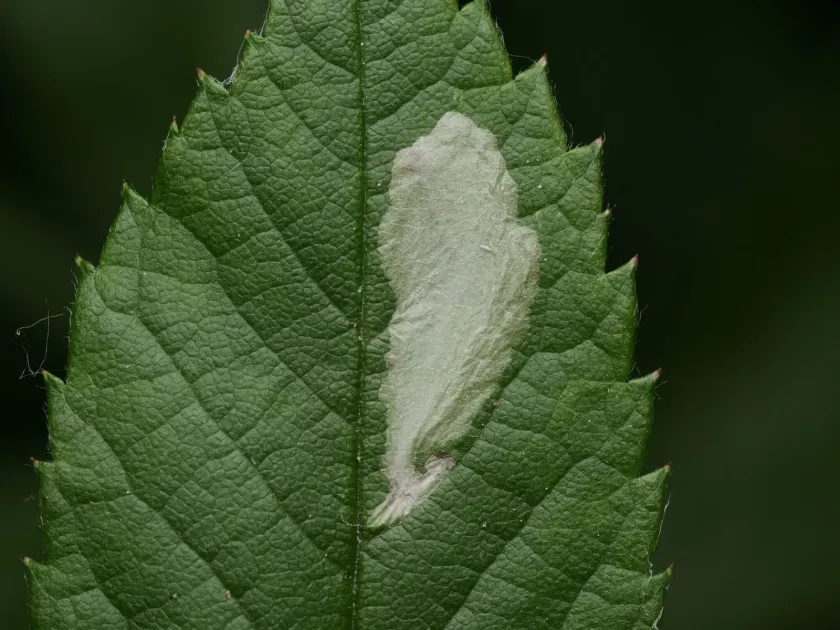
This pest feeds on the foliage of wild and cultivated roses, creating distinctive tunnels, or "mines," between the epidermal layers of the leaves.
The caterpillar consumes the leaf tissue, which inhibits the plant's photosynthetic capability and causes the affected areas to turn yellow and eventually brown.
Heavy infestations stress the rose bushes, reducing their overall vigor, bloom quality, and ability to store energy for the subsequent growing season.
The damaged leaves are also more susceptible to secondary fungal infections, such as black spot, which can further exacerbate the decline of the plant health.
In severe cases, the bush may lose a significant portion of its leaf canopy, negatively impacting its growth rate and overall aesthetic appeal.
When it appears
The activity cycle usually begins in late spring, coinciding with the emergence of the first generation of adults as temperatures stabilize.
Subsequent generations follow throughout the summer months, with the duration of the cycle largely dependent on the ambient temperature and humidity.
The peak of larval activity is typically seen during mid-summer, when the mines become most prominent and numerous on the foliage.
The species overwinters as a pupa within fallen leaves, which makes the sanitation of the garden site a critical step in the annual control cycle.
Monitoring for signs of leaf mining should be maintained consistently from early spring until the final leaves drop in autumn.
Signs of infestation
The most reliable way to identify an infestation is by the visual appearance of the mines etched into the leaves.
- Appearance of narrow, pale, snake-like tracks on the leaf surface.
- Gradual expansion of these tracks into blotch-like mines as the larva grows.
- Accumulation of dark frass (excrement) within the transparent sections of the mine.
- Premature yellowing or browning of specific leaf areas.
- Premature leaf drop occurring across the bush due to extensive tissue damage.
Control measures
The most fundamental cultural control practice is the diligent removal and disposal of all fallen leaves at the end of the season to eliminate overwintering pupae.
Promoting general plant health through regular fertilization and proper watering makes roses significantly less prone to severe damage by leaf-mining insects.
For chemical control, the application of systemic insecticides is necessary, as they penetrate the leaf epidermis to target the larvae hidden inside their mines.
Always utilize integrated pest management (IPM) strategies, rotating different chemical classes to prevent the development of resistance in the pest population.
In small gardens, removing and destroying individual leaves showing early signs of infestation can help limit the spread of the moth significantly.
Taxonomy
- Latin name
- Tischeria angusticolella
- Order
- Lepidoptera (butterflies)
- Family
- Tischeriidae
- EPPO code
- TISCAN
Discussion
No discussions yet — be the first.