
Household casebearer
Tineola uterella
Description
How to identify
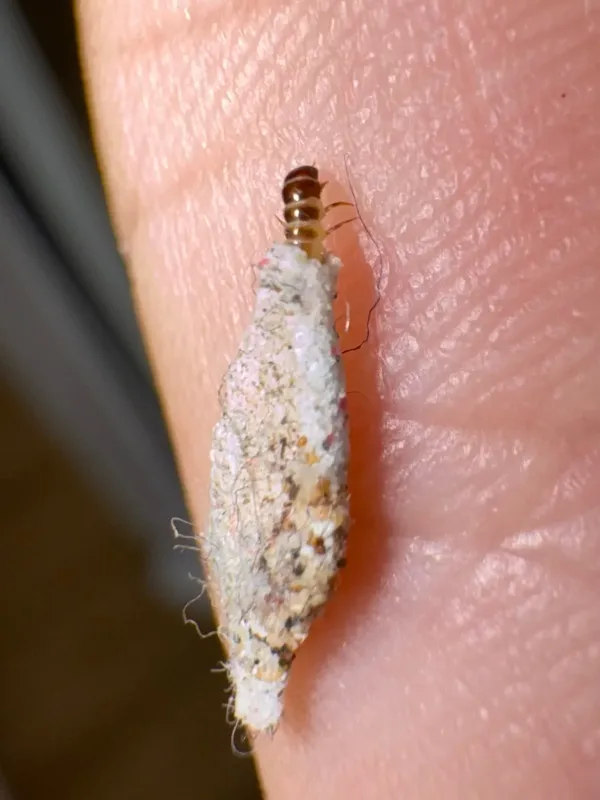
The household casebearer (Tineola uterella) is a small moth belonging to the Tineidae family. It is best known for its larvae, which construct unique, flattened, seed-like protective cases that they carry throughout their development.
The larvae are small with dark-colored heads, remaining safely inside their mobile homes. Adults are delicate moths with narrow wings fringed with hairs, usually colored in muted brown or grey shades, which helps them blend into their surroundings.
This species undergoes complete metamorphosis: egg, larva, pupa, and adult. Due to their habit of camouflaging themselves with bits of dust or plant debris, they are often difficult to spot until damage becomes apparent.
To identify them, one must look for small, debris-like objects moving slowly across leaf surfaces or stems, which are actually the larvae inside their protective cases.
Inspection should focus on the undersides of leaves and sheltered spots where these insects tend to feed and rest during the daylight hours.
What it damages
The primary damage is caused by the larvae as they graze on the plant's epidermis, leaving behind distinctive window-pane damage or skeletonized leaf patches. This disrupts the plant's ability to photosynthesize effectively.
High infestation levels can lead to severe weakening of the plant, potentially causing leaves to wither prematurely and making the vegetation susceptible to secondary bacterial or fungal infections.
While often associated with household debris, these larvae can cause significant harm to various indoor plants and nursery stock, especially in controlled environments.
Larvae feeding on delicate new growth or apical buds can deform the plant's structure, causing stunted development and loss of aesthetic quality for ornamental plants.
In large-scale plant production settings, this pest can multiply rapidly, necessitating diligent monitoring to prevent widespread damage to inventory.
When it appears
The activity of the household casebearer is largely determined by the surrounding climate; in outdoor settings, they are most active during the warmer months of late spring through summer.
During the winter, they typically enter a dormant stage (diapause) within their cases, hiding in leaf litter, bark crevices, or structural gaps in greenhouses.
In indoor environments or heated greenhouses, they can remain active throughout the year, as the stable temperatures allow for continuous generations of the moth.
The duration of the life cycle varies depending on nutritional availability and temperature, typically accelerating in warmer, humid conditions that favor development.
Adult moths emerge and lay eggs on suitable host plants during the summer, facilitating the spread of the population to new areas throughout the growing season.
Signs of infestation
The first sign of an infestation is the appearance of translucent spots on leaves, which gradually turn into irregular holes as the larvae feed on the interior tissue.
The most tell-tale sign is the presence of small, flat, seed-shaped cases attached to the stems or the undersides of leaves, indicating an active colony.
Leaves may show signs of curling, browning, or general chlorosis due to the stress caused by the larvae, even if the pests themselves are not immediately visible.
- Superficial epidermal grazing (window-paning).
- Presence of tiny granular frass near feeding sites.
- Empty protective cases left behind on leaves or potting soil surfaces.
Over time, the affected plants exhibit decreased vigor, growth retardation, and a noticeable decline in overall health if the infestation remains unmanaged.
Control measures
Good sanitation practices are key; removing plant debris, dead leaves, and cleaning nursery areas significantly reduces the number of hiding and overwintering spots.
For small infestations, manual removal of the larvae and their cases is highly effective and safe, providing an immediate way to lower the local population.
Biological control methods, such as using products based on specific entomopathogenic bacteria, can manage larval populations without the need for toxic synthetic chemicals.
If chemical intervention is necessary, insecticides should be applied to target the undersides of leaves, ensuring direct contact with the feeding stages of the pest.
Maintaining proper spacing between plants and ensuring good air circulation reduces humidity levels and makes the environment less hospitable to the casebearer.
Taxonomy
- Latin name
- Tineola uterella
- Order
- Lepidoptera (butterflies)
- Family
- Tineidae
- EPPO code
- TINOUT
Discussion
No discussions yet — be the first.