
Tomato leafminer
Tildenia glochinella
Description
How to identify
The Tomato leafminer (Tildenia glochinella, often associated with the Gelechiidae family) is a destructive pest that poses a significant threat to Solanaceous crops.
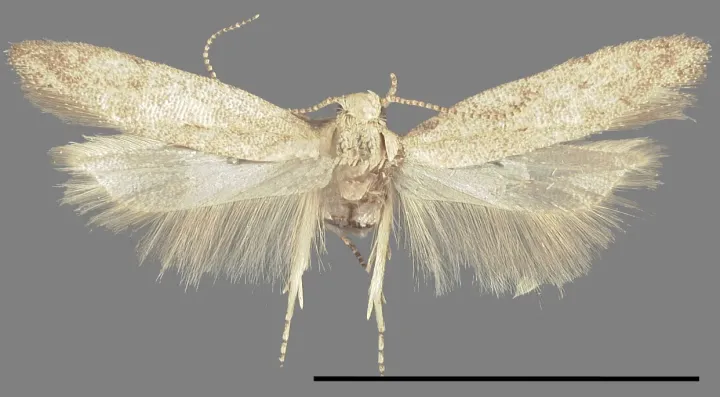
The adult is a small moth with a wingspan of approximately 10–12 mm, characterized by grayish-brown forewings with distinct dark markings that help it blend into the host plant.
Eggs are tiny, oval-shaped, and usually deposited singly on the undersides of leaves or on stems, making them difficult to detect during routine scouting.
The larvae go through several developmental stages (instars), transitioning from a light cream color to a greenish or pinkish hue as they mature.
Pupation typically occurs in the soil or within folded leaf tissue, where the pest remains protected until the adult moth emerges.
What it damages
The pest primarily targets Solanaceae family members, with tomato plants being the most preferred host for larvae feeding and adult oviposition.
Other crops such as potatoes, eggplants, and peppers, along with wild nightshade weeds, can also serve as hosts, sustaining the population throughout the season.
Larvae feed by mining the leaves, creating galleries that destroy the inner photosynthetic tissue and lead to weakened plant health and reduced vigor.
Fruit damage is particularly severe, as larvae burrow into the fruit, causing premature decay and rendering the harvest unsuitable for commercial sale.
In cases of high infestation, entire crops can be decimated if intervention measures are not applied promptly to interrupt the pest's reproductive cycle.
When it appears
The life cycle of the moth is highly temperature-dependent, with developmental rates increasing significantly at temperatures above 20°C.
In warm climates or indoor growing environments, the insect can produce multiple overlapping generations, leading to continuous pest pressure.
Overwintering typically takes place in the pupal stage, buried in the soil or sheltered in plant debris, allowing the population to survive cooler periods.
Adult moths are primarily nocturnal, meaning their flight and mating activities occur in the evening, which should be considered when planning control sprays.
Human activity, including the movement of infested seedlings or harvest containers, is the primary driver of the pest’s spread to new geographical areas.
Signs of infestation
The most recognizable symptom is the presence of irregular, light-colored mines on the leaves, which are created as the larvae tunnel through the leaf tissue.
The presence of fine dark granules, which are the larval frass, inside these tunnels is a diagnostic feature that helps differentiate this pest from other leaf-mining species.
Heavy infestation results in leaves turning yellow, curling, and eventually drying out, which severely limits the plant's ability to produce energy through photosynthesis.
External damage to fruits is visible as entry points surrounded by debris, which quickly become entry sites for secondary bacterial and fungal infections.
Plants affected during the early growth stages may show stunted development, leading to deformed stems and reduced fruit set.
Control measures
A successful management program requires an Integrated Pest Management (IPM) approach that combines cultural, biological, and chemical strategies.
Cultural practices, such as removing infested plant materials, deep plowing to expose pupae, and managing weeds, are essential for reducing the baseline population.
Monitoring with pheromone traps is critical for timing interventions and determining the density of the adult population in the field or greenhouse.
Biological control agents, including predatory bugs and parasitoid wasps, can play a significant role in naturally regulating population levels.
- Use of certified, pest-free seedlings.
- Installation of physical barriers like insect-proof netting.
- Regular field scouting for early mining symptoms.
- Application of selective biorational insecticides.
- Rotation of chemical modes of action to prevent resistance.
Taxonomy
- Latin name
- Tildenia glochinella
- Order
- Lepidoptera (butterflies)
- Family
- Gelechiidae
- EPPO code
- PHTOGL
Discussion
No discussions yet — be the first.