
Bagworm moth
Thyridopteryx
Description
How to identify
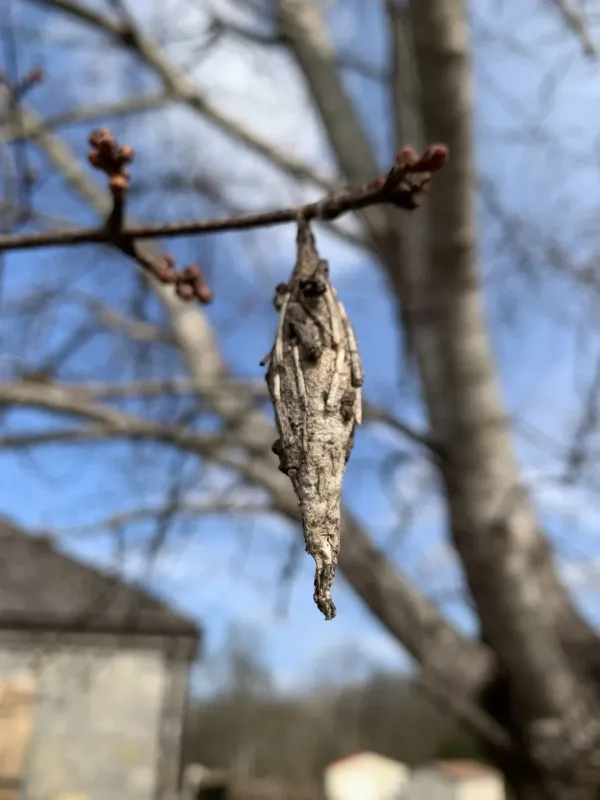
The bagworm moth (Thyridopteryx ephemeraeformis) belongs to the Psychidae family. Its most distinctive characteristic is the larval habit of constructing a portable protective case, or "bag," made of silk and plant debris, such as twigs, needles, or leaves.
Adult males are small, clear-winged moths capable of flight. Conversely, adult females are wingless, legless, and eyeless, remaining within their silk cases for their entire adult life, which makes them very difficult to detect during standard inspections.
The life cycle begins when larvae emerge in late spring from eggs laid by the female inside her old bag. They immediately begin constructing their own small bags, which they expand as they grow, camouflaging them with materials from the host plant.
After feeding and growing throughout the summer, the larvae pupate inside their bags. This developmental stage is spent in a sedentary position, often securely fastened to a branch by sturdy silk threads to ensure stability.
Winter is spent in the egg stage inside the female's old case. This protective environment ensures a high survival rate for the next generation, allowing the species to persist in various climatic conditions.
What it damages
Bagworms are highly polyphagous and are especially destructive to evergreen trees such as junipers, arborvitae, spruce, and pines. They can also defoliate deciduous trees, including maples, oaks, and fruit-bearing varieties.
Larvae consume foliage, leading to skeletonized needles and stripped leaves. Severe infestations often result in massive defoliation, which causes significant stress and can ultimately lead to the death of the tree if not treated.
The insects also damage trees by girdling small branches with the silk used to anchor their bags. This restricts the flow of nutrients and water, causing dieback in the affected parts of the canopy.
Young plantings are particularly vulnerable. A heavy infestation can kill a young tree in just one or two seasons, as they lack the energy reserves to recover from such intense defoliation.
In mature landscapes, while established trees might survive, their aesthetic value is permanently compromised by the ragged appearance caused by bagworm feeding and the presence of leftover bags.
Signs of infestation
The most reliable sign of an infestation is the presence of silk cases dangling from twigs. These cases often look like pine cones or dried debris, causing many gardeners to overlook them until the damage becomes visible.
The presence of partially eaten or "skeletonized" foliage at the top of the canopy is a strong indicator of active feeding by young larvae, which typically start their damage at the very tips of the branches.
Tough, silken cords holding the bags to the plant indicate that the insect is present and active. These attachments are designed to hold the bag securely through windy conditions.
Empty bags hanging from the tree after the flight period of the males suggest that reproduction has occurred and that eggs are likely present for the following season.
Visible thinning of the foliage or browning of branches that were previously healthy are late-stage signs indicating that the larval population has been feeding for several weeks.
Control measures
For smaller trees or light infestations, the most effective method is to manually pick the bags off the trees during the winter months. This removes the eggs before they hatch in the spring.
Biological control using Bacillus thuringiensis (Bt) is highly effective when applied while the larvae are still young and actively feeding, as it targets the caterpillars without harming beneficial insects.
Chemical insecticides should be timed to coincide with the period when larvae are outside their bags feeding. Once the larvae have grown large and secured their cases, contact insecticides become significantly less effective.
Regular scouting of landscape plants during the spring is crucial for identifying an outbreak before it spreads to healthy trees or causes excessive cosmetic damage.
- Manual hand-picking and disposal of bags in winter.
- Application of Bacillus thuringiensis (Bt) sprays.
- Systemic insecticide treatments for severe infestations.
- Monitoring nursery stock for signs of prior infestation.
Taxonomy
- Latin name
- Thyridopteryx
- Order
- Lepidoptera (butterflies)
- Family
- Psychidae
- EPPO code
- THYXSP
Discussion
No discussions yet — be the first.