
Canephora hirsuta
Canephora hirsuta
Description
How to identify
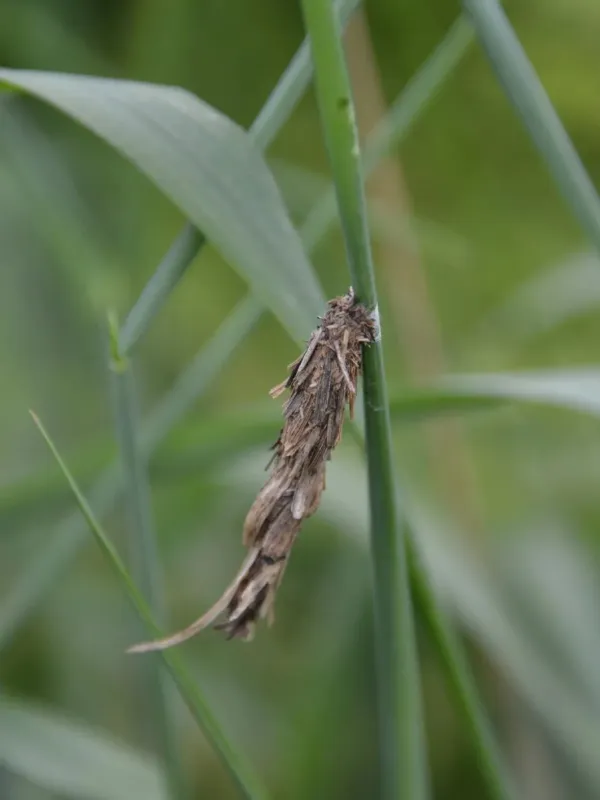
Canephora hirsuta, known as the hairy bagworm, belongs to the Psychidae family within the Lepidoptera order. This species is characterized by a remarkable sexual dimorphism, where adult males are winged moths capable of flight, while females are wingless and worm-like, remaining inside their silken cases throughout their lives.
The larvae, or caterpillars, are famous for constructing portable cases (bags) made from silk and debris such as bark fragments, twigs, and leaf parts. They spend their entire larval stage protected inside these cases, which camouflage them effectively against tree branches.
The life cycle is univoltine, meaning one generation per year. Pupation occurs inside the case, which the caterpillar firmly attaches to a substrate, typically a branch or trunk, using durable silk strands.
The larvae overwinter inside these cases, secured to the bark of trees. As temperatures rise in early spring, the caterpillars emerge or become active again to feed on the foliage of host plants.
The camouflage of the case is so perfect that it is often mistaken for a natural outgrowth, dry piece of wood, or debris, making the pest extremely difficult to spot until significant damage has already occurred.
What it damages
This species is a polyphagous feeder, affecting a wide range of woody plants. Typical host plants include fruit trees like apple, pear, and plum, as well as various berry bushes such as currants and raspberries.
Beyond cultivated orchards, Canephora hirsuta frequently attacks deciduous forest trees, including oak, birch, and willow, often spreading from wild populations to domestic gardens.
The damage is caused by the caterpillars, which consume leaf tissue, often causing skeletonization or irregular holes in the foliage. In cases of high population density, entire branches may be defoliated.
Repeated defoliation weakens the trees, leading to reduced photosynthetic capacity, stunted growth, and a significant drop in fruit yield for the subsequent season.
Young nursery stock is particularly vulnerable, as even minor damage to the canopy can interfere with proper tree development and weaken the overall vitality of the sapling.
Signs of infestation
The most prominent sign of infestation is the presence of small, moving "twigs" or "cocoons" on the branches and leaves of the plants. These are the protective cases housing the larvae.
Close inspection reveals that these objects move across the bark or leaf surfaces. The cases are usually constructed from local materials, making them blend seamlessly with the host plant.
Leaf damage appears as irregular edges, circular or jagged holes, and sometimes complete consumption of the leaf blade, leaving only the primary veins behind.
During the dormant season, one can observe the overwintering cases firmly attached to the branches or bark of the trees, often resembling dried buds or small bumps on the wood.
Increased activity of birds searching the bark in early spring can sometimes be a secondary indicator that a population of caterpillars is present on the trees.
Control measures
Manual removal of the cases during the winter or early spring is the most effective way to control small populations. Collecting and destroying the overwintering larvae prevents the outbreak in the following season.
Chemical control using stomach-contact insecticides is recommended during the early larval development stage, immediately after they emerge from overwintering and begin active feeding.
Biological control methods, such as utilizing Bacillus thuringiensis, offer an eco-friendly approach, effectively targeting the caterpillars while preserving beneficial garden insects and pollinators.
Proper orchard maintenance, including regular pruning and thinning of branches, reduces favorable sites for the caterpillars to attach their cases and improves the general health of the trees.
- Monitor population levels to time insecticide application accurately.
- Encourage natural predators like parasitic wasps and insectivorous birds.
- Avoid transporting infested wood or plant material from contaminated areas.
Taxonomy
- Latin name
- Canephora hirsuta
- Order
- Lepidoptera (butterflies)
- Family
- Psychidae
- EPPO code
- CANEUN
Discussion
No discussions yet — be the first.