
Canephora
Canephora
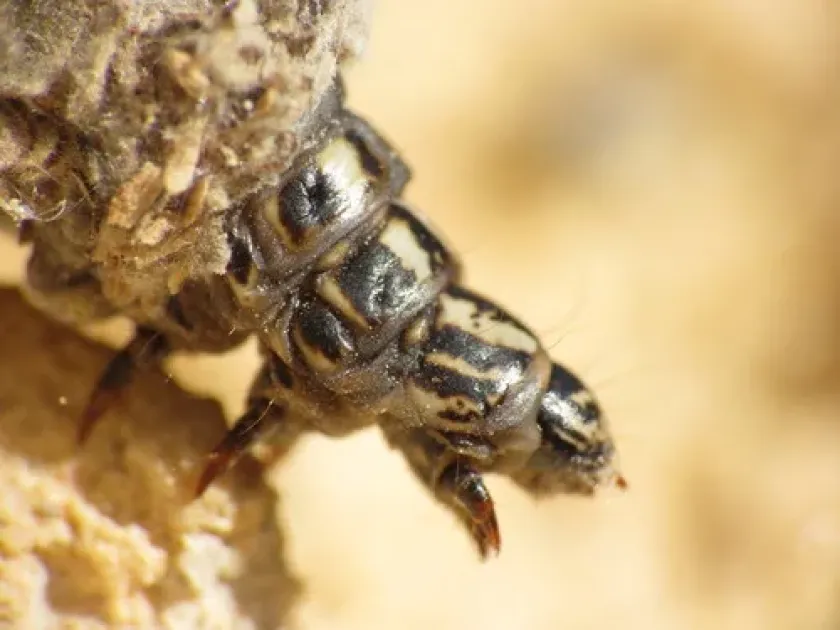
Description
How to identify
Canephora is a genus of moths belonging to the family Psychidae, commonly known as bagworm moths. These insects are famous for their unique behavior of constructing portable cases (bags) made of silk mixed with bits of leaves, twigs, or soil.
The larvae are rarely seen without their cases, which act as highly effective camouflage, making them resemble plant debris or small twigs. This cryptic lifestyle protects them from predators and often hides their presence from gardeners.
Adult males are typically fully winged and capable of flight, while females in many species remain inside their cases with vestigial wings and reduced mobility, focusing solely on egg-laying.
The construction material of the bag is highly specific to the host plant, reflecting the environment where the larva has been feeding throughout its development.
These insects are distributed globally and have evolved to occupy various niches, from deciduous forests to cultivated orchards, making them a diverse group of phytophagous insects.
What it damages
As polyphagous feeders, Canephora larvae consume a wide range of plant materials. In agricultural settings, they damage the foliage of fruit trees, vines, and several species of shrubs by skeletonizing leaves.
Heavy infestations lead to significant loss of photosynthetic leaf area, which weakens the plant’s overall vigor and can cause premature leaf drop, negatively impacting fruit yield and development.
During high-density outbreaks, larvae may graze on tender bark or young buds, causing physical distortion of stems and preventing the proper development of new growth points.
The wounds left by their feeding activity often serve as entry points for pathogens and secondary infections like fungi, which further degrade the host plant's health.
Young seedlings are particularly vulnerable, as even moderate feeding damage can stunt their growth or lead to mortality during sensitive stages of establishment.
When it appears
The life cycle of Canephora is typically univoltine, meaning there is one generation per year. Larvae become active in early spring as temperatures rise, signaling the start of their feeding period.
Peak feeding activity usually occurs during late spring and early summer when the larvae grow rapidly and expand their protective cases to accommodate their increasing body size.
Pupation takes place inside the bag, which the larva secures firmly to a twig or branch. This stationary phase usually occurs in mid-summer, marking the end of the feeding season.
Adult emergence typically happens in late summer. Males fly in search of females, and after mating, the female deposits eggs, often within her existing case or on the surrounding vegetation.
Overwintering occurs as young larvae protected within their cases, hidden in bark crevices or at the base of buds, where they wait for the next season's growth to resume.
Signs of infestation
The most telltale sign of a Canephora infestation is the presence of small, moving "twigs" or debris clumps on the leaves. Careful observation reveals these are living larvae carrying their cases.
Irregular leaf damage, including small holes and skeletonized veins, provides clear evidence that these larvae have been feeding on the canopy foliage.
Fine silk threads visible on twigs and leaves are used by the larvae to anchor themselves or move between branches, creating an untidy, slightly webbed appearance in infested areas.
Reduced growth, discoloration of leaves, and the presence of securely attached bags on stems during the late season are strong indicators of an established pest population.
The discovery of numerous empty or occupied bags throughout the garden in autumn is a warning signal of potential population pressure for the upcoming spring season.
Control measures
For small-scale infestations, manual collection and destruction of the bags is the most effective and eco-friendly control method to break the life cycle.
Biological control using Bacillus thuringiensis (Bt) is highly effective against early-instar larvae. This method is selective and preserves beneficial insects in the garden.
In commercial orchards or severe outbreaks, insecticides should be applied when larvae are young and actively feeding, ensuring better penetration and control.
Cultural practices, such as winter pruning and removing infested branches, significantly reduce the number of overwintering larvae and decrease the population density for the next year.
Promoting a healthy environment for natural predators, such as parasitic wasps and insectivorous birds, is a sustainable approach to keeping Canephora populations below damaging thresholds.
Taxonomy
- Latin name
- Canephora
- Order
- Lepidoptera (butterflies)
- Family
- Psychidae
- EPPO code
- CANESP
Discussion
No discussions yet — be the first.