
Bagworm moth Cryptothelea
Cryptothelea
Description
How to identify
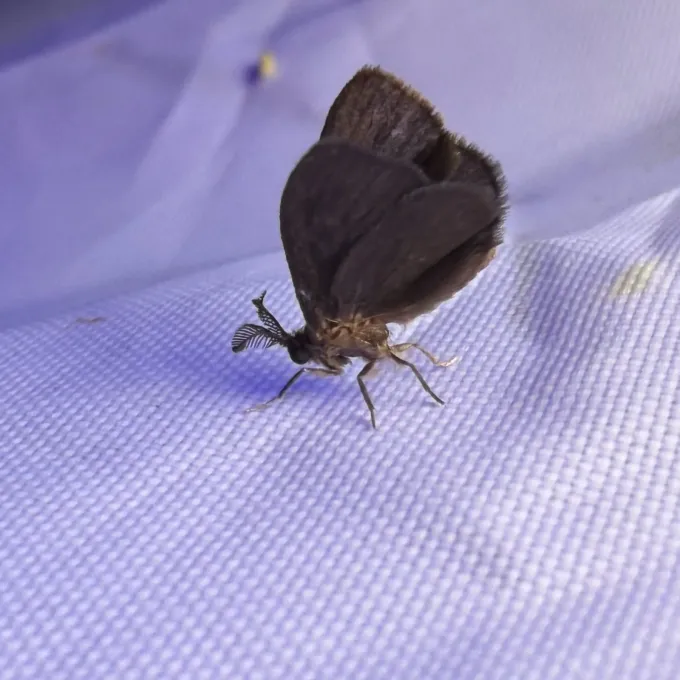
The Cryptothelea genus belongs to the Psychidae family within the order Lepidoptera. The appearance of adult individuals is highly dimorphic: males are small winged moths, while females are often wingless, legless, and eyeless, retaining a vermiform body shape.
The main defining feature of this pest is the unique protective "bag" (case) that the larva constructs from silken threads, bark particles, needles, dry leaves, and other plant debris. This cocoon accompanies the individual through all growth stages, providing camouflage from predators.
Inside the cocoon, the larva remains secure, periodically extending only the front part of its body to feed. Pupation also occurs directly within this dense plant-material housing, which makes the pest difficult to detect during its development.
Reproduction takes place within the cocoon: the fertilized female lays eggs directly inside her protective bag and subsequently dies. First-instar larvae leave the maternal cocoon and are dispersed by wind or crawl to adjacent branches to construct their own shelters.
The pest population can increase rapidly in favorable climatic conditions, especially during hot and dry periods, making control of this insect critical for both ornamental and fruit-bearing plant species.
What it damages
Cryptothelea bagworm larvae are polyphagous. They cause significant damage to a wide range of woody and shrub species, including conifers (thuja, juniper, spruce) and deciduous plants (apple trees, maples, roses, and various ornamental shrubs).
Primary damage is inflicted on young leaves, needles, buds, and the thin bark of branches. While feeding, the larvae consume the leaf blade, leaving behind skeletonized fragments or completely destroying the foliage, which leads to weakened photosynthesis.
During mass outbreaks, the pest can completely defoliate a plant in a short time. This results not only in a loss of aesthetic appeal but also in a significant decline in the plant's immune system, leaving it vulnerable to secondary infections.
For coniferous species, bagworms are particularly dangerous as needle damage regenerates extremely slowly. Mass needle consumption over several seasons may result in the death of individual branches or the entire specimen.
In the agricultural sector, the pest also damages fruit trees, reducing their productivity. Damage to young shoots causes stunted growth, which is critical for young seedlings in nurseries.
Signs of infestation
The primary sign of the pest's presence is the existence of specific cocoons tightly attached to branches or trunks using silk threads. Gardeners often mistake these for dry twigs or debris, which complicates early diagnosis.
On damaged leaves, one can observe characteristic feeding patches. Leaves may appear perforated or have "bitten" edges, as the larva feeds without ever leaving its protective shelter.
Reduced plant growth rates and premature yellowing or shedding of needles without apparent causes often indicate hidden larval activity in the lower crown or within dense foliage.
The presence of silken webbing, which larvae use to anchor their cocoons to the substrate, is also an indirect sign of infestation. In dry weather, larval activity becomes more noticeable as they move along the branches more frequently.
During the pupation period, the number of visible cocoons on the plant increases sharply, allowing for visual monitoring and assessment of the infestation level on the site.
Control measures
Mechanical control remains the most effective method for small areas. During winter and early spring, cocoons should be collected by hand and destroyed (burned), which drastically reduces the future population.
Biological preparations based on bacteria, such as Bacillus thuringiensis, show high efficacy against early-instar larvae. Treatment should be performed during the period of active larval feeding.
In cases of high infestation, systemic insecticides are applied. However, it is important to remember that the dense cocoon hinders the penetration of contact insecticides, so preference is given to systemic agents absorbed by the plant tissues.
Regular inspection of ornamental and fruit plantings during the growing season allows for pest detection before widespread crown damage begins. It is crucial to schedule treatments before the pest begins to pupate.
- Perform regular sanitary pruning of infested branches.
- Use sticky bands if necessary.
- Encourage natural entomophages (birds, predatory insects).
- Adhere to monitoring schedules from May through July.
Taxonomy
- Latin name
- Cryptothelea
- Order
- Lepidoptera (butterflies)
- Family
- Psychidae
- EPPO code
- CRYTSP
Discussion
No discussions yet — be the first.