
Pocket gophers
Thomomys
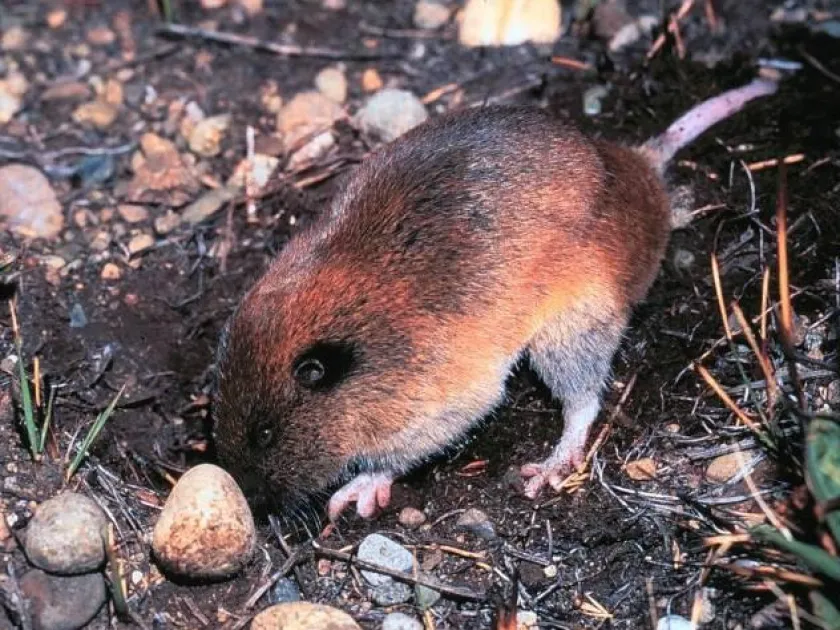
Description
How to identify
Pocket gophers (genus Thomomys) are small, burrowing rodents that spend almost their entire lives underground. They are characterized by sturdy bodies, tiny eyes and ears, and powerful foreclaws designed for digging complex tunnel systems.
They belong to the family Geomyidae. A defining feature of these rodents is their fur-lined, external cheek pouches, which they use to transport food rather than store it in their living quarters. This allows them to forage efficiently while staying hidden.
Their body length ranges from 13 to 30 centimeters. The fur color generally matches the soil where they reside, providing effective camouflage during the brief moments they spend on the surface. They are solitary and highly territorial, often fiercely defending their tunnel networks.
The life cycle of pocket gophers is tied to soil condition and food availability. They prefer moist, productive soils where roots and tubers are abundant. In optimal conditions, they can produce multiple litters per year, leading to rapid population growth.
Unlike moles, which leave volcano-shaped mounds, pocket gophers typically create crescent-shaped mounds with a plug blocking the entrance. This distinct pattern is the primary way for agronomists to differentiate them from other digging animals.
What it damages
Pocket gophers cause significant agricultural damage by feeding on roots, tubers, bulbs, and rhizomes. They are notorious for killing young fruit trees and shrubs by chewing through their root systems, causing the plants to wilt suddenly and die.
Commonly affected crops include potatoes, carrots, beets, and ornamental flowers like lilies and tulips. A single gopher can destroy a large portion of a vegetable crop in a very short amount of time, resulting in severe economic losses.
These rodents frequently damage irrigation infrastructure by chewing through drip lines and pipes. This leads to water loss, soil saturation, and irregular plant growth, making it difficult to maintain proper moisture levels across a field.
Their tunneling activity destabilizes the soil, contributing to erosion, especially on sloped terrain. Additionally, the mounds of soil they create can hinder mechanical harvesting equipment, potentially damaging machinery or creating uneven surfaces.
Root damage caused by gophers makes plants more susceptible to secondary fungal and bacterial infections. Even if the plant manages to survive the initial feeding, the damage to its vascular system often results in long-term stunted growth.
Signs of infestation
The most noticeable sign of a pocket gopher infestation is the presence of fresh, crescent-shaped soil mounds. These mounds usually have a clear plug of soil in the center, which serves as the entrance to the tunnel system.
Another indicator is the sudden collapse or wilting of garden plants. If a plant can be easily pulled from the ground with little resistance and lacks a root system, it is a clear sign that a gopher has been feeding in that specific area.
Surface tunnels, which look like small, meandering ridges in the soil, often appear after irrigation or heavy rain. These indicate that the gopher has been actively digging just below the surface in search of food.
Ground subsidence or small depressions around trees can occur as gophers hollow out the earth beneath the roots. This can eventually affect the stability of the tree, making it tilt or even fall during periods of high wind.
During winter months, signs become more apparent around woody perennials. The rodents may feed on the bark near the base of the trunk or expose roots that were previously buried deep, indicating a severe infestation.
Control measures
The most effective method for controlling pocket gophers is the use of mechanical traps placed within active tunnel systems. Successful trapping requires identifying which part of the tunnel system is currently in use.
Cultural control methods involve regular deep tillage, which disrupts the rodent's tunnel network and forces them to vacate the area. This is most effective in large-scale agricultural settings before planting season begins.
Ultrasonic repellers can be used to discourage rodents from settling on a property. However, their efficiency is highly dependent on soil type and moisture, as sound transmission is significantly reduced in loose or dry ground.
For protecting specific plants, subterranean wire baskets provide a reliable physical barrier. Planting trees and shrubs inside these baskets prevents the gophers from accessing the roots without inhibiting plant growth.
- Installing metal mesh barriers up to 60 cm deep.
- Removing vegetation that provides cover for gophers near field edges.
- Encouraging natural predators like owls and hawks to hunt in the area.
- Using toxic baits strictly within closed tunnels, following safety protocols.
Taxonomy
- Latin name
- Thomomys
- Order
- Rodents
- Family
- Geomyidae
- EPPO code
- THMSSP
Discussion
No discussions yet — be the first.