
Plains pocket gopher
Geomys bursarius
Description
How to identify
The plains pocket gopher (Geomys bursarius) is a rodent belonging to the family Geomyidae. These animals are highly adapted for a subterranean lifestyle, featuring powerful forelimbs equipped with long claws for excavating complex burrow systems.
Adult individuals typically grow to 20–25 cm in length and possess unique, fur-lined cheek pouches that open to the outside, which they use to carry food and nesting materials back to their burrows.
They have small eyes and ears, as their sensory perception relies more on their sensitive whiskers and tail, which help them navigate their pitch-black tunnels, even when moving backwards.
Their fur color ranges from dark brown to grayish, providing camouflage when they briefly emerge from their burrows to dump excavated soil or forage near the surface.
Pocket gophers are solitary creatures that maintain individual tunnel systems, vigorously defending their territory against other gophers, which makes controlling large populations challenging for farmers.
What it damages
This pest causes severe damage by feeding on the root systems of various crops, including potatoes, sugar beets, carrots, and the roots of young fruit trees and ornamental shrubs.
By consuming the vital roots, the gopher causes sudden wilting and eventual death of the affected plants, leading to significant losses in field yields and orchard productivity.
In addition to direct feeding, the burrowing activity severely compromises the soil structure, creating voids that lead to root desiccation and uneven irrigation distribution across the field.
Gophers prefer fertile, easy-to-dig soils, making them particularly destructive in agricultural zones where high-value vegetable crops or specialized seed productions are located.
While their diet consists mostly of underground plant parts, they occasionally pull entire plants into their burrows, causing immediate gaps in crop rows and reducing overall harvest quality.
Signs of infestation
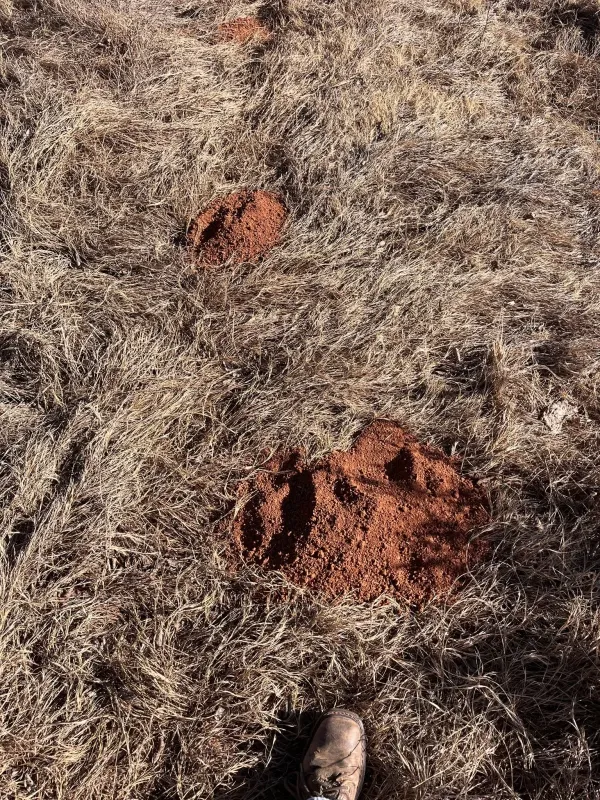
The most prominent sign of a gopher infestation is the presence of crescent or fan-shaped soil mounds, often featuring a distinct plug of earth where the gopher has pushed out debris.
Unlike mole hills, which are circular and piled high, gopher mounds are flatter and usually arranged in lateral lines, mapping out the route of their extensive underground tunnels.
Sudden wilting of plants in an otherwise healthy field is a strong indicator that a gopher has severed the primary taproot below the surface, cutting off the plant's nutrient supply.
Soil settling or depressions appearing after rainfall often indicate the collapse of old tunnels, pointing to the long-term presence of gophers in that specific field sector.
Visible signs of vegetation being dragged into the ground or small areas of clipped stalks around mounds are clear evidence of active feeding and foraging activity near the burrow exits.
Control measures
Effective gopher control often involves the use of specialized traps placed within active tunnel segments. Success requires identifying the most recently used tunnels to maximize trap efficiency.
Toxic baiting is another common strategy, requiring the insertion of poisoned baits deep into the tunnels, followed by sealing the opening to prevent the gopher from pushing the bait back out.
Cultural control measures include deep plowing or tilling, which destroys the structural integrity of the tunnel systems, causing the rodents to abandon the disturbed territory.
Exclusion methods, such as installing underground mesh fencing, can be effective for protecting high-value crops or small orchard areas from gopher intrusion.
- Monitor fields frequently for fresh soil mounds to manage the population early.
- Use wire mesh baskets to protect the root zones of newly planted trees.
- Encourage predatory birds like hawks and owls to nest near fields to provide natural biological control.
Taxonomy
- Latin name
- Geomys bursarius
- Order
- Rodents
- Family
- Geomyidae
- EPPO code
- GEOMDU
Discussion
No discussions yet — be the first.