
Tetragnatha sutherlandi
Tetragnatha sutherlandi
Description
How to identify
Tetragnatha sutherlandi belongs to the family Tetragnathidae, known as long-jawed orb weavers. This species is specifically adapted to agroecosystems with high humidity levels and stagnant water, which are typical characteristics of rice paddies.
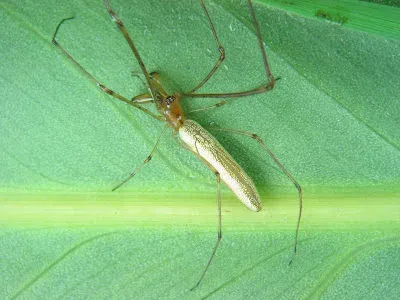
These spiders have a very elongated body and disproportionately long legs, which help them remain stable on the stalks of cereal crops. Their color varies from light yellow to brownish, providing excellent camouflage among the dense vegetation of a rice field.
A distinctive feature of this species is the presence of elongated chelicerae, which are particularly prominent in males. They are known for weaving thin, extensive orb webs directly over the water surface, stretching between rice plants.
The life cycle is closely linked to the water management schedule of rice cultivation. The spider progresses through egg, nymph, and adult stages, successfully thriving in the humid microclimate created by the crop canopy.
While often considered neutral predators, their sheer numbers in commercial rice fields can change their role within the agroecosystem, making them a subject of observation for agronomists.
What it damages
The primary concern regarding Tetragnatha sutherlandi is its impact on rice (Oryza sativa). Although they are primarily predatory, the physical presence of their dense silk webs creates significant problems for the crop's development.
The silk webs can bind together rice leaves, which physically hinders the plant's natural growth and interferes with photosynthesis. This reduced light intake leads to weakened stalks and poor vegetative health during critical stages of development.
Furthermore, the accumulation of webs on the top of the plants can trap moisture, promoting the development of fungal infections in the areas where the leaves are bound. This leads to indirect yield losses due to decreased grain quality.
In cases of severe infestation, the physical weight of the silk and the structural damage to the leaf tips can cause the plants to lean or become stunted, complicating the maturation of the panicles.
Understanding the density thresholds is key, as low populations are usually harmless, but massive outbreaks during the vegetative phase can require intervention to ensure optimal yield results.
When it appears
The appearance of these spiders coincides with the flooding of rice paddies and the onset of the active growing season. Population peaks typically occur during the hottest months of summer, which provide the optimal environment for reproduction.
The rate of population growth is highly dependent on ambient temperatures, with hotter seasons resulting in multiple, rapid generations. As the season progresses into autumn and fields are drained for harvest, the population naturally declines.
Signs of infestation
The most obvious sign of an infestation is the presence of delicate, sticky webs visible between rice leaves, particularly noticeable in the early morning when dew collects on the silk threads.
Closer inspection of the fields reveals adult spiders resting along the stems with their legs stretched longitudinally, a classic defensive posture for this genus. Yellowing of leaf tips in localized clusters is also a strong indicator of web interference.
Control measures
Cultural control is the most effective method, specifically the careful management of water levels in rice paddies. Draining the fields during specific growth stages disrupts the spiders' web-building activities and forces them to vacate the area.
Biological control plays a significant role in maintaining the population balance. Encouraging predatory insects and birds that feed on spiders can keep their numbers below the economic injury level without the need for chemical intervention.
Chemical control should be considered a last resort. If insecticides must be used, they should be chosen carefully to target the pest while minimizing the impact on beneficial insects that naturally inhabit the rice agroecosystem.
Sanitation of the field borders, including the removal of weeds that act as alternative hosts during the early stages of the season, can significantly reduce the initial influx of spiders into the primary crop.
Regular monitoring of the rice canopy during the peak summer months allows agronomists to determine if the population density warrants treatment, ensuring that only targeted and necessary measures are taken.
Taxonomy
- Latin name
- Tetragnatha sutherlandi
- Family
- Tetragnathidae
- EPPO code
- TETGSU
Discussion
No discussions yet — be the first.