
Tetragnathidae
Tetragnatha
Description
How to identify
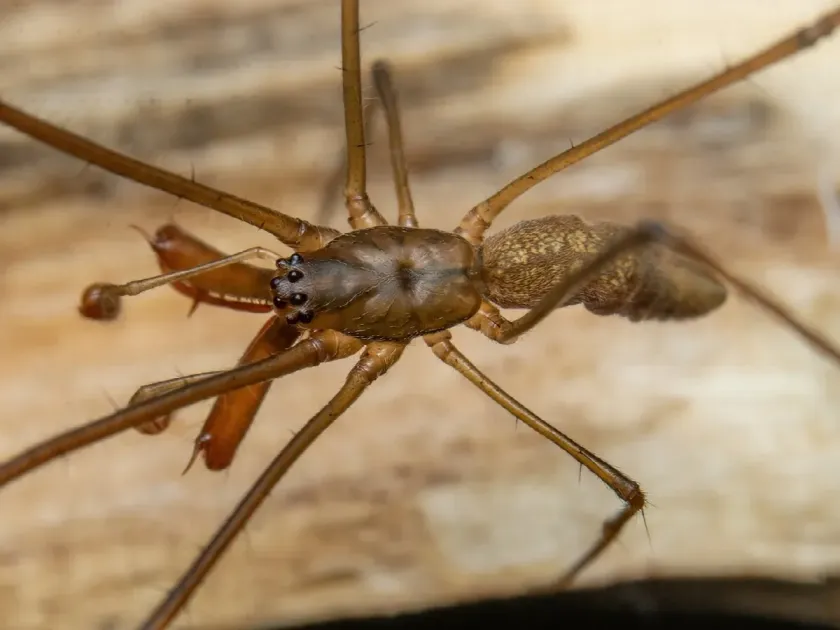
Tetragnathidae, commonly known as long-jawed orb weavers, are a family of spiders characterized by their elongated, slender bodies. They are often confused with other spider families due to their specific resting posture, which involves stretching along plant stems.
A distinctive feature of this family is their hypertrophied chelicerae, especially in males, which give them a unique appearance. These appendages are used during mating displays and territorial defense between competing males.
These spiders are usually found near water or in humid environments within agricultural fields. Their legs are remarkably long, enabling them to navigate their web structures efficiently without interfering with the capture threads.
The coloration of Tetragnathidae species is generally light, often featuring shades of silver, white, or pale brown. This color scheme allows them to blend perfectly with cereal crops and grasses, providing camouflage from predators like birds and wasps.
Despite their predatory nature, they are often considered part of the beneficial agro-ecosystem, although their web-building activities can sometimes conflict with agricultural management practices.
What it damages
The primary concern regarding Tetragnathidae in agriculture is the creation of dense webbing across crop canopies. This webbing can mechanically bind leaves and shoots, leading to stunted growth or deformed development of the plant tissue.
Large quantities of silk can reduce the photosynthetic capacity of the plant by shading the leaf surface, which can lead to reduced biomass production in dense monoculture environments.
The spider silk acts as a trap for debris, dust, and fungal spores. This accumulation increases the humidity around the leaf surface and promotes the development of various plant diseases, potentially necessitating additional fungicide treatments.
In high-value crops like berries or greenhouse vegetables, the presence of spider silk reduces the commercial value of the produce, as it requires labor-intensive cleaning and compromises the aesthetic appeal of the harvest.
While they feed on insects, an excessive number of spiders can disrupt the natural balance of insect populations in a field, potentially leading to the decline of other beneficial predators or, in rare cases, hindering pollination efficiency.
When it appears
Tetragnathidae activity peaks during the growing season, starting from late spring when temperatures are consistently warm. This is when juveniles emerge from wintering sites to colonize the emerging foliage.
The mid-summer period represents the maximum density of the population. At this stage, the availability of prey and the structural complexity of the crops provide ideal conditions for web maintenance and reproduction.
As autumn approaches, the population begins to decline. Adult spiders prepare for wintering, often placing egg sacs in protected environments such as bark crevices, soil gaps, or deep within plant residues.
Environmental humidity is the most significant factor affecting their lifecycle. Periods of heavy rain or high humidity favor rapid development and expansion, while dry, hot spells tend to decrease their activity.
The lifecycle typically includes one generation per year in temperate climates, though some species may exhibit faster development cycles in warmer regions or controlled environments like greenhouses.
Signs of infestation
The most visible sign of a Tetragnathidae presence is the appearance of delicate, horizontal or sloped webs between plant stems. These are particularly noticeable in the early morning when dew collects on the silk threads.
Leaf curling or binding at the top of the plant canopy is a common symptom of high spider activity. This binding is a structural result of the spider’s web-building behavior rather than direct feeding damage.
Close inspection of the underside of leaves or the junctions of stems will often reveal small, silk-wrapped egg sacs. These are usually white or pale yellow and securely attached to the plant surface.
A decrease in the movement of other insects around the crop can serve as a biological indicator of significant spider presence, as Tetragnathidae act as effective localized predators.
Discoloration or yellowing on leaf tips where webs are densest suggests that the web is blocking nutrient transport or light, marking the area where spider concentration is highest.
Control measures
Management of Tetragnathidae should focus on integrated pest management (IPM) practices, as they are not primary pests. Routine cleaning of field borders and irrigation management can effectively limit their expansion.
Physical removal of weeds and crop residues after harvest is crucial for destroying overwintering sites, which significantly reduces the initial population density for the next planting cycle.
Chemical control is rarely recommended unless the infestation density interferes with mechanical harvest or creates significant disease risk. When necessary, use targeted insecticides with low impact on other beneficial insect populations.
In greenhouses, maintaining airflow and regulating relative humidity are effective cultural controls that keep spider activity within manageable limits without the need for chemical intervention.
- Maintain clear field margins;
- Implement proper crop rotation schedules;
- Use physical barriers in high-value vegetable production;
- Monitor population density through visual scouting.
Taxonomy
- Latin name
- Tetragnatha
- Family
- Tetragnathidae
- EPPO code
- TETGSP
Discussion
No discussions yet — be the first.