
Tetragnatha mandibulata
Tetragnatha mandibulata
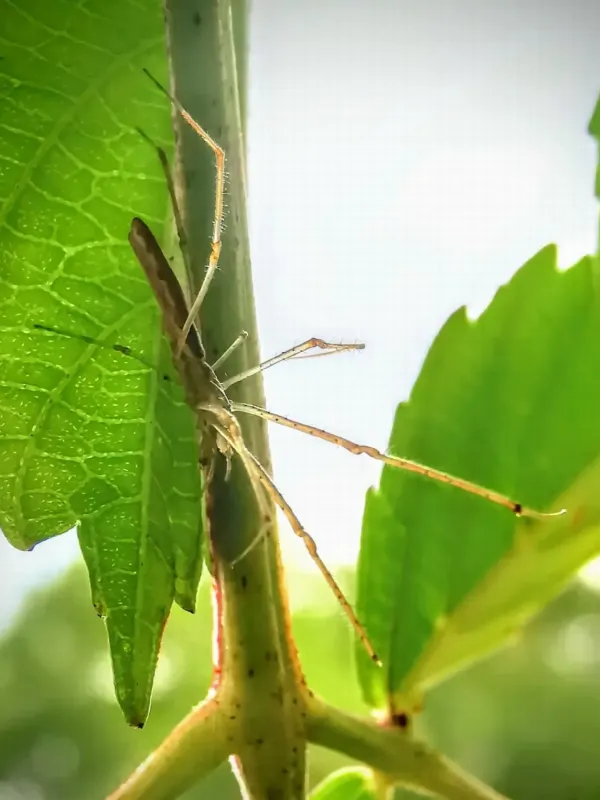
Description
How to identify
Tetragnatha mandibulata is a spider species belonging to the family Tetragnathidae, commonly known as long-jawed orb weavers. Its morphology is highly adapted for a life among tall grasses and aquatic plants.
The body is elongated and thin, which acts as perfect camouflage when resting against rice stems or leaves. Their coloration usually ranges from pale yellow to brownish, blending seamlessly with the vegetation.
A distinctive feature of this species is the disproportionately large chelicerae in adults. Their legs are remarkably long, allowing them to stretch their body out to mimic a blade of grass.
Classified under the order Araneae, these spiders are predominantly predators but are often found in high densities within rice agroecosystems where they can interfere with crop health.
Their biology is heavily dependent on moisture and humidity, which is why they are most frequently encountered in flooded paddy fields where they construct their webs.
What it damages
Rice (Oryza sativa) is the primary crop affected by this species. The spiders utilize the foliage as a structural foundation for their hunting webs, often spanning between multiple plants.
Mechanical damage to the leaves occurs when the spiders weave dense webs that pull the leaves together, restricting growth and causing physical deformation of the leaf blades.
The excessive webbing can block sunlight from reaching the lower leaves, negatively impacting the plant's photosynthesis and overall growth rate during the vegetative stage.
Furthermore, the high density of spider webs creates a microclimate with trapped moisture, which significantly increases the risk of fungal infections and mold development on the rice plants.
Economic damage is observed when the population density reaches high levels, leading to stunted plants and a reduction in final grain yield due to prolonged environmental stress.
When it appears
The activity of Tetragnatha mandibulata is tightly synchronized with the rice growing season and the duration of field flooding. They thrive during the active growth phases of the crop.
The life cycle encompasses several developmental stages that occur within or near the rice fields. High humidity is a critical requirement for their successful reproduction and egg-laying.
They are most active during warm, humid months, aggressively building and maintaining webs to capture prey and expand their territory across the paddy fields.
As the season nears its end and farmers begin to drain the fields, the spider population naturally declines as they migrate toward the surrounding non-flooded vegetation.
Multiple generations can be completed within a single growing season, provided that environmental conditions remain stable and moisture is consistently available for their survival.
Signs of infestation
The most prominent sign of infestation is the presence of extensive webbing stretched between rice stems, which becomes clearly visible in the morning due to dew droplets.
Leaf twisting and clumping in the upper canopy is a classic sign of spider activity. The webs effectively tie the foliage together, leading to visible distortions in the plant structure.
Upon close inspection, one can identify the spiders themselves, often resting motionless along the central vein of the leaf, demonstrating their remarkable camouflage.
The presence of fine spotting or fecal matter deposited on the leaves beneath the webs confirms that the spiders have been residing in those areas for an extended period.
In cases of heavy infestation, plants may show signs of general weakness, chlorosis, or yellowing tips due to the physical obstruction caused by the spider webs.
Control measures
Managing water levels in the rice paddies is one of the most effective mechanical controls, as temporary drying disrupts the habitat and removes the basis for their web-building.
Cultural practices, such as keeping field bunds and surrounding areas free of weeds, help to reduce potential shelter sites for spiders, thereby lowering the initial population pressure.
Chemical control should be applied judiciously only when damage thresholds are exceeded, preferably using selective insecticides that do not harm beneficial insects or pollinators.
- Implementation of crop rotation to break the pest's reproductive cycle.
- Encouraging natural predators and birds that feed on spiders within the field.
- Regular monitoring of web density to identify outbreaks before they cause significant yield loss.
Successful management relies on preventive cleaning of irrigation channels and maintaining a balanced agroecosystem to prevent the mass proliferation of this spider species.
Taxonomy
- Latin name
- Tetragnatha mandibulata
- Family
- Tetragnathidae
- EPPO code
- TETGMA
Discussion
No discussions yet — be the first.