
Common box turtle
Terrapene
Description
How to identify
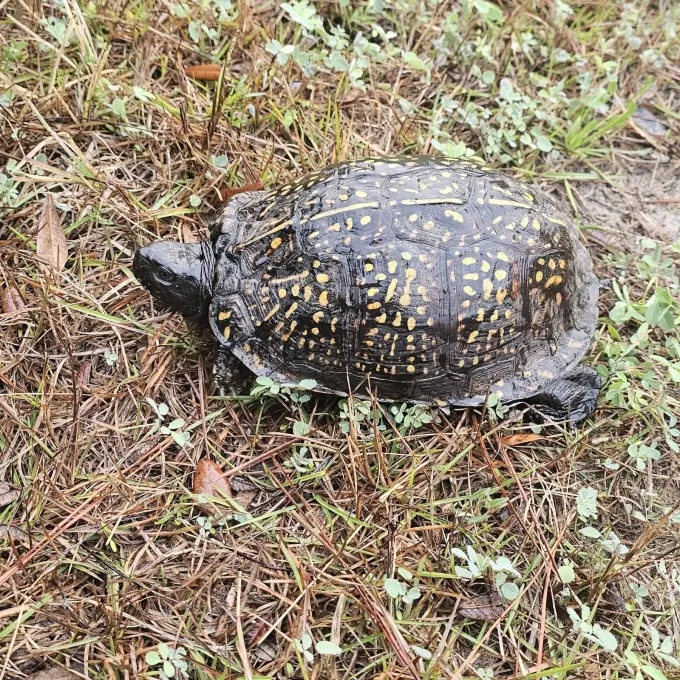
The common box turtle (Terrapene carolina) is a species within the family Emydidae. It is a terrestrial turtle recognized by its high-domed, sturdy shell, usually measuring 15–20 cm in length.
The shell exhibits various patterns of yellow, orange, or olive spots against a dark brown or black background, providing excellent camouflage in wooded environments.
These turtles possess a hinged plastron, allowing them to close their shells tightly against potential threats or predators, a defense mechanism that makes them robust residents.
They are primarily omnivorous, which brings them into contact with human agricultural areas where they forage for fruits, insects, and vegetation.
Active mainly during the day, they prefer damp conditions and are frequently found in gardens that provide both cover and an abundance of food sources.
What it damages
In a garden setting, the common box turtle can cause significant damage by feeding on low-growing crops, particularly those that are ripening on the ground.
They are known to consume ripe tomatoes, strawberries, cucumbers, and other soft fruits, leaving large, jagged bite marks that ruin the harvest.
Beyond direct feeding, these turtles can trample young seedlings and fragile shoots while navigating through vegetable patches, causing mechanical damage.
Their foraging behavior often disrupts mulch layers and protective coverings, exposing the soil and roots to potential drying or pest infestations.
By spending time in specific garden areas, they can lead to soil compaction, which hinders the healthy development of root systems in garden crops.
When it appears
Activity is most pronounced during the warm spring and summer months when metabolic rates rise and food availability is at its peak.
Turtles are especially active following rainfall, as moisture encourages them to leave their shaded shelters and explore for food in garden areas.
As temperatures begin to drop in the autumn, their foraging activity diminishes, and they seek out suitable locations for winter hibernation.
The peak period of damage often coincides with the harvest season of summer berries and vegetables, as these provide a high-sugar energy source for the turtles.
During the hottest periods of the summer, they tend to restrict their activity to the cooler dawn and dusk hours to avoid heat stress.
Signs of infestation
One of the primary indicators of a box turtle presence is the occurrence of smooth, shallow tracks across loose garden soil or mud.
Evidence of feeding includes fruits with irregular, hollowed-out sections or missing pieces that show clear signs of beaked biting.
The presence of small, bowl-shaped depressions or "forms" in the dirt indicates where the turtle has been resting or hiding during the heat of the day.
Excrement containing visible plant fibers and fruit seeds is a clear sign that the turtle has been foraging on your garden produce.
Displaced mulch, overturned small plant markers, and flattened foliage are common environmental signatures of a turtle traversing your vegetable beds.
Control measures
The most reliable control method is the installation of physical barriers, such as small wire mesh fencing or garden edgings, to block access to the beds.
Maintaining a clean garden by removing dense weed patches and brush piles eliminates the shelter that attracts turtles to your property.
Implementing raised garden beds or using trellises keeps sensitive produce off the ground, effectively removing the turtle's food source.
Frequent and prompt harvesting of ripe fruits ensures that the produce is not left on the ground where it can easily be accessed by foraging animals.
If you encounter a turtle causing consistent damage, gently relocating it to a nearby woodland or natural habitat is the best humane solution.
Taxonomy
- Latin name
- Terrapene
- Family
- Emydidae
- EPPO code
- TRRPSP
Discussion
No discussions yet — be the first.