
Painted turtle
Chrysemys picta
Description
How to identify
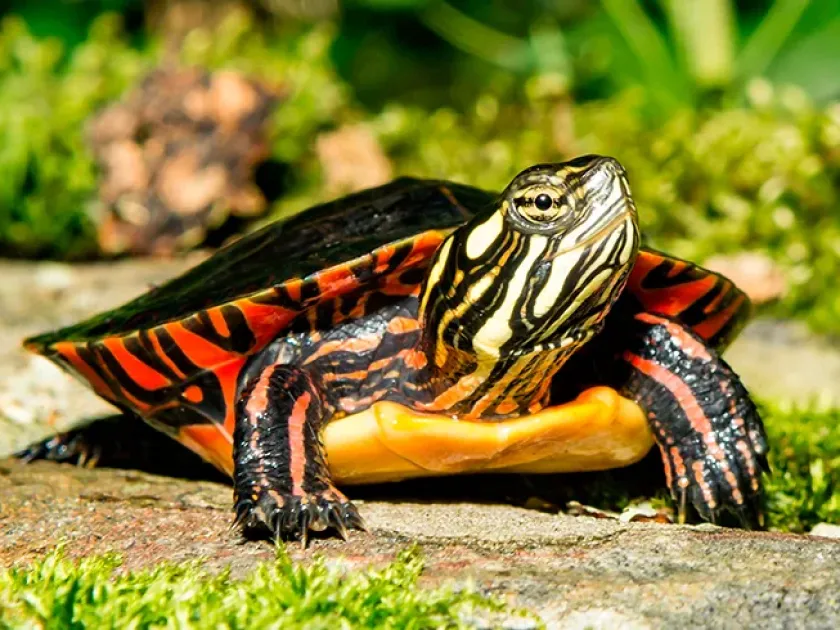
The painted turtle (Chrysemys picta) is a member of the Testudines order and the Emydidae family. It is a freshwater species known for its smooth, dark shell featuring distinctive red and yellow markings.
Adults can grow up to 25 centimeters in length. In agricultural settings, they are commonly found in irrigation channels, ponds, and flooded rice fields where they find optimal conditions for basking and foraging.
They are diurnal animals that frequently haul out onto banks or logs to bask in the sun. Their high mobility allows them to traverse between various water bodies, complicating population control efforts.
Breeding occurs during the spring and summer months. Females lay eggs in loose soil near the water's edge, often coinciding with the onset of agricultural field operations.
The biology of this species is characterized by an omnivorous diet, which makes them potential consumers of both aquatic fauna and young succulent vegetation in irrigation areas.
What it damages
The primary crops affected are rice and various aquatic vegetables grown in flooded environments. Turtles can consume young seedlings, causing significant crop thinning.
Beyond direct plant consumption, the pest causes mechanical damage by burrowing into earthen dams and levees, which leads to uncontrolled water leakage from irrigation systems.
Economic damage includes the cost of repairing hydraulic infrastructure and crop losses due to disrupted water levels in flooded fields.
Consumption of beneficial aquatic plants disrupts the ecological balance within rice fields, which can negatively impact the overall crop health and yields.
When population density is high, the damage becomes systematic, necessitating intervention to protect agricultural resources and irrigation efficiency.
When it appears
Turtles' activity is directly linked to water temperature. After emerging from hibernation in spring, there is a peak in foraging activity coinciding with the crop germination phase.
The summer period marks the peak of their movement, during which individuals actively explore new areas of fields, entering via drainage pipes and channels.
In autumn, activity levels gradually decline, although they continue to consume organic matter and aquatic vegetation until temperatures drop significantly.
During the winter, turtles undergo brumation, burying themselves in the silt at the bottom of ponds, rendering them inactive and inaccessible on fields during this period.
Regional climate conditions dictate the duration of the season during which the pest poses a threat to agricultural operations and field infrastructure.
Signs of infestation
The presence of tracks on the moist soil near banks and irrigation channels serves as an initial indicator of their presence.
Discovery of severed or partially consumed rice seedlings at or below the water surface is a characteristic sign of adult turtle foraging.
Formation of burrows and tunnels in earthen dams leads to water leakage from fields, which acts as a clear diagnostic feature of infestation.
- Direct visual sighting of individuals basking in the sun during the day.
- Finding shell fragments or nest sites in soil near agricultural plots.
- Unexplained fluctuations in water levels within irrigation systems.
Analysis of organic debris in water can also confirm the presence of the species if crop damage remains otherwise ambiguous.
Control measures
The primary control method involves installing fine-mesh physical barriers at the entry points of irrigation channels to prevent turtle ingress onto fields.
Reinforcing banks and dams with stone or concrete prevents the animals from burrowing, thereby reducing the site's attractiveness for shelter and nesting.
Mechanical trapping using specialized funnels in areas of high concentration is an effective way to manage and reduce the local population.
Encouraging natural predator populations around the farm can assist in the biological regulation of turtle numbers.
Proper agricultural management, including timely weed control and maintaining consistent water levels, helps minimize conditions that favor the proliferation of this pest.
Taxonomy
- Latin name
- Chrysemys picta
- Family
- Emydidae
- EPPO code
- KHRMPI
Discussion
No discussions yet — be the first.