
Thistle fly
Tephritis dilacerata
Description
How to identify
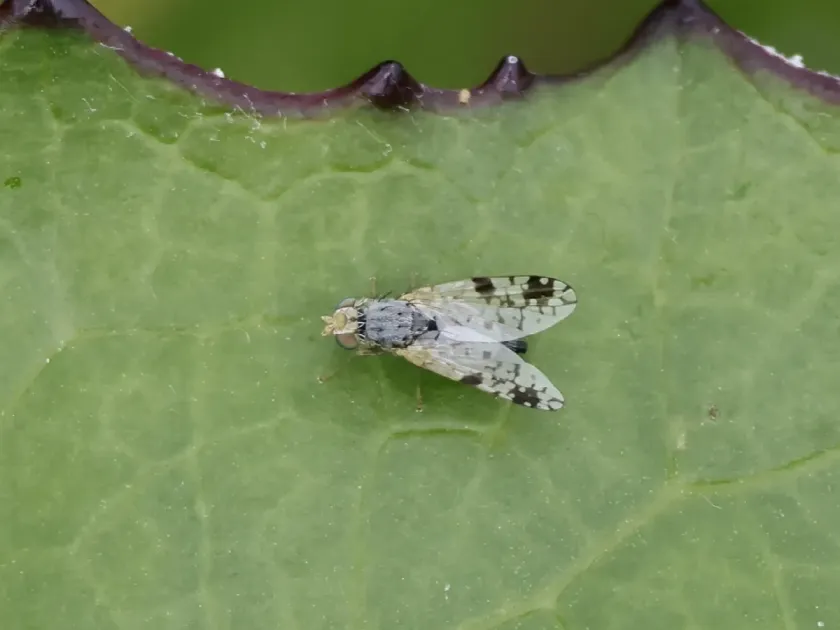
The thistle fly (Tephritis dilacerata) belongs to the Tephritidae family, order Diptera. It is a small insect widely known for the intricate, mottled, or reticulated pattern on its wings.
Adult flies are approximately 4–6 mm in length. Their bodies are typically yellowish-brown and covered in fine, short hairs, which is typical for many species within the genus Tephritis.
The larvae of this fly are legless and creamy-white, adapted for development inside the flower heads of their host plants. They are rarely seen outside of the plant tissues.
Identifying the species in the field often involves observing them on the flower heads of sow thistles (Sonchus species) during warm, sunny weather conditions.
This species is highly specialized, meaning it does not pose a threat to crops, as it has co-evolved specifically with the thistle family.
What it damages
The primary host plant for this insect is the perennial sow thistle (Sonchus arvensis). The fly larvae feed on the floral tissues, effectively destroying the plant's reproductive organs.
By consuming the developing seeds, the fly acts as a natural biological control agent, significantly reducing the viability of the thistle population in a given area.
In agricultural systems, this insect is generally considered beneficial rather than harmful, as it helps suppress the spread of one of the most persistent weeds.
The damage caused by the larvae prevents the dispersal of weed seeds, which otherwise could be carried by the wind over long distances.
Therefore, the economic impact of the thistle fly is positive, as it contributes to the reduction of chemical herbicide usage for thistle control.
When it appears
The lifecycle of the thistle fly is perfectly synchronized with the phenology of the thistle. Adults typically emerge in the spring or early summer to coincide with the budding phase of the thistle.
Mating and oviposition occur throughout the flowering season. Females lay eggs deep into the flower heads to ensure larvae have immediate access to food.
The larval stage lasts for several weeks, covering the period from bud formation to seed maturation. After feeding, they progress to the pupal stage.
Overwintering usually occurs in the pupal stage, either within the remnants of the dried flower head or in the soil surface layer, depending on the environmental conditions.
Depending on the climatic zone, the thistle fly may complete one or two generations per year, with the emergence timing heavily dependent on local temperature and rainfall patterns.
Signs of infestation
Visual signs of infestation include the stunted development of thistle flower heads. Instead of producing fluffy seeds, the infested heads remain shriveled or deformed.
A closer inspection often reveals larvae inside the capitulum (flower head) or evidence of waste (frass) left behind by the feeding larvae.
Discoloration of the outer bracts of the flower head is another common sign that the internal structure has been compromised by insect activity.
The absence of viable, pappus-bearing seeds is the most reliable indicator that the thistle fly has successfully infested the weed population.
Adults can be observed resting on top of the flower heads, especially during midday, which serves as a visible warning of ongoing infestation.
Control measures
There is no need to control the thistle fly, as it performs a valuable service by limiting the seed production of the invasive sow thistle weed.
Standard weed management practices, such as mowing or herbicide application, are sufficient to manage thistle populations, which concurrently regulates the fly's population.
If researchers or farmers need to limit the fly population for specific trials, insecticide applications during the budding stage are the most effective method.
Integrated Pest Management (IPM) strategies encourage the preservation of such natural enemies to maintain ecological balance and suppress weed growth without chemicals.
Cultural methods, such as deep plowing and early-season cultivation, are the best approach for long-term thistle management, which indirectly manages the thistle fly habitat.
Taxonomy
- Latin name
- Tephritis dilacerata
- Order
- Diptera (flies)
- Family
- Tephritidae
- EPPO code
- TEPRDI
Discussion
No discussions yet — be the first.