
Moth fly
Telmatoscopus albipunctatus
Description
How to identify
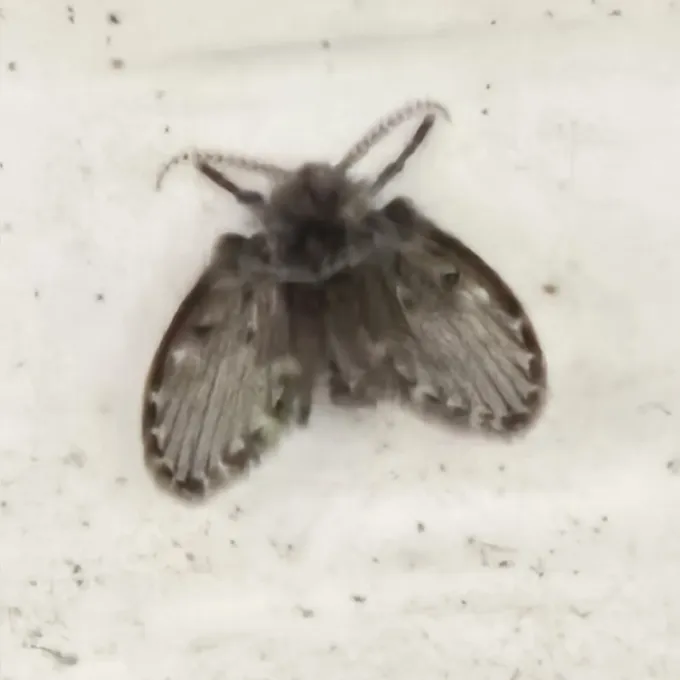
The moth fly (Telmatoscopus albipunctatus), also known as the drain fly, is a small dipteran insect belonging to the Psychodidae family. Adult specimens are 2–3 mm long and resemble tiny moths.
Their bodies and wings are densely covered in fine hairs, giving them a fuzzy appearance. When at rest, they hold their wings in a roof-like position over the abdomen, a key identification feature.
Coloration varies from grey to greyish-brown. They are distinguished by small white spots at the tips of the wing veins, which is reflected in the scientific name of the species.
The larvae are worm-like, 4–5 mm long, and wingless. They possess a distinct head capsule and are adapted to live in semi-liquid environments rich in organic matter.
The life cycle consists of egg, larva, pupa, and adult stages. In warm conditions, the entire metamorphosis can be completed in just 10–14 days, leading to rapid population growth.
What it damages
Damage is primarily caused by larvae, which infest soil substrates rich in decaying organic material. They feed on root debris and rotting plant tissues.
At high population densities, larvae can damage the roots of healthy seedlings and houseplants, weakening the plant and creating entry points for secondary fungal infections.
In greenhouses and hydroponic systems, moth flies can infest plants kept in overly damp substrates, hindering growth and development.
Adults do not feed on plant tissues themselves, but they act as active vectors for various pathogens, bacteria, and mold spores throughout the growing area.
Indirect damage includes the accumulation of waste products on leaf surfaces and soil, which significantly impacts the aesthetic quality of ornamental plants.
When it appears
This pest is active year-round in indoor environments, greenhouses, and homes, where stable temperatures and high humidity are maintained.
Favorable conditions for reproduction include standing water, clogged drainage systems with organic sludge, and constantly waterlogged soil.
Population peaks typically occur during warm periods, as higher temperatures accelerate larval metabolism and shorten the development time of generations.
During the summer, flies can migrate from sewage systems or damp basements directly into plant-growing areas.
To prevent massive infestations, it is critical to monitor humidity levels in composting areas and plant saucers.
Signs of infestation
The first sign of an infestation is the presence of adults, which fly in short, irregular bursts near the soil surface or the sides of pots.
During watering, larvae may be washed out of drainage holes and can be spotted during a close inspection of the saucer or soil surface.
A slimy or gel-like film on the soil surface, resulting from larval excretions, often accompanies a moth fly infestation.
Stunted growth, yellowing of lower leaves, and a general lack of vigor in plants without other obvious symptoms often point to root-level larval feeding.
- Small «moths» fluttering near the base of plants.
- Standing water in saucers and poor drainage.
- Small worm-like larvae visible in runoff water.
Control measures
The primary control measure is maintaining a strict watering regime and eliminating damp areas where organic debris accumulates.
Regular cleaning of drainage saucers, traps, and pipes is necessary to remove the organic medium that larvae depend on for survival.
Biological treatments based on Bacillus thuringiensis are highly effective in suppressing the larval stage without harming the plants.
Using yellow sticky traps helps significantly reduce the population of adults, disrupting their breeding cycle within greenhouse environments.
In cases of severe infestation, replacing the substrate with a sterile and well-draining mixture is recommended to break the fly's life cycle.
Taxonomy
- Latin name
- Telmatoscopus albipunctatus
- Order
- Diptera (flies)
- Family
- Psychodidae
- EPPO code
- TELMAL
Discussion
No discussions yet — be the first.