
Lutzomyia
Lutzomyia
Description
How to identify
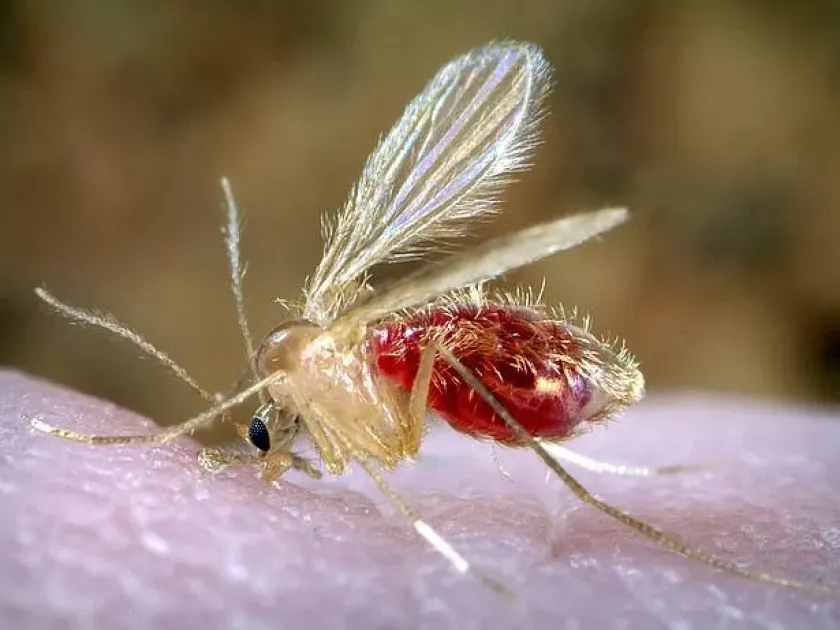
The genus Lutzomyia belongs to the order Diptera, family Psychodidae, and subfamily Phlebotominae. These are small blood-sucking flies, typically ranging from 2 to 3 mm in length.
Adults exhibit a characteristic humped body shape covered with dense hairs, giving them a moth-like appearance. At rest, their wings are held vertically or at an angle to the body.
Their coloration ranges from light yellow to brown, which provides camouflage in their natural habitats such as leaf litter and moist soil.
Biology of the genus is closely tied to high humidity and the presence of decaying organic matter, which serves as a breeding ground for their larvae.
The life cycle undergoes complete metamorphosis, consisting of egg, four larval instars, pupa, and adult stages, with speed depending on ambient temperature.
What it damages
While Lutzomyia species are primarily known as vectors of leishmaniasis, they can indirectly impact agricultural production by causing physiological stress to crops.
Larvae, which thrive in organic-rich soil, may damage young seedlings or root systems if they congregate in high densities within nursery or greenhouse substrates.
Adult flies feed on plant sugars and fluids; these feeding activities can cause superficial tissue damage that invites secondary bacterial or fungal infections.
Large populations of these flies are often indicative of poor sanitation practices, such as excessive accumulation of waste, which creates a favorable microclimate for other pests.
In intensive agricultural settings, their role as mechanical vectors of plant pathogens can lead to localized disease outbreaks within a crop.
When it appears
Lutzomyia activity peaks during periods of high humidity and temperatures typically ranging between +20°C and +30°C.
In tropical and subtropical regions, populations remain active throughout the year, whereas in temperate greenhouses, they can persist indefinitely if climate control is ignored.
Adult activity is primarily nocturnal or crepuscular, meaning they are most active during dawn, dusk, and nighttime hours to avoid desiccation.
During dry seasons, the flies survive in larval or pupal stages, hiding deep within soil layers or other protected, moist micro-environments.
The population dynamics are highly responsive to environmental changes, particularly irrigation and waste management practices.
Signs of infestation
The presence of Lutzomyia is often detected by observing small, hairy flies near irrigation points, compost piles, or dense vegetation.
Early signs of infestation in greenhouses include the appearance of tiny necrotic spots on leaves due to the flies feeding on plant sap.
Slowed growth and reduced turgor in seedlings can indicate larval feeding damage to root tissues in the growth substrate.
The physical presence of insects on yellow sticky traps used for monitoring in greenhouses is a definitive sign of their activity.
Persistent presence of flies despite clean plant canopies often points to breeding sites located in the potting media or underlying soil.
Control measures
Managing Lutzomyia requires an integrated approach focusing on eliminating breeding sites and reducing adult fly populations.
- Strict sanitation to remove organic debris and decaying plant materials from growing areas.
- Adjustment of irrigation schedules to prevent soil saturation and excessive humidity.
- Application of biological controls, such as entomopathogenic fungi or beneficial nematodes, to target larvae in the soil.
- Installation of fine-mesh insect screens on greenhouses to prevent entry from outdoor habitats.
- Localized use of approved insecticides in breeding hotspots during peak population cycles.
Mechanical methods like soil aeration and tillage help disrupt larval habitats and decrease survival rates.
Monitoring populations via sticky traps allows for informed decisions regarding the timing of control interventions.
Maintaining high horticultural standards is the most effective strategy for preventing long-term infestations.
Taxonomy
- Latin name
- Lutzomyia
- Order
- Diptera (flies)
- Family
- Psychodidae
- EPPO code
- LUTZSP
Discussion
No discussions yet — be the first.