
Moth fly
Telmatoscopus
Description
How to identify
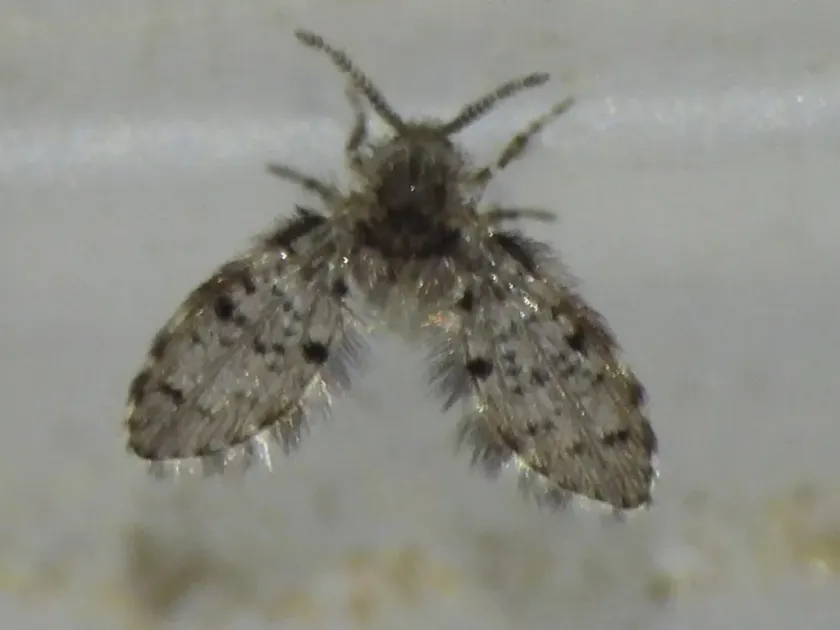
The moth fly (family Psychodidae, order Diptera) is a tiny insect that resembles a miniature moth with broad, densely hairy wings. Adult specimens are typically 1.5–4 mm long and exhibit a grey or brownish coloration.
The body and wings are covered with tiny scales, giving them a fuzzy appearance. When at rest, their wings are folded in a roof-like fashion over the abdomen, which is a key characteristic of the species.
Moth fly larvae are worm-like, legless, and reach sizes between 4 and 10 mm. They have a well-developed head capsule and dense cuticles, allowing them to thrive in moist organic environments.
Detection is often difficult due to their nocturnal habits and preference for hiding in moist, dark areas like soil surfaces, drains, or stagnant water reservoirs.
Adults are known for their characteristic erratic flight pattern, often jumping or running along surfaces instead of taking sustained flight when disturbed.
What it damages
While moth flies are not primary plant feeders, their presence in greenhouses and indoor gardens is detrimental. They thrive in overly wet soil that contains decaying organic matter.
Larvae primarily damage root systems when populations are dense. By feeding on decomposing tissues, they can move onto healthy young roots, leading to rot and systemic plant weakness.
A significant risk associated with these flies is their role as vectors for fungi and bacteria. They carry pathogens on their bodies, which accelerate root decay and plant diseases.
Adults, while not mechanically damaging leaves, can soil plant surfaces with their waste, which may encourage the growth of sooty mold or other fungal contaminants.
Plants grown in conditions of constant soil saturation, poor drainage, or those with accumulated decaying mulch are the most susceptible to infestation.
When it appears
The life cycle of the moth fly is highly dependent on temperature and moisture levels. In greenhouses and residential environments, they can reproduce throughout the year.
Ideal conditions include high humidity and the presence of organic debris, particularly in areas with poor ventilation where moisture persists without evaporation.
Females lay their eggs in moist soil, decaying organic waste, or sludge found in drains, where larvae quickly emerge and begin feeding on the organic matter.
The life cycle from egg to adult can be completed in as little as 10 to 20 days at room temperature (20–25°C), allowing populations to explode rapidly.
During summer months, these pests often migrate into homes through ventilation shafts, drainage systems, or open windows, especially if there is standing water nearby.
Signs of infestation
The first indicator of an infestation is the appearance of small, fuzzy flies hovering around plant pots, drip trays, or near sink drains.
Upon inspecting the substrate, one might spot the larvae crawling in areas where organic matter is decomposing or where the soil remains perpetually soggy.
General plant decline, including yellowing of lower leaves and loss of turgor despite adequate watering, is often a sign of root damage caused by larvae.
A foul, musty odor emanating from the soil indicates active decomposition, which is the primary habitat and food source for moth fly larvae.
- Small flies spotted near plant pots.
- Stagnant water in drainage trays.
- Slow growth in younger plants.
- Fungal mold growth on the soil surface.
Control measures
The primary control measure is to normalize irrigation. It is essential to eliminate standing water in drip trays and ensure proper drainage for all potted plants.
Regular cleaning of drains, sink traps, and ventilation grilles is critical, as these are the most common breeding sites for moth fly populations.
Mechanically removing the top layer of infested soil and replacing it with fresh, high-quality substrate can significantly reduce the number of larvae in the root zone.
Using yellow sticky traps can effectively monitor and reduce adult fly populations, helping to identify breeding hotspots before they become uncontrollable.
While insecticides can be used, they are generally secondary to sanitation. Addressing the moisture and organic waste issues is the only long-term solution for eradication.
Taxonomy
- Latin name
- Telmatoscopus
- Order
- Diptera (flies)
- Family
- Psychodidae
- EPPO code
- TELMSP
Discussion
No discussions yet — be the first.