
Hawthorn groundling moth
Teleiodes vulgella
Description
How to identify
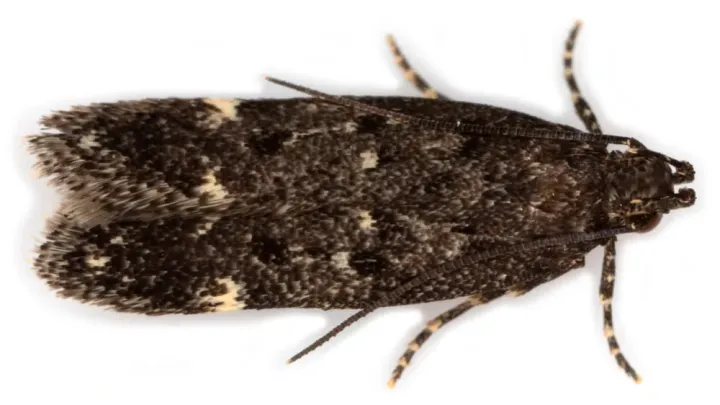
The hawthorn groundling moth (Teleiodes vulgella) is a small lepidopteran belonging to the family Gelechiidae. Adult moths have a wingspan typically ranging between 12 and 15 mm.
The forewings exhibit a grayish-brown coloration with dark mottling and markings, which provides excellent camouflage against the bark of host trees. The hindwings are paler and fringed with fine hairs.
The larvae, when fully grown, measure approximately 8–10 mm. Their appearance is characterized by a dirty-green or yellowish body, a dark head, and a distinctive thoracic plate.
The species overwinters as a second or third instar larva. They typically remain in tight silk cocoons tucked away within bark crevices or on twigs, waiting for the spring warmth.
There is only one generation per year. The flight period of the adult moths generally occurs during the months of June and July, after which the females lay eggs on the host plants.
What it damages
This insect is an oligophagous feeder, specifically targeting members of the Rosaceae family. Primary host plants include hawthorn, apple, pear, plum, and rowan trees.
Early spring damage is caused by larvae feeding on developing buds. This activity often destroys the buds or results in distorted growth of leaves and reproductive parts.
As the larvae mature, they utilize silk to draw leaves together, forming characteristic nests or rolls. Within these shelters, they feed extensively on the leaf tissue.
Heavy infestations lead to leaf senescence and premature drop, significantly reducing the tree's photosynthetic capacity and causing overall stress to the plant.
In nurseries, repeated damage to apical buds can hinder the development of a strong tree framework and retard the growth of young saplings.
Signs of infestation
The first indicator of an infestation is the damaged, eaten-out appearance of spring buds, often accompanied by small boreholes and frass pellets on the surface of the buds.
During the summer months, the presence of leaves rolled or bundled together with silk is the most obvious sign of larval activity. The leaves often turn brown and look skeletonized.
Opening the silk-bound leaf clusters usually reveals the larva or its cast skins. These nests are often found in the foliage of the canopy, concentrating the damage.
An abundance of webbing on the branches serves as a warning sign that the population levels have increased, necessitating monitoring and potential intervention.
Small, empty overwintering cocoons left on the bark are evidence that the pest was present in the previous season, indicating a high risk of recurrence.
Control measures
Effective management begins with early spring applications of insecticides targeting the larvae as they emerge from their overwintering sites before they create protective webs.
Manual removal of webbed leaf clusters is a practical and environmentally friendly method for managing light infestations in small-scale gardens or young orchards.
Biological control using Bacillus thuringiensis sprays can be highly effective against younger larvae while minimizing the impact on non-target beneficial insects.
Using pheromone traps helps orchard managers monitor adult moth activity, ensuring that chemical or biological treatments are timed correctly to maximize impact.
Encouraging biodiversity, particularly birds and predatory insects, plays a vital role in natural population suppression and integrated pest management strategies.
Taxonomy
- Latin name
- Teleiodes vulgella
- Order
- Lepidoptera (butterflies)
- Family
- Gelechiidae
- EPPO code
- TLDSVU
Discussion
No discussions yet — be the first.