
Teleiodes
Teleiodes
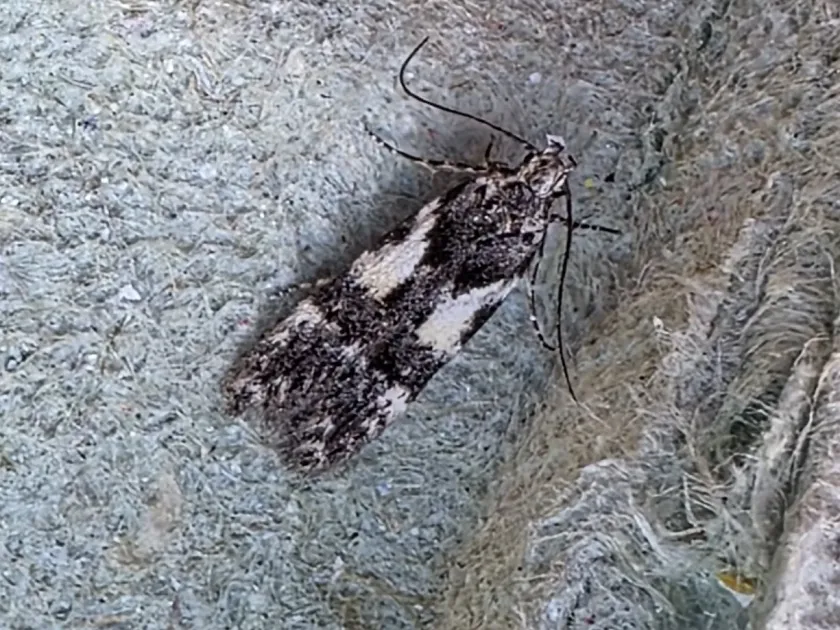
Description
How to identify
Teleiodes is a genus of moths belonging to the Gelechiidae family, within the order Lepidoptera. These are small moths, typically with a wingspan of 15–20 mm, characterized by a specific notch on the outer margin of the hindwings.
The adult coloration ranges from grayish to brownish tones, providing excellent camouflage against tree bark. The larvae have a cylindrical body and a well-developed head capsule, with color patterns shifting depending on their developmental stage.
The pupal stage occurs within a dense cocoon or inside rolled leaves. Accurate species identification often requires detailed microscopic examination of the male and female genitalia.
The genus includes several species, with Teleiodes vulgella being one of the most prominent in forestry and horticulture, as it infests various deciduous trees.
These insects have a close biological link to woody plants, which serve as the primary food source for the larvae throughout their development period.
What it damages
The primary hosts for Teleiodes larvae are various deciduous trees, including hawthorn, apple, pear, and oak. Damage manifests as the destruction of leaf tissue by feeding larvae.
In cases of high infestation, the pest can cause premature leaf drop, which significantly weakens the physiological state of the tree before the winter dormancy period.
Damage occurs primarily during the spring and summer, when larvae actively feed on leaf tissues, skeletonizing them or eating large holes through the lamina.
Young shoots may also suffer if the larvae attack buds or the apical meristem, leading to deformed branch development.
A reduction in the photosynthetic surface area directly correlates with decreased fruit yields and slower rates of wood growth.
When it appears
The insects typically overwinter as larvae in bark crevices or under fallen leaves, constructing specialized winter nests (hibernacula) for protection.
In spring, with the beginning of sap flow and bud break, the larvae leave their overwintering sites and begin active feeding on young plant tissues.
The flight of the first generation of adults usually occurs in late spring or early summer, coinciding with the active growth phase of the trees.
The life cycle is generally univoltine, although varying climatic conditions can lead to shifts in the timing of adult emergence.
Temperature is a critical factor; a cold and prolonged spring significantly slows the pest's metabolism and the development of the larvae.
Signs of infestation
The main sign of infestation is curled or silk-webbed leaves, inside which the Teleiodes larvae remain hidden.
Larval frass (excrement) is visible on the leaf surface, often accumulating in feeding areas or within rolled parts of the leaf blade.
The presence of skeletonized leaves that eventually turn brown and dry out is a clear indicator of this pest's activity.
- Presence of silk nests between leaves.
- Deformation of young shoots and buds.
- Premature yellowing and leaf fall in the crown.
- Visible tunnels chewed into the leaf epidermis.
The pest can be detected by carefully inspecting the underside of leaves, where larvae often hide during the hottest parts of the day.
Control measures
Agronomic measures include regular sanitary pruning of trees, as well as the collection and destruction of fallen leaves where larvae may overwinter.
The use of pheromone traps allows growers to monitor adult population dynamics and make timely decisions regarding the application of insecticides.
Biological control methods involve the use of preparations based on Bacillus thuringiensis, which are highly effective against younger larval instars.
In scenarios of high population density, systemic or contact insecticides are justified during the period of peak larval feeding activity.
It is essential to time applications based on the tree's phenological stages to ensure maximum efficiency before the larvae begin pupation.
Taxonomy
- Latin name
- Teleiodes
- Order
- Lepidoptera (butterflies)
- Family
- Gelechiidae
- EPPO code
- TLDSSP
Discussion
No discussions yet — be the first.