
Elm moth
Teleia fugitivella
Description
How to identify
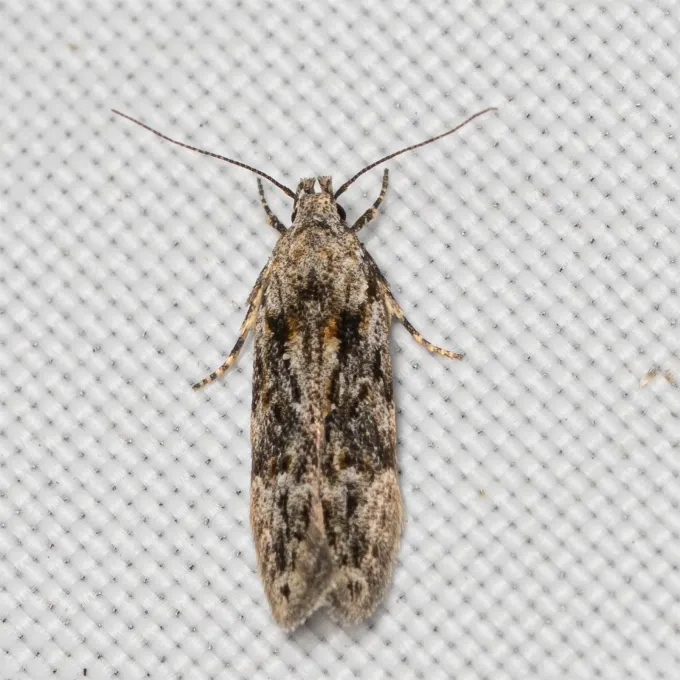
The Elm moth (Teleia fugitivella) belongs to the order Lepidoptera and the family Gelechiidae. The adult moth is small, with a wingspan of approximately 12–14 mm, featuring greyish-brown forewings with distinct dark markings that provide excellent camouflage against tree bark.
The larvae, or caterpillars, are about 8–10 mm long and typically light green or yellowish in color. They are cryptic feeders, often hiding within folded leaves or silk webbing, which makes them difficult to spot during the early stages of an infestation.
The life cycle is closely synchronized with the phenology of elm trees (Ulmus species). Depending on the local climate, the moth can complete one or two generations per year, with activity peaking during the warm spring and summer months.
Pupation occurs within dense silken cocoons spun by the larvae in bark crevices or among curled leaf debris. This stage is critical for the survival of the species during periods of environmental stress.
Proper identification often requires careful inspection of the foliage for characteristic webbing or the use of pheromone traps to detect the presence of adult moths in the area.
What it damages
The primary host for the Elm moth is the genus Ulmus. Larvae cause damage by skeletonizing the leaf blades or creating irregular feeding patterns between the veins, which can significantly affect the tree's health.
Heavy infestations lead to widespread leaf browning and premature leaf drop. This reduces the photosynthetic capacity of the tree, potentially leading to weakened growth and reduced vigor over time.
Stressed trees are more susceptible to secondary attacks from other pests and pathogens, including various fungal diseases that thrive in weakened host tissues.
In landscape settings and nurseries, the visual impact of the damage is significant, as the canopy may become sparse and unsightly, reducing the aesthetic value of the trees.
Extensive defoliation may occur in severe outbreak years, requiring proactive management to protect the long-term structural integrity of the elm population.
When it appears
Adult moths typically emerge in late spring, coinciding with the budding of elm trees. This timing ensures that young caterpillars have immediate access to food sources upon hatching.
Larval activity reaches its peak from late May through July. During this window, the caterpillars are most actively feeding and constructing the characteristic leaf shelters that are so noticeable.
Pupation generally takes place mid-to-late summer. If a second generation occurs, the life cycle repeats, with adult moths emerging again before the onset of autumn cooling.
The insect typically overwinter as pupae or fully developed larvae, hiding in protected niches such as bark crevices or within leaf litter at the base of the host tree.
Timing control measures to align with the larval emergence period is essential for achieving effective management results.
Signs of infestation
The most reliable sign of an infestation is the presence of leaves that have been folded or rolled and secured with silk webbing. Inside these nests, the larvae can be found feeding.
- Rolled or folded leaves bound with silk.
- Skeletonized leaf patches and irregular feeding holes.
- Small deposits of dark frass (excrement) within leaf shelters.
- Early leaf yellowing and premature leaf fall in affected canopy zones.
- Silken cocoons found in bark crevices.
As the season progresses, a heavily infested tree may show signs of canopy thinning and a general lack of vibrant green foliage due to the cumulative feeding damage.
Visual surveys during the early summer are the best way to determine the extent of the infestation before significant defoliation occurs.
Control measures
Chemical control involves the application of appropriate insecticides during the larval emergence period, targeting the caterpillars before they are fully protected by their leaf shelters.
Biological control using Bacillus thuringiensis or other microbial agents is highly effective against young larvae and is often preferred in urban areas to minimize environmental impact.
Sanitation practices, such as the removal and destruction of fallen leaves and infested debris, help to reduce the overwintering population and minimize the risk of re-infestation.
Promoting a diverse environment that supports beneficial predatory insects and insectivorous birds is a sustainable long-term strategy for keeping moth populations in check.
Regular monitoring of tree health and early detection of silk-webbed leaves allow for timely, localized interventions that prevent the need for large-scale chemical treatments.
Taxonomy
- Latin name
- Teleia fugitivella
- Order
- Lepidoptera (butterflies)
- Family
- Gelechiidae
- EPPO code
- TELAFU
Discussion
No discussions yet — be the first.