
Telamona decorata
Telamona decorata
Description
How to identify
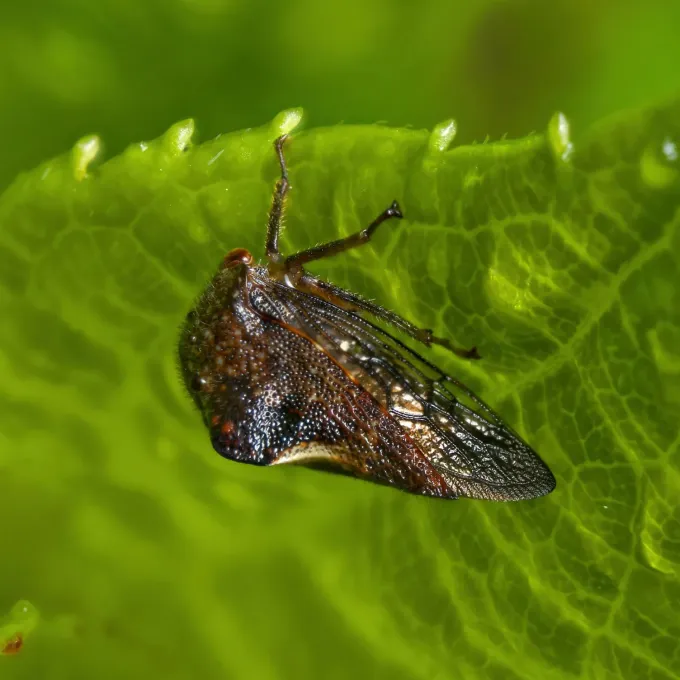
Telamona decorata is a species of treehopper belonging to the family Membracidae (order Hemiptera). These insects are recognized by their unique pronotum, which features a pronounced hump or crest that serves as a highly effective camouflage mechanism against bark textures.
Adults possess a robust body shape that is typical for the family, with a shield-like pronotum that often covers the wing bases. Their coloration generally ranges from mottled browns to greys, allowing them to remain virtually invisible when resting on tree branches.
Nymphs of this species also exhibit specialized body outgrowths and live in close proximity to their feeding sites. They are typically found on young branches where they feed on sap, often remaining immobile to blend in with their surroundings.
The life cycle involves incomplete metamorphosis. Eggs are laid in slits cut into the bark of host trees. After hatching, nymphs undergo several molts before reaching the adult stage, typically following a seasonal pattern synchronized with tree growth.
Measuring between 8 to 12 millimeters, adults are capable of rapid jumping, which helps them escape potential predators. Their morphological diversity is quite significant, often varying slightly depending on the host plant species.
What it damages
Telamona decorata primarily targets deciduous tree species, with a particular affinity for oak trees (Quercus) and various nut-bearing trees. In domestic gardens and landscapes, they can be found on ornamental trees, causing stress to the host.
As phloem-feeders, these insects extract vital nutrients from the host plant. Continuous feeding by a large colony can lead to significant growth retardation, particularly in young or recently planted trees that lack established root systems.
The oviposition process is the most destructive aspect of their presence. Females create small incisions in the bark to deposit eggs, which can lead to localized tissue necrosis, scarring, and the development of cankers if the tree's health is already compromised.
Wounds caused by egg-laying serve as entry points for various fungal and bacterial pathogens. This secondary damage can cause twig dieback and long-term structural weakness in the tree canopy.
In cases of severe infestation, tree growth can become stunted, and the tree may display premature senescence of leaves. This stress makes the tree more susceptible to secondary wood-boring insects and environmental stressors like drought.
Signs of infestation
The most reliable sign of a Telamona decorata infestation is the presence of small, characteristic scarring or slits on the bark of young shoots. These are the direct result of female oviposition activity.
The presence of honeydew on the leaves below the infested area is a common indicator. This sticky residue often encourages the growth of sooty mold, which appears as a black, powdery coating on the leaf surfaces.
Yellowing, curling, or premature drooping of leaves on specific branches is a strong indication of high-intensity feeding. Gardeners should inspect these branches closely for the presence of nymphs or adults.
Direct visual observation of adults on twigs, often positioned near branch junctions, is the most common way to identify the pest. Due to their excellent camouflage, a careful, slow inspection is required.
- Bark scarring and irregular slits on twigs
- Presence of sooty mold on leaf surfaces
- Reduced vigor and delayed shoot growth
- Presence of honeydew-seeking ants or sticky residue
Control measures
Cultural control is the first line of defense. Pruning and destroying infested branches during the dormant season can significantly reduce the overwintering egg population, limiting the number of nymphs that emerge in spring.
If population levels are high, systemic insecticides applied during the early nymphal stage can be effective. It is critical to select products that minimize impact on beneficial predatory insects that naturally control hopper populations.
Maintaining optimal tree health through proper fertilization and irrigation is essential. Vigorous trees are better equipped to heal bark wounds and withstand the nutrient drain caused by sap-feeding insects.
Conservation of natural enemies is encouraged. Predators such as lady beetles, lacewings, and parasitic wasps are highly effective at suppressing treehopper numbers and should be supported by avoiding broad-spectrum pesticides.
Protective bark treatments or tree wraps may be considered for highly susceptible young saplings during the egg-laying season to prevent females from successfully accessing the bark for oviposition.
Taxonomy
- Latin name
- Telamona decorata
- Order
- Hemiptera (bugs, aphids, leafhoppers)
- Family
- Membracidae
- EPPO code
- TLMNDE
Discussion
No discussions yet — be the first.