
Telamona
Telamona
Description
How to identify
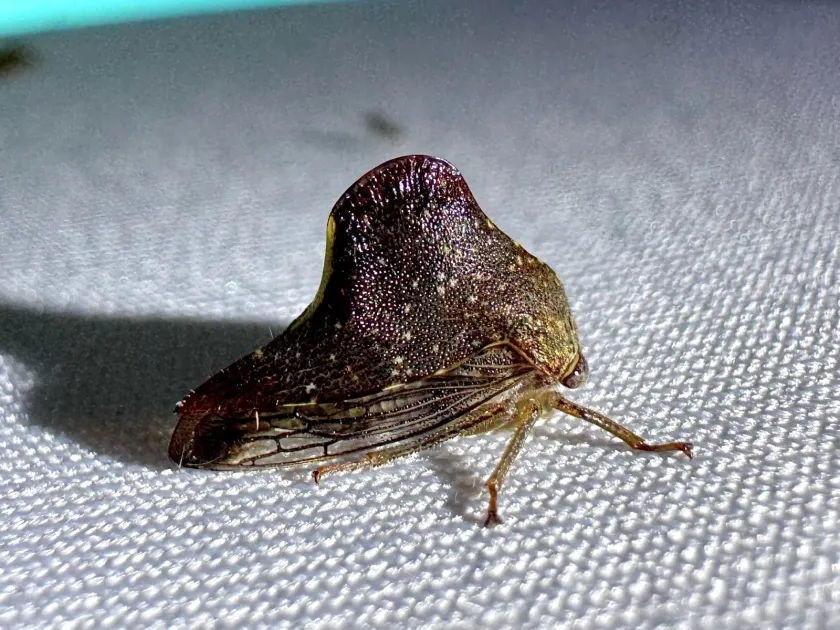
Telamona is a genus of insects belonging to the family Membracidae, commonly known as treehoppers. These insects are easily recognized by their highly developed, often bizarrely shaped pronotums that can mimic thorns, twigs, or irregularities in tree bark.
Adult Telamona typically range in size from 8 to 15 millimeters. Their coloration is usually earth-toned, varying between brown, grey, and green, which provides excellent camouflage against the woody surfaces they inhabit.
The life cycle of these insects involves incomplete metamorphosis, progressing through egg, nymph, and adult stages. They do not undergo a pupal stage, making them distinct from many other garden pests.
Nymphs resemble smaller, wingless versions of the adults. They are social or semi-social in some species and are often found huddled together on stems or leaves, feeding on plant phloem.
These insects are highly sensitive to vibrations. When threatened, they often perform rapid movements or hide on the underside of branches, making them difficult to spot during routine garden inspections.
What it damages
Telamona primarily feed on deciduous trees, with oaks, hickories, and various species in the Rosaceae family being among their favorite hosts. They utilize specialized piercing-sucking mouthparts to extract sap.
The feeding process itself causes stress to the tree, as it removes vital fluids and nutrients. However, the most significant damage occurs when females insert their eggs into the bark of young branches.
These egg-laying incisions create deep wounds in the cambium layer. These wounds serve as entry points for secondary pathogens, such as fungi and bacteria, which can cause cankers and tissue necrosis.
Young trees are particularly susceptible to this damage. Severe infestations can lead to limb dieback, stunted growth, and structural weakness of the branches, making the trees more vulnerable to wind and ice damage.
In addition to physical damage, the constant extraction of sap over long periods weakens the overall immune system of the tree, potentially leading to increased susceptibility to other pests and environmental stressors.
When it appears
Adult Telamona are typically active from late spring through the summer months. This is the period when they seek mates and establish populations on host trees, focusing on canopy growth.
Egg-laying usually reaches its peak in mid-to-late summer. The eggs are deposited into slits made in the bark of twigs, where they remain sheltered during the winter months, entering a period of diapause.
Nymphs emerge in the spring, synchronized with the onset of bud break and the beginning of active sap flow in the host trees. This ensures that the newly hatched insects have immediate access to high-quality food.
Weather patterns play a critical role in the success of a population. A mild, moist spring generally favors survival, while extreme summer heat or drought conditions can negatively impact the availability of host tree sap.
Gardeners should focus their monitoring efforts on the late spring and summer months. Observing the canopy during the early morning can reveal the presence of adults before they become elusive during the heat of the day.
Signs of infestation
The most telltale sign of Telamona activity is the presence of small, systematic scars or slits in the bark of young twigs. These marks are the result of female egg-laying and often appear in rows.
Around the oviposition sites, the bark may show signs of blistering, swelling, or cracking. In some cases, sap flow or gumming can be observed as the tree attempts to seal the wound.
Leaves on infested branches may exhibit symptoms of nutrient deficiency, such as yellowing, curling, or premature senescence. These symptoms occur because the vascular tissue at the feeding site is disrupted.
The presence of ants crawling on the bark is another indicator. Ants are often attracted to the honeydew secreted by Telamona as they feed, essentially protecting the treehoppers from potential predators.
Sudden branch dieback on otherwise healthy-looking trees during the growing season can also be a late-stage indicator that the branch structure has been compromised by repeated egg-laying over several years.
Control measures
Sanitation is a primary management strategy. Pruning and destroying branches that show heavy scarring or egg-laying activity can significantly reduce the overwintering population for the next season.
Maintaining tree vigor is essential. Proper irrigation and fertilization help trees recover more quickly from feeding damage and provide the physiological strength needed to wall off wounds effectively.
If chemical control is necessary, use systemic insecticides that target sucking insects. Application should be timed to coincide with the emergence of nymphs to maximize effectiveness and minimize exposure to non-target species.
Encouraging natural predators, such as lady beetles, lacewings, and various parasitic wasps, can help keep Telamona numbers in check without the need for intensive chemical interventions.
- Prune and burn infested wood during the dormant season;
- Install sticky bands to catch climbing nymphs;
- Avoid excessive use of broad-spectrum pesticides that kill natural enemies;
- Maintain proper tree spacing to improve airflow and reduce humidity in the canopy.
Taxonomy
- Latin name
- Telamona
- Order
- Hemiptera (bugs, aphids, leafhoppers)
- Family
- Membracidae
- EPPO code
- TLMNSP
Discussion
No discussions yet — be the first.