
Citrus brown mite
Tegolophus brunneus
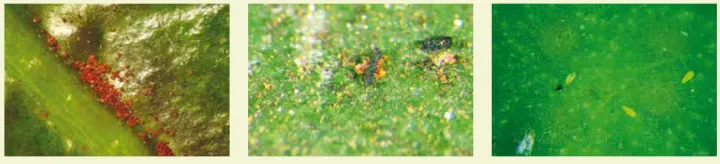
Description
How to identify
The Citrus brown mite, scientifically known as Tegolophus brunneus, belongs to the family Eriophyidae. It is a tiny, microscopic pest, characterized by a brownish, elongated, and wedge-shaped body that requires magnification for proper identification in the field.
The life cycle of this mite is highly efficient, allowing it to colonize citrus trees rapidly under favorable conditions. Development proceeds through an egg stage, two larval stages, and an adult phase, with the entire cycle often completing in just a few days during warm weather.
These mites typically dwell in sheltered areas of the plant, such as the underside of leaves, around fruit stalks, or within the pores of the fruit rind. Their cryptic behavior makes them elusive, often going unnoticed until significant damage is already present.
Dispersal within an orchard mainly occurs via wind currents and mechanical transfer. Farm workers, contaminated pruning tools, and infested plant material are the most common vectors for spreading the mite across different sections of a plantation.
Because they are not true insects, conventional insecticide treatments are often ineffective. Specialized acaricides or biological control agents are required to manage their populations effectively without disrupting the orchard ecosystem.
What it damages
Tegolophus brunneus is a significant pest of various citrus species, including lemons, oranges, and grapefruit. The mites use their specialized mouthparts to pierce plant cells and extract sap, causing localized tissue death and structural degradation.
The most severe damage occurs on the rind of developing fruit. Infested citrus fruits exhibit a characteristic bronze or brown discoloration, which renders them aesthetically unappealing and classifies them as low-quality, thereby significantly reducing market value.
In addition to cosmetic damage, heavy infestations can lead to stunted growth and leaf drop. The physiological stress caused by persistent sap extraction weakens the tree, making it more susceptible to environmental stressors and secondary opportunistic diseases.
Young twigs and shoots are also heavily affected, often resulting in deformed growth patterns. The damage to the epidermis can further predispose the plant to infestation by sooty mold, which thrives on the necrotic tissues and waste secretions of the mites.
Economic losses arise not only from reduced fruit quality but also from the increased cost of necessary control measures. In commercial production, even a moderate infestation requires immediate action to protect the season's yield.
Signs of infestation
The most visible sign of infestation is the bronzing of the fruit skin. As the mite population feeds, the protective outer layer of the rind breaks down, losing its luster and turning into a coarse, discolored surface that is clearly distinct from healthy fruit.
Leaves may show chlorotic stippling, curling, or yellowing. While these symptoms can be confused with nutrient deficiencies, the presence of mites can be confirmed by examining the leaf surface with a hand lens or under a microscope in a laboratory setting.
Thinning of the foliage and premature leaf senescence are common in severely infested trees. The canopy may appear duller than usual, as the mite-induced damage disrupts the photosynthetic efficiency of the leaves.
A dusty appearance on the leaves or fruit, caused by the accumulation of mite exuviae (cast skins) and frass, is another indicator of a high infestation level. This debris often serves as a substrate for dark, sooty mold fungi.
Growth arrest in young developing fruits and shoots provides a clear signal that the plant's metabolic capacity is being compromised by the intense feeding activity of the mite colonies.
Control measures
Integrated Pest Management (IPM) is essential for controlling the Citrus brown mite. This includes frequent monitoring and early detection, which allows for targeted interventions rather than blanket chemical applications across the entire orchard.
Chemical control focuses on the use of selective acaricides. It is critical to rotate active ingredients to prevent the development of resistance. Applications should be timed carefully to coincide with the periods of peak mite activity and vulnerability.
Biological control represents a highly effective, sustainable approach. Releasing predatory mites from the family Phytoseiidae can significantly suppress Tegolophus brunneus populations, reducing the need for synthetic chemical treatments.
Cultural practices, such as proper pruning, improve canopy ventilation and light penetration. Since these mites prefer shaded, humid environments, keeping the tree structure open helps reduce their habitat suitability and slows population growth.
- Regular monitoring using sampling techniques for early infestation detection.
- Strategic application of acaricides during early fruit development.
- Promotion of natural predatory mite populations through reduced pesticide use.
- Sanitation of equipment to prevent the mechanical spread of the mite between rows.
- Balancing nitrogen fertilization to prevent excessive succulent growth that attracts mites.
Taxonomy
- Latin name
- Tegolophus brunneus
- Order
- Mites
- Family
- Eriophyidae
- EPPO code
- TEGLBR
Discussion
No discussions yet — be the first.