
Tarsonemus setifer
Tarsonemus setifer
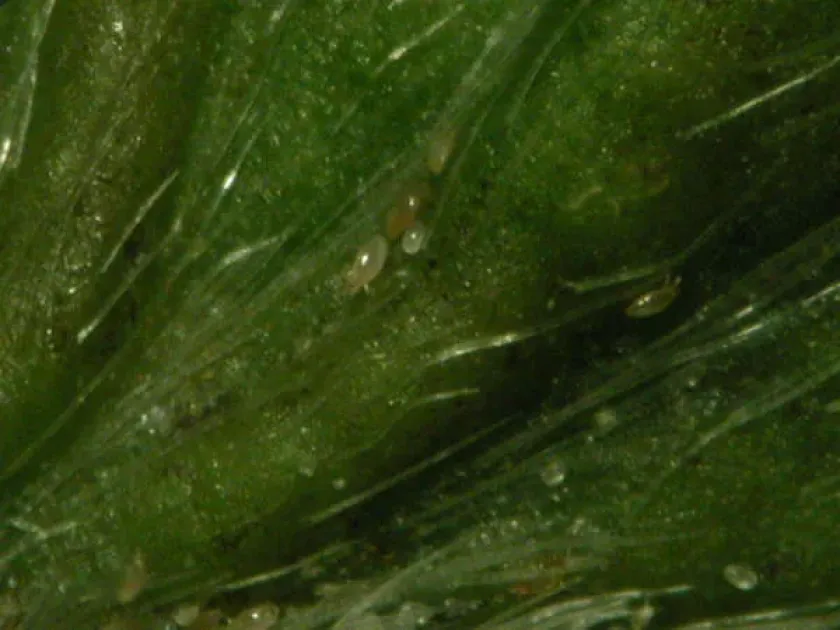
Description
How to identify
Tarsonemus setifer belongs to the order Trombidiformes and the family Tarsonemidae. This microscopic mite measures only 0.15–0.25 mm in length, making it invisible to the naked eye.
The mite's body is oval to elongated in shape, with a color spectrum ranging from light yellow to brownish. Females are larger than males and possess distinct setae (bristles), which are a diagnostic feature of the species.
Its life cycle consists of egg, larva, and adult stages. Development is rapid under conditions of high humidity and moderate temperatures, which facilitates exponential population growth.
This species is polyphagous and capable of surviving unfavorable conditions within the soil or plant debris, complicating early diagnostic efforts.
Movement is slow, and the pest primarily spreads through contaminated plant material, horticultural tools, or greenhouse air currents.
What it damages
Tarsonemus setifer attacks a wide variety of crops, primarily focusing on vegetables, ornamental plants, and berries grown in greenhouse environments.
Major susceptible crops include tomatoes, cucumbers, peppers, and various ornamental plants like cyclamens and begonias, where the mite targets plant growth points.
The pest feeds on plant cell sap, which disrupts metabolic processes and weakens the plant, often leading to severe physiological stress.
Infestations typically occur in areas with high humidity, as these mites are highly sensitive to dry air and thrive in moist microclimates.
Beyond direct physical damage, these mites can facilitate the entry of secondary pathogens, such as fungi or bacteria, through the feeding lesions on the plant tissue.
Signs of infestation
The first signs of infestation include the cessation of terminal growth and the deformation of young leaves, which may appear curled or stunted.
The surface of leaves often develops an oily, glossy, or cork-like texture. Over time, affected leaves may show yellowing and premature necrosis.
In flowering plants, flower buds fail to open or develop into deformed flowers, significantly reducing their aesthetic and commercial value.
Stems may develop necrotic spots, and the plant often exhibits a stunted or dwarf-like appearance due to the consistent damage to the meristematic tissues.
- Deformation of young shoots and leaves
- Stunted growth and development
- Discoloration of leaf blades
- Abortion of flower buds
- Necrosis on stems and foliage
Control measures
Effective management begins with strict quarantine protocols, including the thorough inspection of all incoming nursery stock to prevent the introduction of the pest.
Regular sanitation of greenhouse structures, tools, and equipment is essential to reduce the risk of harboring the mite between crop cycles.
Chemical control involves the use of specialized acaricides effective against microscopic mites. Rotating active ingredients is crucial to manage and prevent resistance.
Managing greenhouse humidity levels can help, as reducing excessive moisture creates a less hospitable environment for the development of Tarsonemus populations.
In cases of severe outbreaks, immediate removal and destruction of infested plants are necessary to contain the spread and protect the surrounding healthy crop.
Taxonomy
- Latin name
- Tarsonemus setifer
- Order
- Mites
- Family
- Tarsonemidae
- EPPO code
- TARSSE
Discussion
No discussions yet — be the first.