
Mushroom mite
Tarsonemus myceliophagus
Description
How to identify
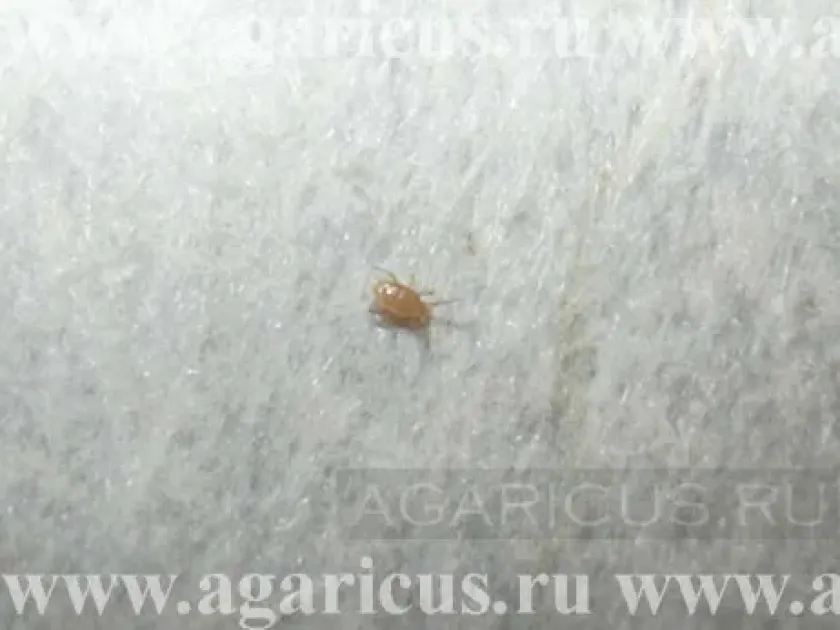
The Tarsonemus myceliophagus is a microscopic mite belonging to the Tarsonemidae family within the Trombidiformes order. The size of an adult is so minuscule that detection with the naked eye is nearly impossible.
The body of the mite has a distinct oval shape and a translucent, whitish or yellowish hue. Its mouthparts are specifically adapted to pierce and suck the cell contents of fungal mycelium.
These pests are characterized by an extremely high reproduction rate within mushroom cultivation environments. Under optimal temperatures, the life cycle of a single generation can last only a few days.
Females lay their eggs directly on the fungal hyphae, which ensures that the larvae have immediate access to a food source as soon as they emerge.
The spread of mites within mushroom blocks occurs passively: they are transported by substrate particles, on staff clothing, through tools, or via insect vectors.
What it damages
The primary food source for this species is the mycelium of mushrooms such as Agaricus bisporus and oyster mushrooms. The pest literally eats the contents of the hyphae, leading to the total degradation of the mycelium.
When the substrate is infested, the mycelium stops spreading and loses its density and structure. In severe cases, total death of the mycelium occurs, making fruit body formation impossible.
The pest is also capable of damaging young primordia, leading to their deformation, browning, and subsequent rot, which significantly reduces the marketability of the harvest.
The economic impact manifests in a sharp decrease in the biological efficiency of the substrate. Yield losses in cases of heavy infestation can range from 30 to 80 percent.
A secondary danger is that mites are often vectors for pathogenic fungi and bacteria that promote the development of rot within mushroom cultivation chambers.
Signs of infestation
The first sign of infestation is a local "sinking" of the mycelium. In these areas, the mycelium becomes gray or brown, losing its characteristic white, fluffy appearance.
A whitish film might appear on the surface of the substrate or on the stalks of the mushrooms, which, upon closer inspection, reveals itself to be a mass concentration of mites.
When slicing through a mushroom block, one may notice zones where the mycelium looks depressed and sparse. The texture of the substrate in these areas becomes loose, sometimes accompanied by an unpleasant odor.
Fruit bodies affected by the mite often appear "bitten." Brown spots form on their surface, which darken and expand over time.
- Yellowing and cessation of primordia growth.
- Specific indentations on the surface of mushroom caps.
- Destruction of mycelial threads within the compost.
Control measures
The key defense method is strict adherence to sanitary and hygiene standards. Regular disinfection of all premises, including racks and inventory, is mandatory.
It is essential to perform high-quality thermal treatment (pasteurization) of the substrate before inoculation. A temperature of 60 degrees Celsius for several hours is fatal to both adults and eggs.
Access for insect vectors to the cultivation room must be restricted. Use mosquito nets on ventilation openings and traps for adult fungus gnats.
If an infestation has already occurred, use specific acaricides approved for use in mushroom farming. However, chemical treatments must be handled with extreme care to avoid harming the mushroom culture.
After the production cycle is complete, a thorough thermal "cooking" of the room (steam disinfestation) must be conducted to prevent the spread of the pest to the next rotation.
Taxonomy
- Latin name
- Tarsonemus myceliophagus
- Order
- Mites
- Family
- Tarsonemidae
- EPPO code
- TARSMY
Discussion
No discussions yet — be the first.