
Tarsonemid mite
Tarsonemus floricola
Description
How to identify
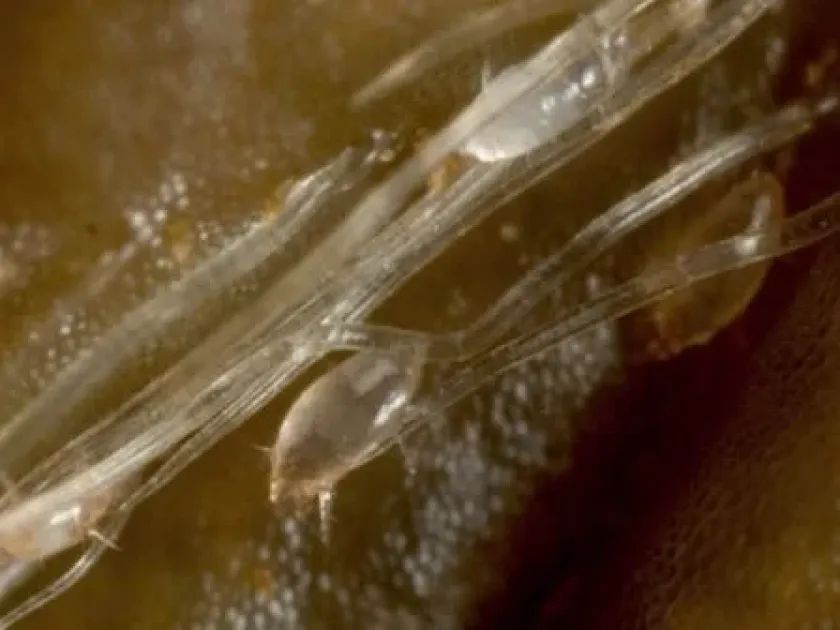
The tarsonemid mite (Tarsonemus floricola) is a microscopic member of the Acariformes order and Tarsonemidae family. Due to their tiny size, typically around 0.2–0.3 mm, they are virtually invisible to the naked eye.
The body of this mite is oval, translucent, and varies in color from pale yellow to light brown. Their morphology is highly specialized, with legs adapted for navigating deep within plant crevices and tightly closed buds.
They prefer hidden microhabitats, specifically leaf axils, growing tips, and folded buds. Because of this cryptic behavior, infestations often go undetected until significant damage has already occurred.
Reproduction is highly efficient; under favorable conditions, the lifecycle can be completed in as little as 7 to 10 days, leading to exponential population growth within a short timeframe.
As obligate phytophagous pests, they colonize a wide range of horticultural, greenhouse, and agricultural crops, posing a significant threat to delicate plant species.
What it damages
These mites feed on plant cell contents by piercing the epidermis of tender tissues. This process directly depletes the plant of nutrients and disrupts normal metabolic functions.
When the growing points are targeted, the plant's development is severely stunted. This leads to erratic branching, deformed stems, and a characteristic distortion often described as "witch's broom" growth.
Affected leaves appear curled, crinkled, and lose their vibrant color, often developing a dull, bronzed, or grayish appearance. Severe infestations can cause leaf necrosis and premature leaf drop.
Bud development is severely impaired, resulting in aborted blooms or deformed flowers. Petals may show scarring, irregular shapes, or localized necrotic spots, rendering the product unmarketable.
The feeding sites created by the mites serve as entry points for secondary pathogens, including bacteria and fungi, which can exacerbate the decline of the plant significantly.
When it appears
In greenhouses and indoor environments, the tarsonemid mite can remain active throughout the entire year, provided that temperature and humidity levels remain relatively stable.
In outdoor environments, peak activity is observed during warmer months. They thrive in temperatures ranging between 20°C and 25°C, coupled with high relative humidity levels.
While extremely dry conditions can slow down their development, the mites are remarkably resilient and can survive in protected nooks or within plant debris until conditions improve.
Transmission occurs through physical contact between plants, wind dissemination, or via human activity, such as handling plants with contaminated tools or clothing.
The period of maximum damage typically aligns with the plant's active growth phase, as mites migrate toward the most succulent, nutrient-rich tissues available.
Signs of infestation
The primary symptom is the stunted and distorted growth of newly developing leaves. These leaves often appear crinkled, thickened, and misshapen compared to healthy foliage.
Using a high-magnification hand lens, an agronomist can often spot tiny, mite-like creatures gathered in clusters within the deep axils of leaves or near the apical meristem.
Aborted or deformed flowers are a strong indicator of an infestation. Buds that fail to open or open with missing or necrotic sections suggest feeding activity by the mites.
Leaves may show a "glassy" or silver-gray sheen. This effect is caused by the widespread destruction of chlorophyll and epidermal cells resulting from prolonged mite feeding.
In severe cases, a sticky residue or the presence of secondary sooty mold growth on the undersides of leaves can indicate that a mite colony has been active for an extended period.
Control measures
Managing the tarsonemid mite requires an integrated approach that focuses on early detection, environmental manipulation, and the judicious use of targeted chemical treatments.
Cultural practices should emphasize sanitation, such as the removal and destruction of heavily infested plants. Ensuring proper spacing and ventilation helps create a less favorable microclimate for the mites.
Chemical control involves the application of systemic acaricides. Because these mites reside in hidden areas, thorough coverage of all plant surfaces, particularly the growing tips, is essential for efficacy.
- Use of predatory mites (e.g., Amblyseius species) as biological control agents.
- Regular sterilization of pruning tools and equipment to prevent cross-contamination.
- Rotating acaricides with different modes of action to mitigate the risk of pesticide resistance.
Always verify the compatibility of control measures with local integrated pest management (IPM) guidelines to protect beneficial insects while maintaining plant health.
Taxonomy
- Latin name
- Tarsonemus floricola
- Order
- Mites
- Family
- Tarsonemidae
- EPPO code
- TARSFL
Discussion
No discussions yet — be the first.