
Takahashia japonica
Takahashia japonica
Description
How to identify
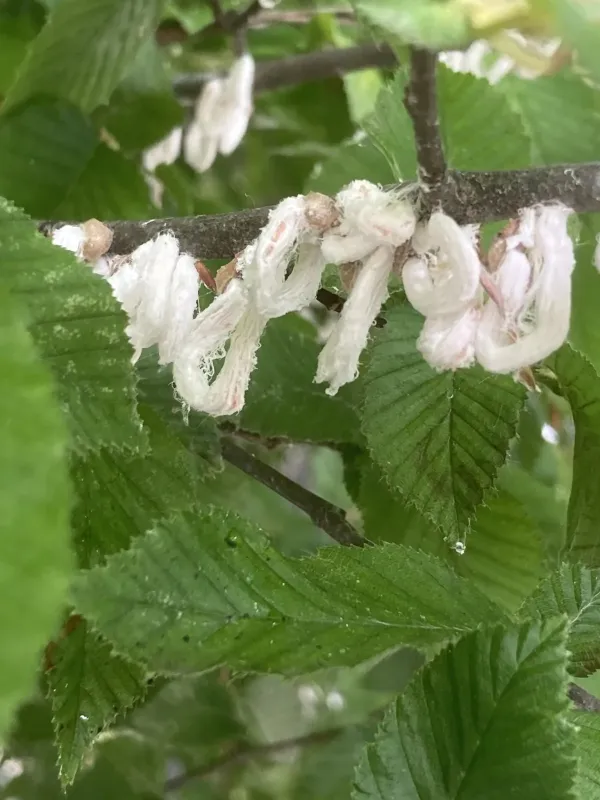
Takahashia japonica is a species of soft scale insect belonging to the family Coccidae. The most distinctive feature of the adult female is the white, curved, ribbon-like ovisac (egg sac) produced during the spring.
These conspicuous white structures wrap around thin twigs and branches, making the infestation highly visible to the naked eye. The female itself remains protected under a brown, flattened, shield-like body.
The insect undergoes hemimetabolous development, comprising egg, nymph (crawler), and adult stages. While males exist and are winged, they are rarely observed due to their short lifespan and cryptic nature.
First-instar nymphs, known as crawlers, are very small and active. They are responsible for the dispersal of the species across the host plant and, via wind, to adjacent trees.
Due to its invasive nature and specific biological characteristics, proper identification is crucial for early detection in nurseries and urban green areas.
What it damages
This pest is highly polyphagous, attacking a wide range of woody ornamental and fruit trees. Among its preferred hosts are maples (Acer spp.), fruit trees like apple, pear, and plum, and other landscape trees.
Damage occurs when both nymphs and adults pierce plant tissues to feed on phloem sap. This constant drainage of nutrients leads to leaf chlorosis, premature leaf drop, and stunted shoot growth.
A secondary, but highly damaging, effect is the production of honeydew. This sticky substance coats the leaves and branches, creating a perfect substrate for sooty mold growth.
Sooty mold blocks sunlight and clogs stomata, severely reducing the plant's photosynthetic efficiency. This leads to long-term decline in vigor and reduced resistance to environmental stress.
In cases of severe infestation, the cumulative stress can cause branch dieback or even the death of young, vulnerable saplings, resulting in significant aesthetic and economic impact.
When it appears
The biological cycle is strictly synchronized with the seasons. Overwintered mated females become active in early spring, coinciding with the beginning of sap flow in host plants.
Egg sac production occurs primarily in spring (typically April to May). This period is the most distinct phase, as the white structures become highly visible on twigs.
Crawler emergence typically occurs in early summer, often in June. This is a critical window for intervention, as the nymphs are actively moving and have not yet formed their protective shells.
Throughout the summer, nymphs settle on the underside of leaves to feed. In late autumn, they migrate back to the woody parts of the tree to overwinter until the next spring.
As a univoltine species, it produces only one generation per year, which simplifies the planning of management programs based on seasonal monitoring of specific life stages.
Control measures
Effective management requires a multi-faceted approach. Mechanical removal of infested twigs before crawler emergence is a highly effective, non-chemical method for small-scale infestations.
Chemical control should be timed to target the crawler stage in early summer. Systemic insecticides are generally preferred as they provide protection as the nymphs feed on the sap.
Dormant oil applications during late winter or early spring can be used to suppress overwintering populations. These oils physically coat the scales, causing suffocation before the egg-laying process begins.
Rigorous phytosanitary inspections of incoming nursery stock are essential to prevent the spread of the pest to new areas. Infested plants should be isolated and treated or destroyed immediately.
Biological control, including the encouragement of natural predators like ladybird beetles and lacewings, can play a supportive role in reducing populations in integrated pest management programs.
Taxonomy
- Latin name
- Takahashia japonica
- Order
- Hemiptera (bugs, aphids, leafhoppers)
- Family
- Coccidae
- EPPO code
- TAKAJA
Discussion
No discussions yet — be the first.