
White wax scale
Ceroplastes albolineatus
Description
How to identify
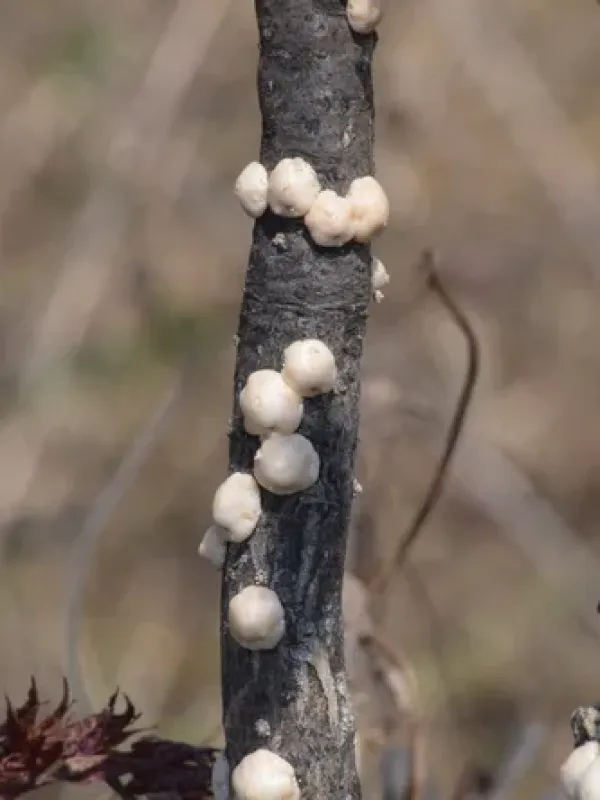
The white wax scale belongs to the order Hemiptera and the family Coccidae. Adult females are characterized by their bodies being covered in a thick layer of white or yellowish wax, which often gives them the appearance of small, waxy lumps on the plant surface.
Unlike armored scale insects, soft scales (coccids) do not possess a separate shell that can be detached. The waxy coating in Ceroplastes albolineatus is an integral part of the insect's body, providing defense against predators and dehydration.
The first-instar nymphs, commonly referred to as "crawlers," are small, mobile, and light-colored. They move actively across the plant to find suitable feeding sites, typically along the veins of leaves or on succulent young stems.
Sexual dimorphism is highly pronounced in this species. Males are relatively rare, smaller in size, and equipped with wings, whereas females are sedentary and remain attached to their feeding site for most of their lives.
Identification often involves examining the structure of the wax test. For members of the genus Ceroplastes, the wax often shows faint radial patterns or specific lobes that help distinguish them from other soft scale species.
What it damages
This pest is a major threat to evergreen woody plants and shrubs. Citrus crops, including lemons, oranges, and mandarins, are particularly susceptible and can suffer significant yield losses during heavy infestations.
Beyond citrus, many ornamental plants, such as ficus species and tropical foliage, are frequently infested. The insect feeds on young shoots, leaf petioles, and foliage, draining plant sap and reducing overall vigor.
The feeding process results in the removal of essential nutrients from the plant. Sustained pressure from a large colony can lead to stunted growth, reduced fruit quality, and, in severe cases, the death of individual branches or the entire plant.
The accumulation of honeydew secreted by the scale insects promotes the growth of sooty mold, which creates a black, unsightly film on leaves and bark. This restricts photosynthesis by physically blocking sunlight from the leaf surface.
The presence of the pest also weakens the host plant, making it significantly more vulnerable to secondary invasions by pathogens and other pests, leading to a rapid decline in plant health.
Signs of infestation
The most visible sign of an infestation is the presence of white, waxy bumps on the underside of leaves or along branches. These structures are firmly attached and often cannot be brushed off easily.
Sticky honeydew secretions on the leaves are a classic symptom of scale insect activity. This substance is sweet and attracts various insects, most notably ants, which protect the scale colonies from natural predators.
The secondary development of sooty mold is a key indicator of a long-term infestation. A dark, powdery substance on the leaves and stems often points to the fact that sap-sucking insects have been present for quite some time.
Affected plants often display symptoms of general decline, including chlorosis (yellowing of leaves), leaf curl, and premature defoliation. Growth patterns on infested shoots may also become irregular or twisted.
- White waxy bumps on stems and leaves.
- Sticky residue on foliage surfaces.
- Growth of black sooty mold.
- Increased ant activity on the tree.
- Yellowing and loss of leaves.
Control measures
Control is challenging due to the protective wax covering that makes the insect resistant to many contact insecticides. The most effective strategy is timing the application to coincide with the crawler stage, before the waxy shield is fully formed.
Systemic insecticides are the preferred choice for large-scale management, as they are absorbed into the plant tissues. When the scale feeds on the sap, it ingests the active ingredient, which is effective even against protected adults.
In greenhouses or home gardens, horticultural oils can be used. These oils work by suffocation, creating a film over the insect that prevents respiration, which is a safer alternative to synthetic chemical pesticides.
Good agricultural practices, such as pruning and destroying heavily infested branches, help manage the population density. Ensuring proper plant spacing and airflow can also make the environment less favorable for scale survival.
Biological control, utilizing parasitic wasps or predatory beetles, can play a vital role in integrated pest management programs. Maintaining a healthy balance of beneficial insects can often keep scale populations below economically damaging levels.
Taxonomy
- Latin name
- Ceroplastes albolineatus
- Order
- Hemiptera (bugs, aphids, leafhoppers)
- Family
- Coccidae
- EPPO code
- CERPAL
Discussion
No discussions yet — be the first.