
Little grebe
Tachybaptus ruficollis
Description
How to identify
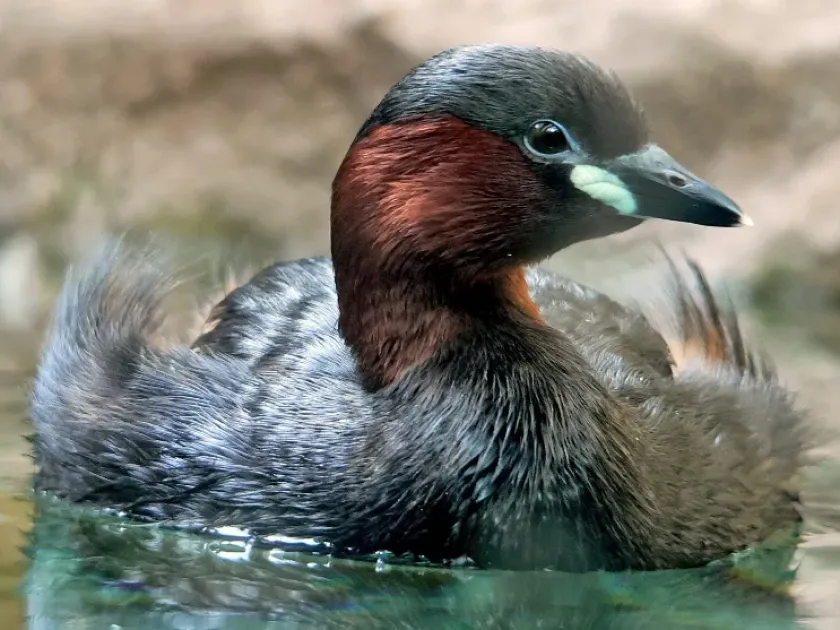
The little grebe (Tachybaptus ruficollis) belongs to the order Podicipediformes and the family Podicipedidae. It is a small waterbird characterized by its compact, rounded body and short tail.
During the breeding season, adults display a rich reddish-brown patch on their cheeks and neck. In winter, the plumage turns duller, typically gray-brown, which provides excellent camouflage.
The beak is straight and sharp, perfectly adapted for diving and catching small fish or aquatic invertebrates. They are highly skilled swimmers and divers.
They prefer quiet, freshwater habitats with abundant aquatic vegetation, where they construct floating nests anchored to reeds or other water plants.
The species is generally shy and secretive, often disappearing into dense vegetation when disturbed or diving to avoid detection.
What it damages
Little grebes can become a significant nuisance in commercial fish farms and hatcheries, particularly those focusing on juvenile fish production.
By preying on fish fry, they directly reduce the stock density and overall productivity of the aquaculture facility.
Injuries caused by their sharp beaks during failed capture attempts can lead to secondary infections, increasing mortality rates among the fish population.
When present in high numbers, they may deplete the available food resources, competing with the target fish species in smaller ponds.
Their persistent activity creates constant disturbance, which can adversely affect the growth rates and stress levels of the cultured fish.
When it appears
The little grebe returns to its breeding ponds as soon as the ice clears, typically from late March through April, depending on the latitude.
Peak activity occurs throughout the summer months when parents are busy foraging to feed their growing brood, leading to maximum predation pressure.
Autumn migration sees a dispersal of the population, though many individuals may remain on ice-free waters if the climate permits.
Wintering birds can cause continuous damage to indoor or heated industrial fish ponds, where they find open water and abundant food supplies.
Seasonal dynamics are strongly linked to the availability of foraging sites and the presence of nesting material in the pond environment.
Signs of infestation
A primary indicator of their presence is a characteristic, high-pitched, whinnying call often heard within dense reed beds.
Small surface ripples and vortexes formed by diving grebes reveal their feeding activity within the pond's interior.
Floating nesting platforms, often woven into emergent vegetation, are a definitive sign of an established breeding colony or pair.
Direct sightings of the birds, which quickly vanish beneath the water surface upon approach, serve as confirmation of their occupation.
Unexplained decline in fry counts within protected nurseries often suggests predation by small waterbirds like the little grebe.
Control measures
The most effective strategy for aquaculture is the installation of overhead netting to completely exclude birds from critical nursery ponds.
Acoustic deterrents that broadcast alarm calls or predator sounds can effectively discourage the birds from settling in a specific pond.
Management of shoreline vegetation by thinning out reeds can reduce the attractiveness of the site for nesting and hiding.
- Utilizing floating visual deterrents such as reflective tapes
- Installing physical barriers around the pond perimeter
- Conducting regular population monitoring to anticipate threats
Operational adjustments, such as adjusting fish stocking times to avoid peak bird activity, can help mitigate potential economic losses.
Taxonomy
- Latin name
- Tachybaptus ruficollis
- Family
- Podicipedidae
- EPPO code
- TACBRU
Discussion
No discussions yet — be the first.