
Pied-billed grebe
Podilymbus
Description
How to identify
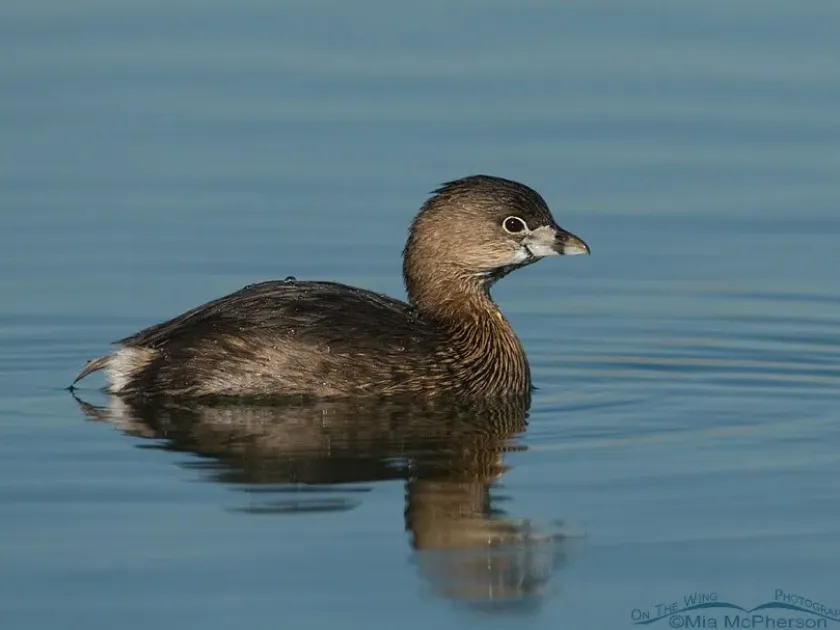
The pied-billed grebe (Podilymbus podiceps) is a water bird belonging to the Podicipedidae family. It is known for its compact body and a stout, short bill with a distinct black vertical band during the breeding season.
These birds are master divers, perfectly adapted to an aquatic lifestyle. They possess brown, mottled plumage that provides excellent camouflage within the dense vegetation of ponds and canals.
Systematically, they are classified under the order Podicipediformes. They spend most of their lives in the water, making them challenging to track during standard field scouting.
The breeding cycle involves building floating nests made of aquatic plant matter, well-hidden in cattails or reeds. Their secretive nature makes them highly successful in navigating complex water environments.
While they are not traditional crop pests, their preference for irrigation infrastructure can create technical difficulties for agricultural operations.
What it damages
The primary concern regarding the pied-billed grebe in an agricultural context is the interference with water management and irrigation systems.
By using reeds and aquatic vegetation to construct their floating nests, these birds can cause blockages in irrigation canals, leading to reduced water flow and inefficiency in field delivery.
In specialized crops like rice, the birds’ foraging and diving habits can cause physical damage to young seedlings, impacting plant density in flooded sections.
Their predation on small fish and aquatic insects within irrigation reservoirs may disrupt the biological control mechanisms that help manage other insect pests.
Additionally, the accumulation of guano in closed irrigation systems can affect water quality, which may be detrimental for specific crops sensitive to changes in water chemistry.
When it appears
Grebe activity peaks during the spring and summer breeding seasons when they establish nesting sites near irrigation water sources.
Migratory patterns during fall and spring can lead to sudden increases in populations on farming properties, necessitating proactive monitoring.
In warmer months, their presence is more common in shallow areas where the temperature supports the small prey species they consume.
Winter activity varies by region, with birds migrating away from frozen environments, though they may remain year-round in southern areas with mild climates.
Agro-scouting should be intensified during the crop germination phase to ensure irrigation efficiency is not compromised by nest-building activities.
Signs of infestation
The most prominent sign of their presence is the discovery of floating nests made of rotting vegetation, typically tucked into the edges of reed beds.
Audible signals, often described as hollow, cuckoo-like sounds, serve as an early warning that a pair is nesting nearby, even if they remain hidden.
Debris piles, such as twigs and plant stalks accumulating at irrigation intake screens or pumps, are a common indicator of grebe interference.
Evidence of young plant damage in aquatic crops or the sudden disappearance of small fish from small farm ponds can indicate a resident grebe population.
Observing birds diving repeatedly in a specific area is a direct indicator of their foraging activity, signaling a potential point of disturbance.
Control measures
Installing mesh screens on irrigation intake pipes and canal filters is an effective preventative measure to keep birds out of critical water systems.
Managing aquatic vegetation along canal banks reduces the availability of materials and nesting sites, discouraging the birds from settling in those specific areas.
Using bird deterrents, such as ultrasonic emitters or visual scare devices, can provide temporary relief in areas where high bird traffic interferes with equipment.
Regular maintenance and cleaning of irrigation channels prevent the accumulation of plant debris that birds use to secure their floating nests.
Consulting with local wildlife authorities is recommended if a large colony settles, as they can provide guidance on humane deterrent methods or relocation strategies.
Taxonomy
- Latin name
- Podilymbus
- Family
- Podicipedidae
- EPPO code
- PODLSP
Discussion
No discussions yet — be the first.