
Rhododendron borer
Synanthedon rhododendri
Description
How to identify
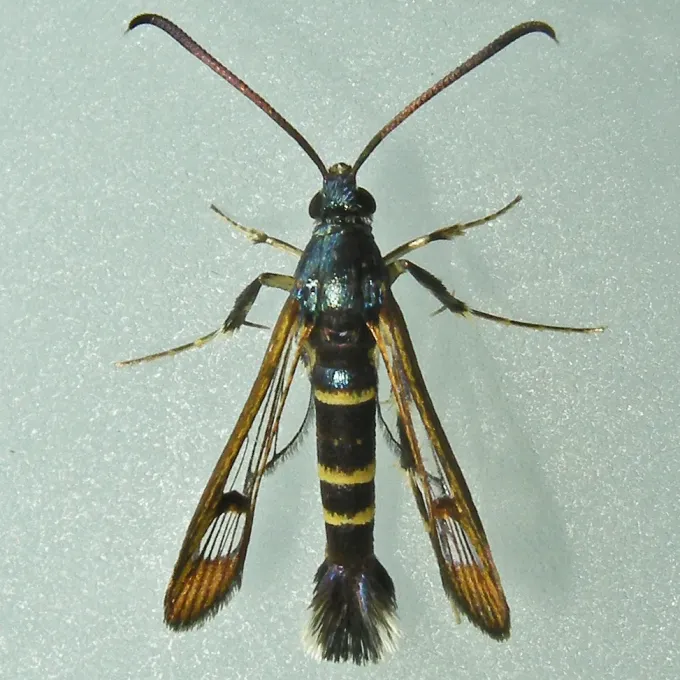
The Rhododendron borer (Synanthedon rhododendri) is a small clearwing moth that mimics the appearance of a wasp or hornet, which is typical for the Sesiidae family. The wingspan of an adult moth is approximately 15-20 mm, featuring transparent wings with dark margins.
The insect's body displays bright yellow or orange stripes, making it visually resemble Hymenoptera species. This mimicry acts as a survival mechanism, helping the adult moth avoid predators like birds and larger predatory insects during the summer months.
The borer larva reaches up to 15 mm in length and has a whitish or yellowish body with a distinct brown head. The larval stage is the most damaging to ornamental shrubs, as their hidden life cycle inside the wood makes them difficult to detect early.
The insect's development takes place within the plant tissues, shielding it from many contact-based insecticides. Adults are usually spotted only during their active flight period in late spring or early summer.
In temperate climates, the moth's life cycle typically lasts one to two years. The majority of the pest's lifespan is spent in the larval stage, boring through the wood of rhododendrons.
What it damages
The primary host plants for this pest are members of the genus Rhododendron. Damage occurs in both cultivated varieties and wild species growing in gardens and park settings.
Larvae colonize stems, branches, and the root collar, entering through bark fissures or previous mechanical injury sites. By feeding on cambium and wood tissues, the larvae disrupt the plant's vascular system and nutrient flow.
Severe infestation can lead to the complete death of the shrub due to compromised circulation to the upper canopy. Young saplings and stressed bushes are particularly susceptible and often lack the vigor to resist the borer's colonization.
Secondary fungal infections often occur at the larval entry points, accelerating the dieback of infested branches. Stressed plants also show reduced winter hardiness and become more prone to secondary environmental stressors.
The structural damage caused by boring makes branches fragile; they frequently break during high winds or under the weight of snow. Infested mature shrubs may lose their aesthetic shape and vigor for several seasons.
Signs of infestation
The first sign of infestation is often the premature yellowing and wilting of individual leaves or entire shoots in the upper part of the canopy. Over time, branches begin to desiccate and die without an obvious cause.
Close inspection of the bark reveals small entry holes through which larvae push out frass, which looks like fine sawdust or wood shavings. These signs of activity often accumulate at the base of the shrub.
Characteristic swellings, irregularities, or bark cracks may appear on the surface of the stems, indicating tunnels inside. If the bark is peeled back, winding larval galleries become visible.
During summer, gardeners might observe the adult moths fluttering around the shrubs on sunny days. Their flight is characterized by sharp, quick movements resembling those of a fly or a wasp.
- Yellowing of leaves on specific shoots.
- Presence of brownish frass (sawdust) on the bark surface.
- Visible entry holes in the wood.
- Wilting of branch tips in mid-summer.
Control measures
Mechanical control involves timely sanitary pruning and the destruction of infested branches containing larvae. Pruning cuts must be made well below the identified tunnel sites, ensuring healthy tissue is reached.
Maintaining high-level horticultural practices is crucial: regular watering, fertilization, and protection from physical injury enhance the natural immunity of rhododendrons. Healthy plants are significantly less attractive to borers.
The use of pheromone traps during the peak moth flight period helps monitor populations and disrupt the mating cycle. Traps should be hung within the canopy of the shrubs in late May.
Chemical control strategies include applying systemic insecticides during the period when young larvae hatch from eggs, before they bore deep into the wood. Products containing organophosphates or neonicotinoids are generally effective.
Regular monitoring of shrubs throughout the growing season allows for early detection of an infestation. Removing infested parts promptly prevents the spread of the Rhododendron borer to neighboring plants in the garden.
Taxonomy
- Latin name
- Synanthedon rhododendri
- Order
- Lepidoptera (butterflies)
- Family
- Sesiidae
- EPPO code
- SYNARH
Discussion
No discussions yet — be the first.