
Lesser peachtree borer
Synanthedon pictipes
Description
How to identify
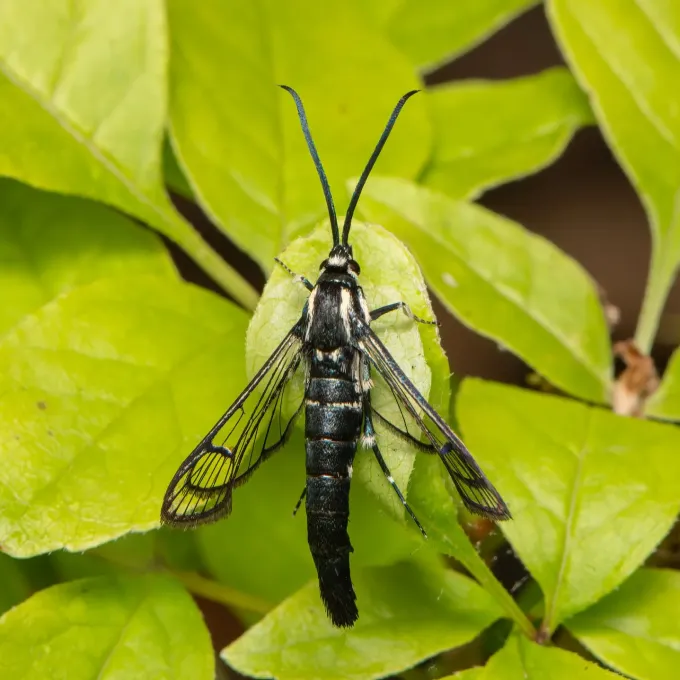
The lesser peachtree borer (Synanthedon pictipes) is a moth species belonging to the Sesiidae family, commonly known as clearwing moths.
Adult moths mimic wasps in appearance, possessing a black body with yellow stripes and narrow, transparent wings with dark margins.
The larvae are cream-colored caterpillars with amber-brown heads, measuring approximately 15-20 mm when fully developed.
Unlike the greater peachtree borer, this species predominantly attacks the aerial parts of the tree, including the trunk and major branches.
The life cycle involves overwintering as larvae beneath the bark, which allows them to survive cold winter temperatures in protective chambers.
What it damages
The primary hosts include various stone fruits such as peaches, cherries, plums, and apricots, causing significant economic losses in orchards.
Larvae feed on the inner bark and cambium layer, creating extensive galleries that disrupt the transport of water and nutrients within the tree.
Trees with pre-existing injuries, such as pruning cuts, cracks, or winter sunscald, are the most susceptible to larval colonization.
Chronic infestations weaken the structural integrity of branches, eventually leading to branch dieback or total tree loss if left untreated.
Damaged trees exhibit reduced vigor, poor yield, and increased susceptibility to opportunistic fungal pathogens that thrive in woody wounds.
Signs of infestation
The most visible sign of an infestation is heavy gumming on the bark, as the tree attempts to seal off the tunnels created by the larvae.
Accumulations of frass, which is a mix of excrement and chewed wood fragments, can be found near the entry and exit holes of the galleries.
Loose or dead bark flakes away easily, revealing the underlying galleries filled with larval debris or the insects themselves.
Foliage on the infested limbs may show symptoms of water stress, such as wilting during hot periods or early senescence in autumn.
Empty pupal casings often protrude from the exit holes in the bark, indicating that adult moths have emerged and the generation is complete.
Control measures
Integrated Pest Management starts with cultural practices that reduce the number of sites suitable for female egg-laying, such as proper pruning.
Avoiding mechanical injury to the trunks during cultivation and applying reflective white paint can significantly reduce the risk of infestation.
Pheromone mating disruption programs are highly effective for commercial orchards to reduce the population density without broad-spectrum spraying.
Targeted insecticide applications should coincide with the peak flight period of adult moths to prevent larvae from successfully boring into the bark.
Regular monitoring using pheromone traps helps to determine the precise timing for interventions and assesses the success of control measures.
Taxonomy
- Latin name
- Synanthedon pictipes
- Order
- Lepidoptera (butterflies)
- Family
- Sesiidae
- EPPO code
- SYNAPI
Discussion
No discussions yet — be the first.