
Alder Clearwing
Synanthedon mesiaeformis
Description
How to identify
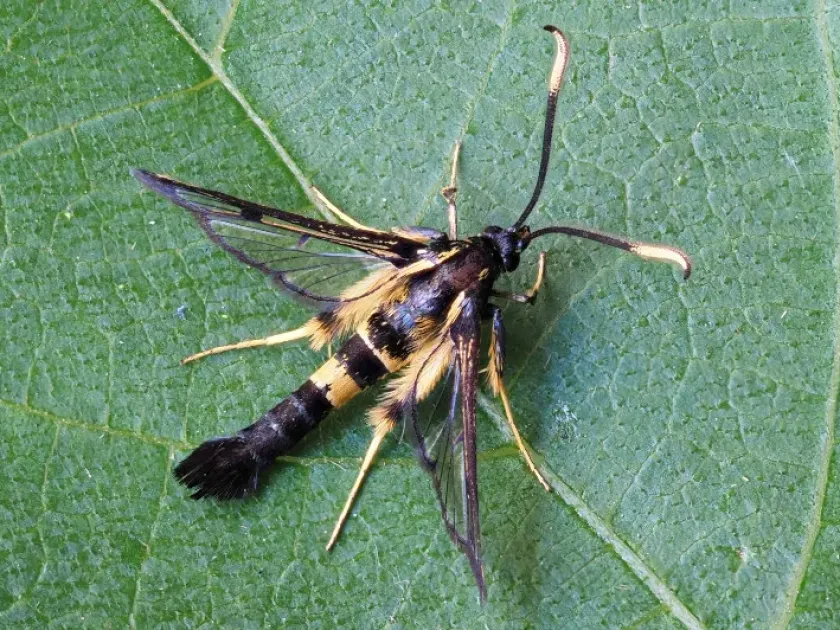
The Alder Clearwing (Synanthedon mesiaeformis) is a moth belonging to the Sesiidae family. Its appearance is a classic example of Batesian mimicry, as the adult moth strongly resembles a wasp or a hornet.
The wingspan typically measures between 20 and 25 millimeters. The wings feature transparent areas with distinct scales on the margins, and the body exhibits colorful bands that help it blend into its environment or deter predators.
Larvae are pale yellow with a brown, chitinized head. They are xylophagous, meaning they bore directly into the wood of the host plant to feed on the cambium and xylem tissues.
The lifecycle of this species usually spans two years. This extended development time allows the larvae to penetrate deep into the woody tissues, shielding them from environmental extremes and many natural predators.
Pupation occurs within the larval gallery. Before the adult moth emerges, the pupa uses its specialized structures to break through the bark, leaving the pupal casing protruding from the exit hole.
What it damages
The primary hosts for the Alder Clearwing are species within the Alnus genus (alder). These moths often target trees that are already stressed due to environmental factors, such as drought or waterlogging.
Feeding by the larvae causes significant structural damage to the cambium layer. This interrupts the transport of water and nutrients, leading to the gradual decline of the tree's health.
In addition to physical damage, the galleries created by the larvae serve as entry points for pathogenic fungi and bacteria. This secondary infection often causes localized rot and wood decay.
Severe infestations can lead to crown dieback, reduced annual growth, and, in young or fragile specimens, the total death of the tree.
The economic and aesthetic impact is particularly high in decorative landscapes and forestry plantations, where the health and visual integrity of the trees are essential.
When it appears
The flight period for adult Alder Clearwings occurs from late spring through the summer months, typically spanning from June to August depending on local climatic conditions.
Adult moths are diurnal, meaning they are active during the day. They mate and lay their eggs individually on the bark, specifically targeting crevices, wounds, or areas where the bark is thin.
After hatching, the neonate larvae immediately begin boring into the bark. They spend the vast majority of their lifecycle hidden beneath the surface, feeding on the underlying tissues.
Larvae overwinter inside the tree trunk, sheltered within their tunnels. They resume feeding in the spring, eventually undergoing metamorphosis to emerge as adults.
The most intense feeding activity takes place during the active growing season of the tree, when nutrient flow is at its peak and the wood is softer and more accessible.
Signs of infestation
The most recognizable sign of an infestation is the presence of frass (larval excrement) at the base of the trunk. This fine, wood-colored debris often accumulates in small piles.
Exit holes found on the trunk or large branches are definitive evidence of past or current occupation. These holes are typically small and oval-shaped, consistent with the size of the moth.
Bark swelling or the presence of sap flow is a common reaction of the tree to the presence of larvae. If you see sap exuding from unusual spots, it may indicate a larval gallery.
Wilting of foliage or premature browning of leaves on specific branches can suggest that the nutrient supply to those parts has been compromised by boring larvae.
Carefully peeling away small sections of dead bark may reveal the winding, flattened galleries that are characteristic of this species' feeding behavior.
Control measures
Managing the Alder Clearwing requires a strategic approach, focusing on maintaining tree vigor and preventing larval establishment through various methods.
Sanitation is key; removing heavily infested trees or branches helps reduce the local population pressure and prevents the further spread of the pest to healthy specimens.
Protecting the tree trunk from mechanical injury is essential, as these wounds provide perfect sites for female moths to deposit their eggs.
Pheromone traps can be utilized during the flight period to monitor population levels and, in some cases, to disrupt the mating process of the moths.
- Apply systemic insecticides to trunks during the early summer flight period.
- Use wound dressings on bark injuries to create a physical barrier against egg-laying.
- Ensure adequate irrigation and fertilization to promote overall tree resilience.
- Encourage the presence of insectivorous birds and parasitic wasps in the habitat.
Taxonomy
- Latin name
- Synanthedon mesiaeformis
- Order
- Lepidoptera (butterflies)
- Family
- Sesiidae
- EPPO code
- SYNAME
Discussion
No discussions yet — be the first.