
Kathya's Clearwing
Synanthedon kathyae
Description
How to identify
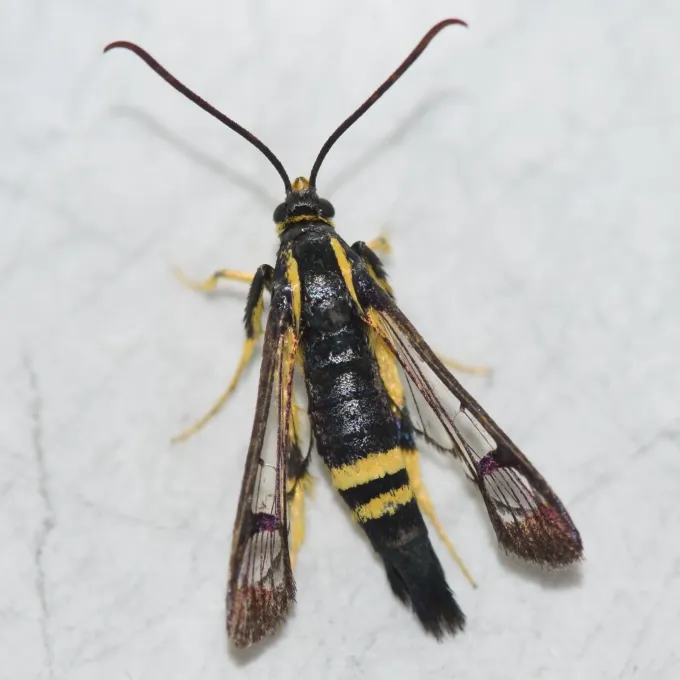
Kathya's Clearwing (Synanthedon kathyae) is a moth belonging to the family Sesiidae. Adult moths mimic hymenopterans, such as wasps, featuring clear, transparent areas on their wings and striped bodies.
The adult body is slender and covered in scales that can easily shed. They are diurnal, showing peak activity levels during bright, sunny daylight hours.
The larvae, or caterpillars, have a whitish body and a distinct brown head. They are endophagous, meaning they live and feed inside the tissues of host plants.
Eggs are small and oval, usually deposited singly by females near cracks in the bark or near previous mechanical injuries on the tree trunks.
Positive identification often requires pheromone traps, as the visual appearance of this species closely resembles other members of the clearwing family.
What it damages
The primary hosts for Synanthedon kathyae are various woody plants and shrubs, particularly those within the Rosaceae family.
The pest poses a threat to both wild species and cultivated fruit trees, with young saplings being particularly vulnerable to significant damage.
Larvae burrow under the bark, excavating tunnels within the cambium layer and sapwood, which severely disrupts the plant's nutrient transport system.
Severe infestations weaken the tree, making it susceptible to cold stress, secondary infections, and a general decline in growth vigor.
In cases of heavy infestation, larvae can cause the dieback of entire skeletal branches and may lead to the total death of the infested tree.
When it appears
The adult flight period of Synanthedon kathyae generally occurs from late spring through the summer months, depending on local weather conditions.
The activity of the moths is highly synchronized with the phenological development of host plants, aiding in successful egg-laying cycles.
The life cycle duration can vary from one to two years, influenced by temperature fluctuations and the specific geographic region of distribution.
Larvae overwinter inside the galleries they have created within the wood, which provides them with protection from harsh winter environmental conditions.
Pupation takes place in the spring; subsequently, the emerging moth bores an exit hole through the bark to reach the surface for mating.
Signs of infestation
A primary indicator of an infestation is the accumulation of "frass" (larval excrement) near the base of the trunk or within bark fissures.
Visual inspection often reveals darkened or slightly loose areas of bark, indicating areas where the larvae have been feeding on the cambium layer.
The presence of empty pupal exuviae protruding from exit holes is a clear sign that adults have successfully emerged from the host tree.
Wilting of terminal shoots or individual branches without obvious pathological causes can be a secondary symptom of internal vascular damage.
Stripping away affected bark reveals winding tunnels tightly packed with sawdust and larval waste, confirming the internal presence of the pest.
Control measures
Essential agrotechnical practices include the mechanical removal of dead bark and sealing wounds with grafting wax to prevent oviposition.
The deployment of pheromone traps serves as an effective tool for both monitoring population levels and disrupting the mating cycle of the moths.
Sanitary pruning, involving the removal and destruction of infested branches, is critical to reduce the overwintering larval population in the orchard.
Systemic insecticides, applied during the sensitive window of larval eclosion, are highly effective in managing severe or persistent outbreaks.
Maintaining high horticultural standards and tree vigor makes plants less attractive to the pest and improves their recovery from infestation.
Taxonomy
- Latin name
- Synanthedon kathyae
- Order
- Lepidoptera (butterflies)
- Family
- Sesiidae
- EPPO code
- SYNAKA
Discussion
No discussions yet — be the first.