
Cherry borer
Synanthedon cruentata
Description
How to identify
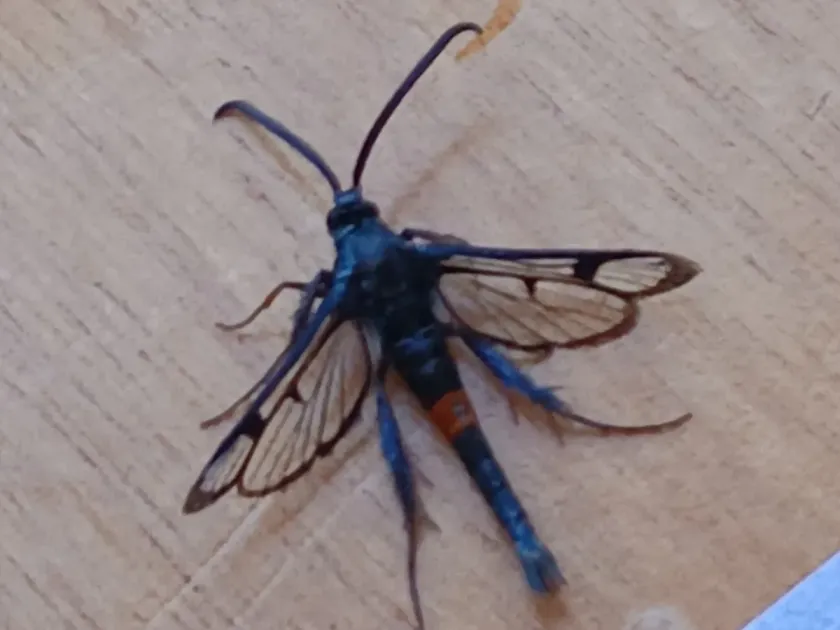
The cherry borer (Synanthedon cruentata) is a member of the Sesiidae family, commonly known as clearwing moths. These insects are famous for their mimicry, as they look remarkably like wasps.
Adult moths feature narrow, transparent wings with dark borders. Their bodies are marked with vibrant yellow or red stripes, which helps in identifying the species in the field.
The larva, or caterpillar, is the most destructive stage. It has a pale, yellowish-white body, a distinct brown head, and well-developed thoracic legs, designed for tunneling.
The lifecycle typically spans one year. However, in cooler environments, the development of the larvae can take up to two years, making pest monitoring essential.
Adults are diurnal insects, most active during sunny weather. They rely on their wasp-like appearance to evade predators while searching for egg-laying sites.
What it damages
The primary hosts for this pest include stone fruit trees, specifically cherry and sweet cherry. It can also occasionally infest plum and apricot trees if they are stressed.
Larvae tunnel directly under the bark, feeding on the phloem and cambium layers. These galleries disrupt the flow of nutrients and water throughout the tree.
Severe infestations weaken the tree structure significantly. The damaged areas often become focal points for secondary infections by fungi and bacteria.
Trees infested by cherry borers often display stunted growth, wilting of individual branches, and reduced fruit quality due to the tree's impaired physiological state.
If the damage is left untreated, the borer galleries can girdle the trunk or major branches, eventually leading to the death of the entire tree.
When it appears
The flight period for adult moths generally begins in late spring or early summer, corresponding with the flowering and post-flowering stages of cherry trees.
Females deposit eggs individually into bark crevices, pruning wounds, or mechanical scars on the trunk, where young larvae can easily enter the wood.
Upon hatching, larvae immediately bore into the bark to begin feeding. They continue to develop throughout the summer, building galleries for shelter and food.
Overwintering occurs inside these galleries under the bark. Larvae of different ages spend the winter months dormant, protected from the cold by the host plant's tissues.
In the following spring, larvae resume feeding and growth. They eventually pupate near the exit holes they have prepared before the next cycle of adult emergence.
Signs of infestation
The most visible sign of infestation is gummosis, where the tree exudes sap from the entry holes. This sap often mixes with frass (insect excrement) to form dark lumps.
Careful observation during the growing season might reveal thinning leaves or yellowing foliage on specific branches, indicating interrupted vascular pathways.
Entry holes in the lower trunk or near the forks of major branches are clear indicators of the borer's presence within the tree's vascular system.
Peeling away dead bark near signs of sap leakage usually reveals the tortuous tunnels carved by the larvae as they feed on the cambium.
Using pheromone traps is an effective way to detect the presence of adults in the orchard early, allowing for timely intervention before significant damage occurs.
Control measures
Sanitation is the most effective management strategy. This includes the regular pruning of infested branches and the immediate disposal of all prunings through burning.
Maintaining tree vigor is crucial. Proper fertilization and watering help the tree heal wounds, making it less attractive to egg-laying females.
Chemical control should be timed to coincide with the moth flight period, as identified by trap monitoring, to target larvae before they burrow too deeply.
- Apply white wash to tree trunks to deter egg-laying.
- Seal mechanical wounds and pruning cuts with protective coatings.
- Encourage natural predators such as birds and beneficial insects in the orchard.
- Remove any root suckers that harbor pests near the soil surface.
A proactive and integrated approach to orchard management is the best way to prevent cherry borer populations from reaching damaging levels.
Taxonomy
- Latin name
- Synanthedon cruentata
- Order
- Lepidoptera (butterflies)
- Family
- Sesiidae
- EPPO code
- SYNACR
Discussion
No discussions yet — be the first.