
Dogwood borer
Synanthedon corni
Description
How to identify
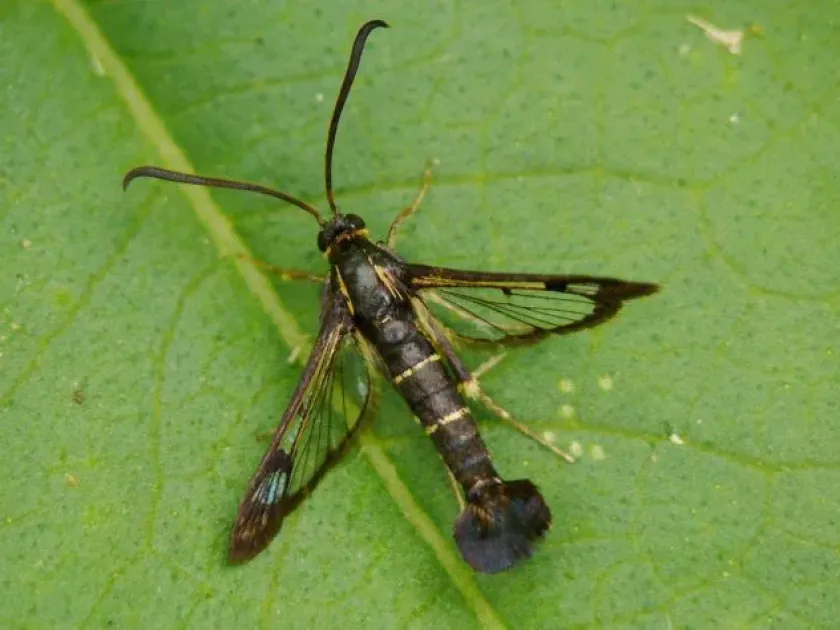
The dogwood borer (Synanthedon scitula) is a clearwing moth of the Sesiidae family. These insects are well-known mimics, as adult moths bear a striking resemblance to wasps, which serves as a natural defense mechanism against predators.
The adult moth features clear, transparent wings with dark margins and a yellow-banded body. Their life cycle consists of the egg, larval (caterpillar), pupal, and adult stages, with larvae being the primary cause of plant damage.
Adults are diurnal and typically emerge during the late spring and summer months. Due to their deceptive appearance, they are rarely recognized by gardeners, making early detection difficult.
The species belongs to the order Lepidoptera. Its biology is characterized by a hidden larval development stage, where caterpillars feed underneath the bark of host trees, protected from many external environmental factors.
Pupation occurs within the tunnels carved by the larvae. Upon emergence, the empty pupal cases are often left protruding from the exit holes in the bark, which serves as a definitive identification marker.
What it damages
The primary host for this pest is the dogwood tree (Cornus species), although it can also infest other ornamental and fruit-bearing trees. Larvae burrow into the tree, consuming the phloem and cambium layers.
By feeding on the inner bark, the larvae disrupt the vascular system of the tree, which hinders the transport of water and nutrients from the roots to the branches.
Multiple larvae infestations on a single tree can lead to girdling, a condition where the circular path of the larva cuts off the entire nutrient supply, resulting in the death of the limb or the whole tree.
The damage caused by the borer significantly weakens the tree, creating entry points for secondary pathogens, including various fungal diseases and bark cankers.
In landscape settings, the presence of these borers significantly reduces the aesthetic value and long-term health of dogwood plantings, necessitating proactive intervention.
When it appears
The flight period of adult moths typically begins in late spring and can extend through mid-summer, depending on local temperatures and regional climate.
Larvae remain active within the tree throughout the growing season. As temperatures rise in the spring, larval feeding resumes, which is when the most visible symptoms begin to appear.
Pupation is timed to coincide with favorable weather conditions for the adult stage. The emergence period can be monitored using pheromone traps to time pesticide applications accurately.
The life cycle is often staggered, meaning that different life stages may be present simultaneously within the same host tree, complicating control efforts.
Proper timing is critical for pest management; interventions must occur before the larvae successfully tunnel deep into the wood where they are unreachable.
Signs of infestation
The most noticeable sign of a dogwood borer infestation is the presence of frass (larval waste) that looks like fine sawdust pushed out through holes in the bark.
Swollen, cracked, or deformed bark is a common indicator of underlying larval activity. These areas often appear discolored compared to the surrounding healthy bark.
Exudation of sap or gumming on the trunk and primary branches is frequently observed as the tree attempts to seal the wounds inflicted by the larvae.
A declining canopy, characterized by yellowing leaves, stunted growth, and dieback of individual branches, often signals that the tree is suffering from significant borer pressure.
Exit holes left by emerging adults are small, round openings on the surface of the bark, sometimes with the remnants of the pupal case still visible at the entrance.
Control measures
Cultural control practices include maintaining tree vigor through proper irrigation, mulching, and fertilization, as stressed trees are significantly more susceptible to infestation.
- Avoiding mechanical damage to the trunk from mowers and trimmers, which creates ideal entry sites for the borer.
- Removing and destroying infested branches or severely damaged trees during the dormant season to reduce the overall population.
- Using pheromone traps to monitor adult flight patterns and time chemical or biological applications effectively.
- Applying biological insecticides or systemic chemicals to the bark surface during the peak adult egg-laying season.
It is crucial to treat the trunk area thoroughly, focusing on wounds, graft unions, and areas with previously noted borer activity to kill larvae before they penetrate the wood.
Integrated Pest Management (IPM) strategies, which combine monitoring with selective chemical use, are the most effective way to protect dogwood trees long-term.
Taxonomy
- Latin name
- Synanthedon corni
- Order
- Lepidoptera (butterflies)
- Family
- Sesiidae
- EPPO code
- SYNACO
Discussion
No discussions yet — be the first.