
Oak clearwing
Synanthedon conopiformis
Description
How to identify
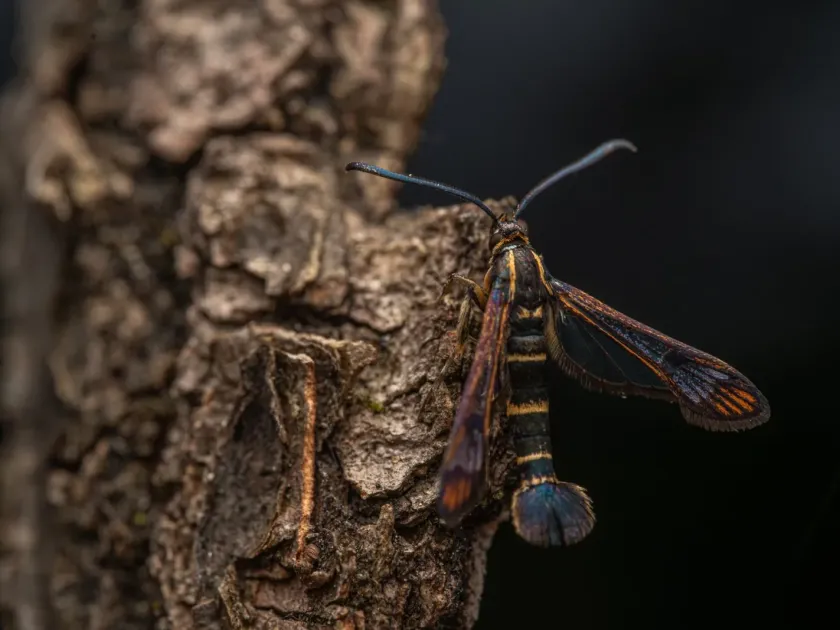
The oak clearwing Synanthedon conopiformis is a moth belonging to the family Sesiidae, known for its remarkable resemblance to wasps and hornets through Batesian mimicry.
Adult moths feature slender bodies with transparent wings, bordered by dark scales, and distinct yellow transverse bands on the abdomen that enhance their wasp-like appearance.
The larvae, which are the damaging stage of this insect, possess cream-colored bodies with sclerotized brown heads and are specialized for a subcortical lifestyle.
This species follows a complete metamorphosis cycle, progressing through egg, larval, pupal, and adult stages within its host plant environment.
Despite their mimicry, they can be identified in the field by entomologists through their flight patterns and the specific ecological niches they occupy on oak trees.
What it damages
This pest primarily infests oak species, particularly the pedunculate oak, where it targets the bark and the underlying cambium layer for development.
Larvae excavate extensive galleries beneath the bark, which disrupt the transport of nutrients and water, leading to the physiological weakening of the host tree.
Young trees and saplings are most vulnerable, as significant larval activity can girdle the stem, resulting in the death of the upper parts of the tree.
The galleries created by the larvae also serve as entry points for various secondary pests and fungal pathogens, further complicating the health status of the tree.
In forest management, the damage caused by these clearwing moths can lead to a decrease in the quality of timber and a reduction in the overall stand growth rate.
When it appears
Adult moths are typically active during the late spring and summer months, with flight periods usually peaking between May and July depending on regional temperatures.
During this flight period, females lay their eggs strategically in bark crevices, especially near wounds or existing lesions on the trunk of the tree.
Larval development occurs under the bark throughout the growing season, often requiring one to two years to complete, depending on the climatic conditions of the area.
The larvae overwinter in their galleries beneath the bark, where they remain sheltered from extreme cold and predators until development resumes the following spring.
Pupation takes place inside the larval tunnels, followed by the pupa partially protruding from the exit hole to allow the adult moth to emerge successfully.
Signs of infestation
Early indicators of infestation include the presence of fine, brown frass (larval excrement) accumulating in crevices on the bark or at the base of the trunk.
Trees may exhibit localized sap flow or gumming, which is a common stress response triggered by the physical damage caused by the feeding larvae.
Empty pupal exuviae left protruding from the exit holes are a classic diagnostic sign that adults have successfully emerged from the bark galleries.
Crown symptoms often include signs of distress, such as thinning foliage, premature yellowing of leaves, and the progressive dieback of branches from the top down.
Closer inspection of the bark surface reveals irregular, winding ridges or depressions that correspond to the underlying tunnels excavated by the larvae.
Control measures
Good silvicultural practices, such as maintaining healthy, vigorous stands and removing heavily infested trees, are essential to preventing population outbreaks.
Preventing mechanical injuries to trunks during maintenance activities is crucial, as fresh wounds serve as highly attractive sites for egg-laying females.
Pheromone traps are highly effective for monitoring adult activity and can be used to capture males, thereby reducing the reproductive potential of the local population.
In ornamental or high-value tree settings, localized chemical control or the excision of larvae from small, identified galleries can be performed as a remedial measure.
Ongoing surveillance and early detection are key; conducting thorough inspections of tree trunks during the late winter or early spring allows for timely intervention.
Taxonomy
- Latin name
- Synanthedon conopiformis
- Order
- Lepidoptera (butterflies)
- Family
- Sesiidae
- EPPO code
- SYNACN
Discussion
No discussions yet — be the first.