
Garlic fly
Suillia lurida
Description
How to identify
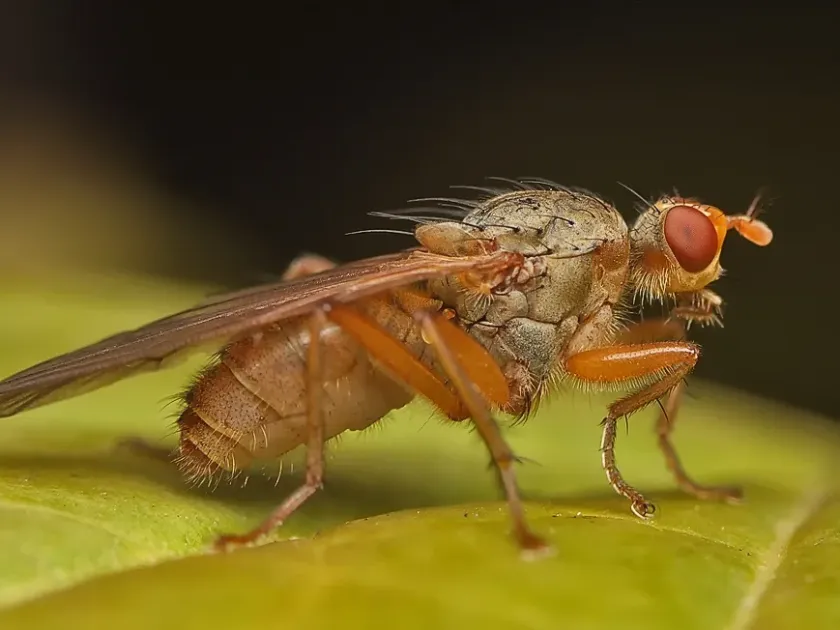
The garlic fly (Suillia lurida) belongs to the Heleomyzidae family. It is a small fly with a yellowish-brown color that easily blends into the soil and garden environment.
Adult flies are active during cool spring weather, which makes them a specific threat to garlic and onion crops that start growing early in the season.
The larvae are legless, pale-colored maggots that feed specifically on the tissues of plants belonging to the Allium genus.
The biological cycle of this pest is strictly adapted to the temperature fluctuations of the soil, allowing it to remain dormant as a pupa until the next favorable season.
It is difficult to spot the adults in the field because they appear only briefly, making preventative monitoring with sticky traps a recommended practice.
What it damages
The garlic fly primarily affects garlic and onions, with a strong preference for young, developing shoots in early spring.
Larvae burrow into the plant's basal plate and stems, disrupting the flow of water and nutrients, which eventually leads to the wilting of the plant.
Severe infestations can destroy an entire seedling, causing significant gaps in the rows and reducing the overall stand density of the crop.
Secondary fungal and bacterial rot often colonize the damaged tissues, causing the plant to turn slimy and smell foul, which complicates the diagnosis.
Economic damage is twofold: the loss of young plants in the spring and the decreased storability of the bulbs due to weakened immunity.
When it appears
The garlic fly is a typical early-spring pest. The flies emerge when temperatures start to rise above 5–10 degrees Celsius (41–50 Fahrenheit).
This timing is critical because it perfectly aligns with the emergence of overwintered garlic, which is highly vulnerable in its early vegetative stage.
The duration of the damage period is directly related to the spring weather; cool and rainy springs extend the window during which the fly is active.
Once the soil warms up significantly, the fly enters a diapause state and does not cause further damage to mature vegetable crops throughout the summer.
Therefore, timing the planting and monitoring the fields in the first weeks of spring are the most important factors for effective pest control.
Signs of infestation
The earliest symptom is the yellowing and subsequent drooping of the leaf tips, which is often misidentified as nutrient deficiency or drought stress.
When pulling an affected plant, you will find that the base is soft, decayed, and contains clear evidence of larval feeding tunnels.
Small white maggots may be visible inside the damaged plant parts if examined shortly after the first signs of wilting appear.
Plants often grow unevenly in patches, indicating where female flies have laid their eggs in the soil near the host plants.
The lack of a healthy root system in infested plants makes them extremely easy to pull from the ground, confirming the damage to the basal plate.
Control measures
Crop rotation is the most effective management strategy; garlic should not be planted in the same area more frequently than once every three to four years.
Good agricultural practices, such as choosing healthy, treated seed cloves and planting at the optimal time, significantly reduce the risk of infestation.
- Deep plowing in the autumn to expose pupae to frost and predators.
- Using row covers (agrofibre) during the peak emergence of flies in spring.
- Immediate removal and destruction of infested plants to prevent larval development.
- Application of approved insecticides at the start of the fly flight season.
- Maintaining soil health to boost the natural resistance of the garlic crop.
Applying potassium-rich fertilizers helps the plants recover and develop stronger tissues, making them less attractive to the larvae.
Regular monitoring of your garden beds during the first warm weeks of spring allows for quick intervention and protects the future harvest.
Taxonomy
- Latin name
- Suillia lurida
- Order
- Diptera (flies)
- Family
- Heleomyzidae
- EPPO code
- SUIILU
Discussion
No discussions yet — be the first.