
Helomyzid fly
Helomyza
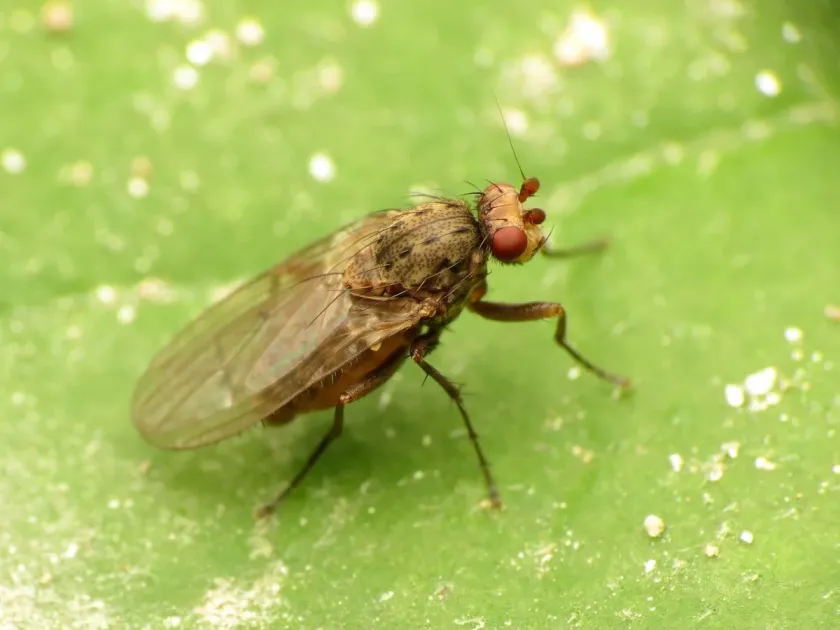
Description
How to identify
Helomyza is a genus of flies belonging to the family Helomyzidae, often referred to as seaweed flies or mud flies. These insects are small to medium-sized, typically measuring between 5 and 10 millimeters in length.
The adults are characterized by their often yellowish-brown to dark brown coloration, long legs, and distinct bristle patterns along the wing edges. They are commonly found in shaded, humid environments.
The larvae are legless, cylindrical maggots. They possess specialized mouthparts that allow them to tunnel into plant tissue or decaying organic matter.
Their life cycle consists of four distinct stages: egg, larva, pupa, and adult. The development rate is highly dependent on ambient temperature and moisture levels.
While many species in this family are saprophagous (feeding on decaying material), members of the Helomyza genus can become agricultural pests when they infest living plant tissues.
What it damages
The primary damage is caused by the larvae, which tunnel into the roots and stems of various vegetables. This tunneling activity destroys the internal structure of the plant.
Root crops like carrots, parsnips, and onions are particularly susceptible. The larvae create extensive galleries that provide entry points for secondary bacterial and fungal infections.
Once infested, the affected plants often exhibit stunted growth and rapid decline. The rotting process, accelerated by pathogens, renders the harvest inedible and unsuitable for storage.
In greenhouses and nurseries, Helomyza infestations can destroy entire trays of seedlings, as the young, soft tissues are easily penetrated by the developing maggots.
The overall crop quality is significantly compromised, leading to economic losses due to the unsellable state of the damaged produce.
When it appears
Adult flies are most active during the cooler, humid months of the year, particularly in the spring and early autumn when temperatures are moderate.
The females typically lay eggs in moist soil near the base of host plants. The hatching larvae then migrate to the plant roots to begin feeding.
Depending on the climate, there may be multiple overlapping generations per season, especially in regions with mild winters and high rainfall.
The overwintering stage usually occurs as pupae or mature larvae buried within the soil or protected by accumulated plant debris.
Periods of prolonged rain create the optimal conditions for the larvae to survive and thrive, often leading to sudden outbreaks in home gardens and commercial fields.
Signs of infestation
The first indicator of an infestation is often the yellowing and wilting of leaves, despite adequate irrigation. This suggests that the root system is failing.
If you inspect the base of the plant, you may find soft, rotting areas or visible entrance holes caused by the tunneling larvae.
Cutting into the root reveals internal tissue damage, usually accompanied by decay and the presence of small, white maggots feeding inside the channels.
- Wilting foliage despite moist soil.
- Discolored or rotting root tissues.
- Presence of small maggots inside the vegetable flesh.
- Unpleasant odor from the soil or damaged plant base.
- Reduced vigor and stunted plant growth.
In severe cases, the plant can be easily pulled from the ground because the roots have been almost entirely consumed by the pest larvae.
Control measures
Cultural control is the most effective strategy. Implementing a strict crop rotation schedule helps break the life cycle of the pest by removing host plants from the area for several seasons.
Proper field sanitation is essential. Removing and destroying all crop residues after harvest eliminates potential breeding grounds and reduces the overwintering population.
Deep plowing in the autumn can help expose pupae to freezing temperatures and natural predators, significantly reducing their survival rate.
Avoiding the use of fresh, non-composted manure is critical, as it acts as a strong attractant for egg-laying females during the planting season.
If necessary, ensure proper soil drainage in vegetable beds. Excess moisture creates the damp environment that Helomyza larvae require to develop successfully.
Taxonomy
- Latin name
- Helomyza
- Order
- Diptera (flies)
- Family
- Heleomyzidae
- EPPO code
- HELESP
Discussion
No discussions yet — be the first.