
Amber snail
Succinea putris
Description
How to identify
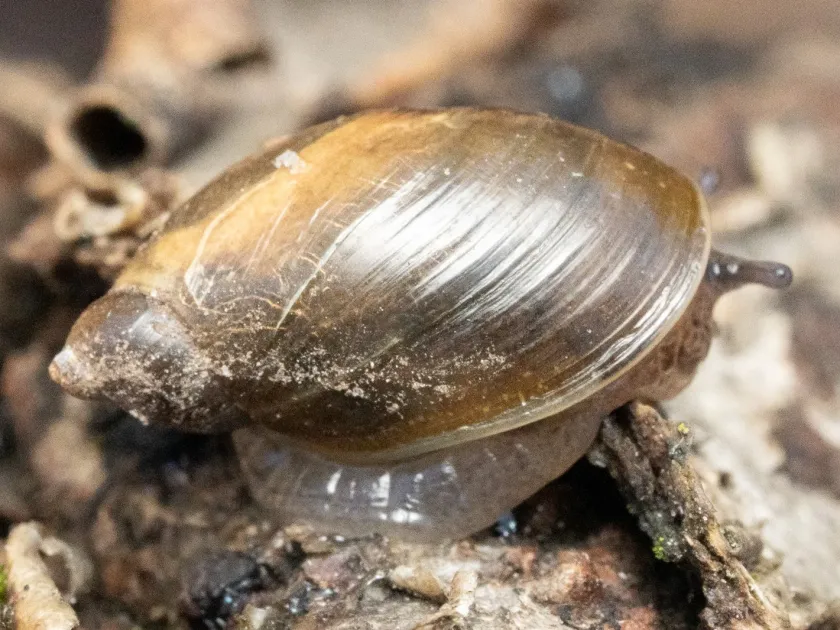
The Amber snail (Succinea putris) is a species of small, air-breathing land snail belonging to the family Succineidae. These mollusks are easily identified by their thin, translucent shells that have a characteristic amber or yellowish-brown hue.
An adult Amber snail typically measures between 15 and 20 mm in length. The shell has a relatively large body whorl compared to its overall size. The snail's body is typically pale, and it possesses a robust foot that allows it to navigate moist environments with ease.
These snails are hermaphroditic, meaning each individual can reproduce, which contributes to their rapid population expansion in suitable habitats. They prefer highly humid environments and are most commonly found in wetlands, near water sources, or in damp garden corners.
Life cycle stages include eggs laid in clusters in damp soil or vegetation, juvenile snails that look like miniature adults, and mature snails. They survive the winter by hibernating in sheltered areas under leaf litter or within the top layer of soil.
Their activity is highly dependent on humidity levels. During dry periods, they seek refuge in cooler, shaded areas, emerging only when the moisture level is sufficient for their physiological needs.
What it damages
Amber snails are considered pests in gardens, particularly when they infest vegetables, berries, and ornamental plants. Crops such as lettuce, cucumbers, strawberries, and young brassicas are highly susceptible to their feeding habits.
The damage caused by these snails manifests as ragged holes in the leaves, often starting from the edges or the center of the leaf lamina. In severe cases, they can cause total defoliation of seedlings or young plants, leading to complete crop loss.
Beyond physical consumption, the slime trails left by the snails can facilitate the growth of fungi and bacteria. This secondary infection often leads to the rotting of the affected tissues, rendering the vegetables unmarketable.
They are nocturnal feeders, making them difficult to spot during the day. However, in conditions of heavy rainfall or overcast weather, their feeding activity can persist throughout the day, increasing the speed of damage to crops.
Damage is typically concentrated in areas with poor airflow and high soil moisture, where the snails find constant shelter and proximity to succulent plant parts throughout the growing season.
Control measures
Cultural control is the first line of defense against Amber snails. Maintaining a tidy garden, removing weeds, and eliminating excessive debris helps remove the moist shelters where these snails prefer to hide and lay their eggs.
Improved drainage and reduced frequency of overhead irrigation in dense plantings can significantly decrease the snail population. Ensuring that soil surfaces dry out between waterings disrupts their ability to move and thrive.
Physical barriers such as crushed eggshells, coarse sand, or wood ash can be spread around the base of vulnerable plants. These materials create a difficult surface for the snail’s soft foot, acting as an effective repellent.
Chemical control involving molluscicides containing metaldehyde can be used as a last resort. Always apply these products cautiously to ensure they do not come into direct contact with the edible parts of vegetables and follow label directions.
Biological control methods involve supporting natural predators in your garden ecosystem. Birds, frogs, toads, and beetles are known to feed on snails and can help keep their population under control without the need for synthetic chemicals.
Taxonomy
- Latin name
- Succinea putris
- Order
- Molluscs
- Family
- Succineidae
- EPPO code
- SUCCPU
Discussion
No discussions yet — be the first.