
Amber snail
Succinea
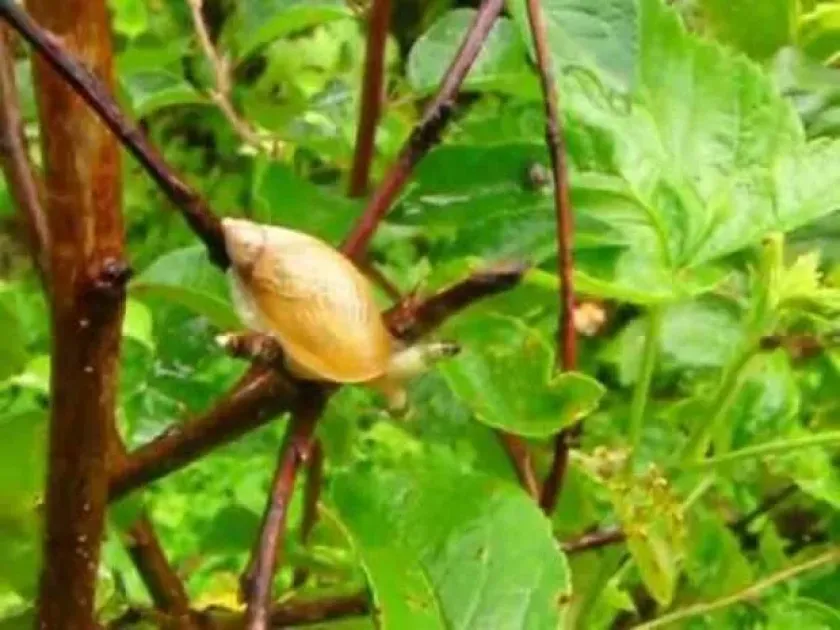
Description
How to identify
The amber snail is a small land-living gastropod belonging to the Succineidae family. Its shell is characterized by a distinct amber or yellowish-brown color; it is thin, translucent, and fragile, featuring an elongated shape with a large final whorl.
Adult specimens typically do not exceed 10–15 millimeters in length. The body of the mollusk itself has a grayish or yellowish tint, which allows it to camouflage effectively among damp vegetation and decaying leaf litter.
Unlike other gastropod species, amber snails prefer areas with high humidity. They are frequently encountered in close proximity to water bodies, river floodplains, as well as in irrigated agricultural fields and dense garden plantings.
The life cycle of this mollusk is closely tied to humid environments, causing their population to increase sharply during rainy seasons. They are crepuscular or nocturnal, hiding in the soil or under plant debris during the day.
Reproduction occurs through laying eggs in moist soil or under mulch layers. The juveniles that hatch grow rapidly if food and moisture are abundant, completing their development within a few months.
What it damages
Amber snails are polyphagous, meaning they are capable of feeding on almost any type of soft plant tissue. They cause significant damage to vegetable, berry, and ornamental crops by feeding on leaves, tender stems, and succulent fruits.
This pest poses a particular threat to seedlings in greenhouses and hotbeds, where a favorable microclimate is maintained. Young sprouts can be completely destroyed by a colony of snails within just a few days.
In addition to consuming vegetative mass, amber snails contaminate plants with their mucus, which significantly lowers the marketability of produce and hinders photosynthesis. Furthermore, fungal infections often develop at the site of the damage.
Among the most vulnerable crops are cabbage, leaf lettuce, strawberries, and blackberries. On berries, the traces of mollusk activity often become entry points for rot, leading to the spoilage of the entire crop.
The damage potential increases during periods of prolonged rain, when the natural predators of these mollusks are less active and the plants become more succulent and attractive to the pests.
Signs of infestation
The primary sign of amber snail presence is the characteristic holes in leaf blades, which often have ragged edges. Unlike insects, mollusks do not leave skeletal veins behind, consuming the leaf tissue entirely.
Silvery, dried mucus trails remain on the surface of leaves and stems after the snails have traveled. These trails are easily visible against the dark background of foliage during early morning hours when humidity is still high.
Shallow ulcer-like lesions are present on fruits and berries. The pests themselves can often be found by inspecting the underside of leaves or the soil at the base of the plant during the early morning.
A heavy infestation in one area is often accompanied by a specific odor of decaying organic matter, especially if they are congregating in piles of garden waste or compost heaps.
With systematic monitoring of greenhouse plants, it becomes evident that damage spreads in clusters, typically starting from the dampest areas of the garden bed.
Control measures
The foundation of protection is the agrotechnical approach: regular weeding and soil cultivation. Removing plant debris deprives the mollusks of their daytime shelter and breeding grounds.
An effective technique involves creating barriers from materials that are unpleasant for mollusks to traverse. Using wood ash, lime, or superphosphate around garden beds creates a dry zone that snails cannot cross.
In large-scale farming, chemical products based on metaldehyde are used. The pellets are scattered in areas where pests congregate, while strictly adhering to dosage guidelines and pre-harvest intervals.
Biological control methods include encouraging natural predators such as hedgehogs, toads, frogs, and birds to visit the area. Maintaining biodiversity within the property significantly lowers snail population numbers.
Traps, such as containers filled with beer or fermented kvass, allow for the mass capture of adult snails. Placing boards, plywood scraps, or damp burlap between rows also assists in gathering pests for subsequent manual removal and destruction.
Taxonomy
- Latin name
- Succinea
- Order
- Molluscs
- Family
- Succineidae
- EPPO code
- SUCCSP
Discussion
No discussions yet — be the first.