
Amber snail
Oxyloma elegans
Description
How to identify
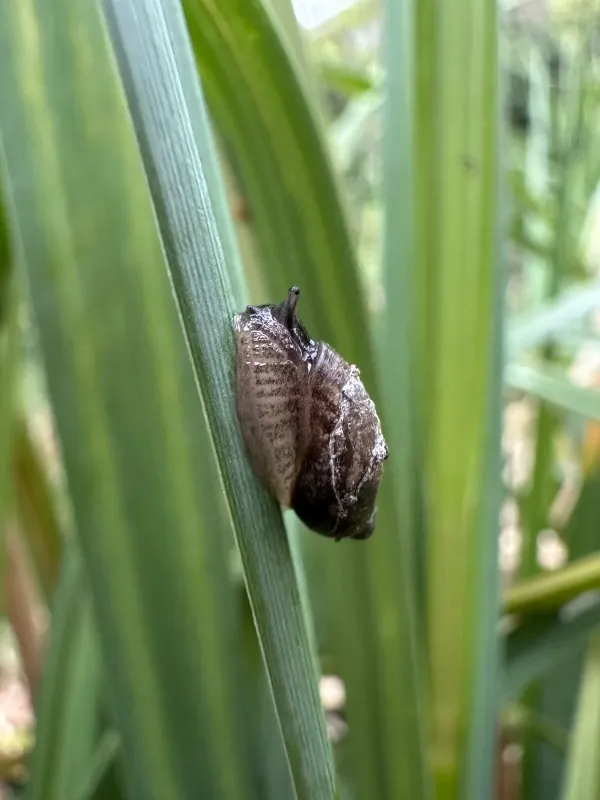
The amber snail (scientific name Oxyloma elegans) is a land-dwelling gastropod mollusc belonging to the family Succineidae. It is characterized by a distinctive, thin, amber-colored shell that typically consists of only 2.5 to 3 whorls. The shell is notably translucent and possesses a very wide aperture.
Adult individuals usually measure between 12 and 16 mm in length. The body of the snail is generally grayish or brownish, often displaying a darker dorsal stripe. Its physical structure is extremely fragile, and the animal is highly dependent on moist environmental conditions for survival.
The biological cycle of this species is strongly linked to aquatic or semi-aquatic habitats. While they are technically terrestrial, they are most commonly found in floodplains, wetlands, and irrigated agricultural lands where the soil remains consistently damp throughout the growing season.
Reproduction is temperature-dependent and usually occurs during warmer months. These snails are hermaphroditic and can rapidly expand their population size when humidity levels are high. They deposit their eggs in moist soil or decaying organic matter, which provides a protected environment for the developing young.
Behaviorally, the amber snail is primarily nocturnal. During the day, they sequester themselves in damp, shaded locations, such as the underside of leaves, under mulch, or within dense vegetation, only becoming active under the cover of darkness or during persistent overcast and rainy weather.
What it damages
The amber snail is a generalist feeder that causes damage to a variety of vegetable and ornamental crops. They show a particular preference for seedlings and soft-leafed plants such as lettuce, cabbage, and young berry shrubs, especially those located in damp corners of the garden or near water sources.
Using their radula, a serrated tongue-like organ, they scrape away the plant's epidermis and underlying tissues. This feeding behavior results in characteristic irregular holes and large patches of missing tissue on leaves, which can severely compromise the plant's overall health and photosynthetic capacity.
Seedlings and young plants are the most susceptible to irreversible damage. If the growing tip or the young leaves of a seedling are consumed, the plant may fail to establish, leading to significant yield losses and the need for replanting in heavily infested areas.
In addition to direct mechanical feeding, the amber snail acts as a vector for various plant pathogens. The mucus produced by the snail can harbor fungal spores and bacteria, which are then introduced into the plant tissues through the open wounds created by the snail's feeding.
The economic impact of this pest is highly variable and depends on annual rainfall. In unusually wet seasons, the population density of amber snails can spike, leading to devastating damage across commercial horticultural crops, particularly in poorly drained fields.
Signs of infestation
The presence of amber snails is most easily identified by the glistening, dried mucus trails left behind on foliage and stems. These silvery streaks are often visible in the early morning and serve as a clear indicator of the path taken by the snail during its nightly feeding activities.
Feeding damage is characterized by "windows" or jagged holes in the leaves. Unlike insect damage, where margins might be clean-cut or follow veins, snail feeding damage often leaves behind remnants of frayed leaf tissue, making the leaves appear ragged and uneven.
During the day, search for the snails under the lower foliage, near the base of the plant stems, or hiding in moist soil clods. Their physical appearance, with their distinctive amber-colored shells, is relatively easy to spot if one knows to look in the damp, shaded micro-habitats.
Stunted growth or wilting in plants that otherwise appear well-watered can be a sign of infestation. This occurs when snails cluster near the root collar or stem base, causing localized stress and tissue damage that disrupts the plant's vascular flow.
Proximity to dense weed cover is a significant sign of potential infestation risk. Weeds provide the necessary shelter and humidity for amber snails to breed and thrive, acting as a springboard for the snails to move into neighboring vegetable beds or flower patches.
Control measures
The most effective management strategy is cultural control focused on reducing habitat humidity. Regular weeding, consistent soil cultivation between rows, and improving field drainage are critical steps to making the environment less hospitable to moisture-loving snails.
Physical barriers can be employed to protect sensitive crops. Spreading coarse materials like sharp sand, wood ash, or crushed eggshells around the base of plants creates a jagged surface that deters molluscs, as they struggle to move across abrasive substances without damaging their soft bodies.
Hand-picking remains a highly effective method for small-scale gardens. Collecting the snails manually at night or during damp evenings is straightforward. Alternatively, beer or fermented juice traps buried at soil level are excellent at attracting and trapping these pests in larger numbers.
Biological control involves fostering a garden ecosystem that supports natural predators. Frogs, toads, hedgehogs, and ground beetles are known predators of land snails. Minimizing the use of harsh chemicals will help these beneficial species thrive and exert natural pressure on the snail population.
For severe infestations, iron phosphate-based molluscicides are the preferred chemical control option. These baits are generally safer for non-target wildlife and domestic animals compared to traditional metaldehyde pellets, but they should still be applied precisely according to the label requirements.
Taxonomy
- Latin name
- Oxyloma elegans
- Order
- Molluscs
- Family
- Succineidae
- EPPO code
- OXLMEL
Discussion
No discussions yet — be the first.