
Stenolechia
Stenolechia
Description
How to identify
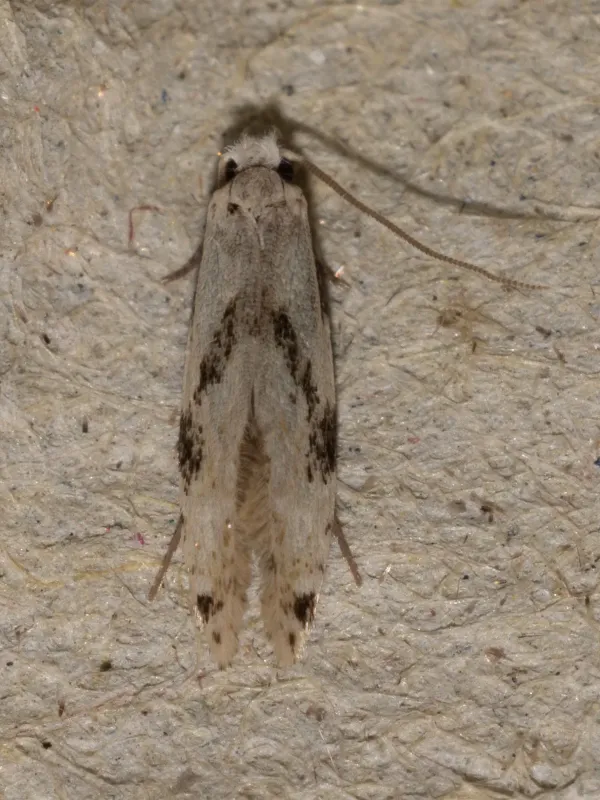
Stenolechia is a genus of moths belonging to the family Gelechiidae, often referred to as twirler moths. Adult insects are small, with narrow wings characteristic of this taxonomic family.
The adult moths usually feature cryptic coloration, ranging from gray to brown, which allows them to blend in perfectly with tree bark. Their small wingspan makes them difficult to spot during routine garden inspections.
The larvae (caterpillars) possess well-developed chewing mouthparts that enable them to bore into plant tissues. The pupal stage typically occurs within damaged plant parts or in the leaf litter beneath the tree.
The life cycle of this insect is closely linked to regional climate conditions. In temperate zones, the pest usually completes one generation per year.
Precise species identification often requires laboratory analysis of the adult genitalia or systematic entomological monitoring using pheromone traps.
What it damages
The primary hosts damaged by Stenolechia (particularly the species Stenolechia gemmella) are conifers, with a strong preference for juniper plants.
Larvae feed on buds and young shoots by mining them from the inside. This activity disrupts the normal physiological growth and development of the plant's vegetative organs.
Damage to the central shoot can halt vertical growth or cause stem deformation. In cases of high infestation, there is a significant loss of ornamental value.
This pest poses a serious threat to nurseries, as damage to young seedlings often leads to plant death or permanent stunting, reducing marketability.
In addition to direct bud damage, the tunnels created by larvae provide entry points for secondary infections, including fungal bark diseases.
Signs of infestation
The first sign of infestation is the yellowing and wilting of young shoot tips in the spring, coinciding with the peak activity of the larvae.
During inspection, small entry holes in the buds can be observed, often surrounded by brown frass (waste) held together by fine silk webbing.
Inside the damaged buds, one can often find the caterpillar itself or remnants of its activity in the form of small dark particles.
In the spring, as buds begin to burst, infested areas appear eaten or underdeveloped compared to healthy sections of the shrub.
- presence of fine webbing on shoots;
- needle drop from infested areas;
- dieback of terminal buds;
- visible boring marks on the bark.
Control measures
Prevention begins with regular monitoring of juniper plantings, especially at the start of the growing season when larvae emerge from overwintering sites.
An effective cultural control method involves the timely pruning and destruction of infested shoots before the larvae reach the pupation stage.
For high populations, the use of systemic chemical insecticides is recommended, as these can penetrate plant tissues to reach the larvae hidden inside.
Treatment should be applied during the period of maximum larval activity, which generally corresponds to the phase of active bud development.
Biological control agents, such as formulations containing entomopathogenic bacteria or viruses, also provide effective results when applications are timed correctly.
Taxonomy
- Latin name
- Stenolechia
- Order
- Lepidoptera (butterflies)
- Family
- Gelechiidae
- EPPO code
- STNESP
Discussion
No discussions yet — be the first.