
Steinernema kraussei
Steinernema kraussei
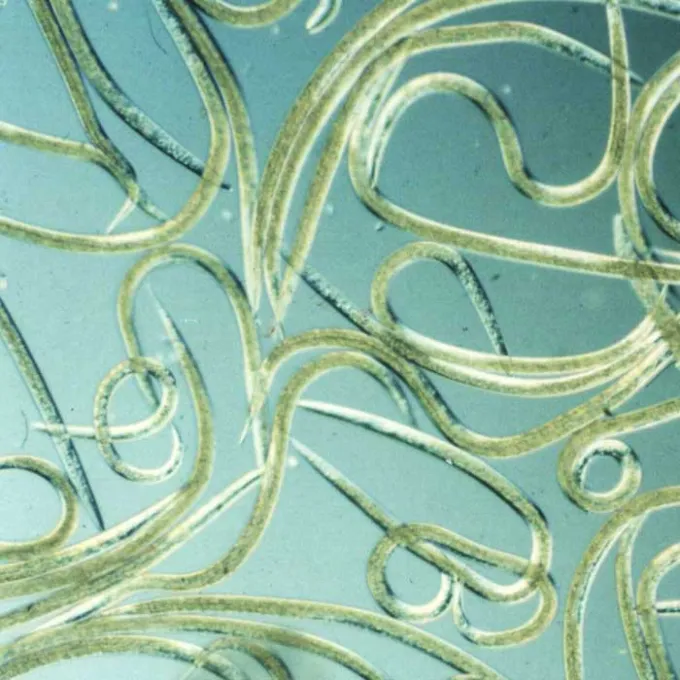
Description
How to identify
Steinernema kraussei is a specialized entomopathogenic nematode belonging to the family Steinernematidae, order Rhabditida. These microscopic organisms are highly effective biological control agents that target specific soil-dwelling insects.
In their infective juvenile stage, these nematodes move through the soil profile, utilizing chemical cues to locate potential hosts. Their movement is dependent on soil moisture and temperature, which facilitate their search for prey.
The biology of the species relies on a symbiotic relationship with Xenorhabdus bacteria. Once a nematode enters an insect host, these bacteria are released into the hemolymph, causing rapid death of the insect within a short period.
The host's body serves as a nutrient-rich environment for the nematode population to complete its life cycle. After resource depletion, the next generation of infective juveniles emerges into the soil to seek new hosts.
A distinctive feature of Steinernema kraussei is its ability to remain active at lower soil temperatures compared to other common entomopathogenic species, making it ideal for early-season applications.
What it damages
Although termed a pest in some general contexts due to its classification as a nematode, Steinernema kraussei is strictly an entomopathogenic organism used for plant protection, meaning it does not cause damage to plant tissues.
Its primary targets include larvae of various coleopteran pests, such as the black vine weevil, which are notorious for destroying the root systems of ornamental plants and soft fruit crops like strawberries.
By effectively parasitizing and killing these insect larvae, the nematode protects the root system from damage. This leads to healthier plants, improved nutrient uptake, and a significantly reduced risk of secondary fungal infections caused by root wounds.
Without the intervention of such biological agents, soil pests can rapidly proliferate, leading to complete crop failure in commercial nurseries and home gardens alike.
Utilizing this natural enemy is a sustainable approach that minimizes the need for chemical insecticides, ensuring the health and safety of the surrounding environment and consumers.
When it appears
The operational season for Steinernema kraussei typically begins in early spring, as soon as soil temperatures reach approximately 5-8 degrees Celsius. This early activity allows for pre-emptive pest control.
Optimal effectiveness is observed during periods of high soil moisture. Since nematodes rely on water films to move, irrigation management after application is critical for successful pest control.
During the summer months, the activity of the nematodes is maintained through regular watering to prevent desiccation of the soil, which could threaten their survival and ability to locate prey.
The species continues its activity into the autumn, effectively controlling overwintering larvae before they enter a dormant state in deeper soil layers.
Temperature fluctuations directly influence the rate of infection and reproduction, meaning that development cycles may slow down significantly during particularly cool or unseasonable weather patterns.
Signs of infestation
The primary sign of nematode efficacy is a visible reduction in the symptoms of plant stress, such as wilting or chlorosis that usually indicates root-feeding damage by insect larvae.
A field assessment may reveal dead insect larvae within the root zone, often showing discoloration caused by the action of symbiotic bacteria associated with the nematode infection.
Plants treated with these nematodes typically show vigorous new growth and a robust root system, contrasting sharply with untreated areas where pest pressure remains unchecked.
Laboratory confirmation involves extracting soil samples and observing the presence of S. kraussei under a microscope, or examining the remains of host insects for signs of nematode colonization.
The absence of fresh damage symptoms on the roots over a period of several weeks after application is a strong indicator of successful pest population suppression.
Control measures
The application of Steinernema kraussei is performed by preparing an aqueous suspension and applying it directly to the root zone of the crops, typically using sprayers or irrigation systems.
- Maintain adequate soil moisture levels for several days following application.
- Avoid applying during peak sunlight hours to prevent exposure to harmful UV radiation.
- Ensure the application temperature is within the suitable range for the species.
- Avoid mixing with incompatible chemical pesticides that might harm the nematode population.
Good agricultural practices, such as applying organic mulch, help to conserve soil moisture and protect the nematode population, thereby enhancing their long-term efficacy.
Integrating biological controls into a comprehensive management strategy allows for more resilient crop protection, reducing reliance on traditional synthetic pesticides.
Taxonomy
- Latin name
- Steinernema kraussei
- Order
- Nematodes
- Family
- Steinernematidae
- EPPO code
- STNRKR
Discussion
No discussions yet — be the first.